Manufacturing storage. Racking shaped to the part, not the pallet.
Half of what a factory stores will never sit on a pallet. Extrusion, bar, coil, castings, jigs and spares each need a different structure, and the wrong one costs floor, damages stock or puts a crane lift and a walkway in the same place.
- Floor recovered, coil
- 44%
- Floor recovered, extrusion
- 38%
- Shelving duty tiers
- 200 to 800kg
- Typical lead time
- 4 to 8 wks
Eight storage problems we see in factories.
Most manufacturing sites have several of these at once. The survey deals with them as one layout, because the line, the crane and the trucks share the same floor.
Line-side buffering.
A production line needs the next shift's material within reach and nothing else. Too little buffer stops the line; too much fills the walkways.
We size line-side storage from the consumption rate and the replenishment interval, not from the space available. Adjustable pallet racking or pallet live lanes at the point of use give first in, first out rotation, with replenishment from the back and picking from the front so the forklift and the operator never share an aisle. Finished goods buffers at the end of the line follow the same logic, and where pallets per product are high, pallet shuttle lanes hold them deep without trucks entering the racking.
- Buffer sized from consumption rate and replenishment interval
- FIFO at the point of use with pallet live or carton live
- Separate replenishment and pick faces where the line allows
- Protection on every upright facing a truck route
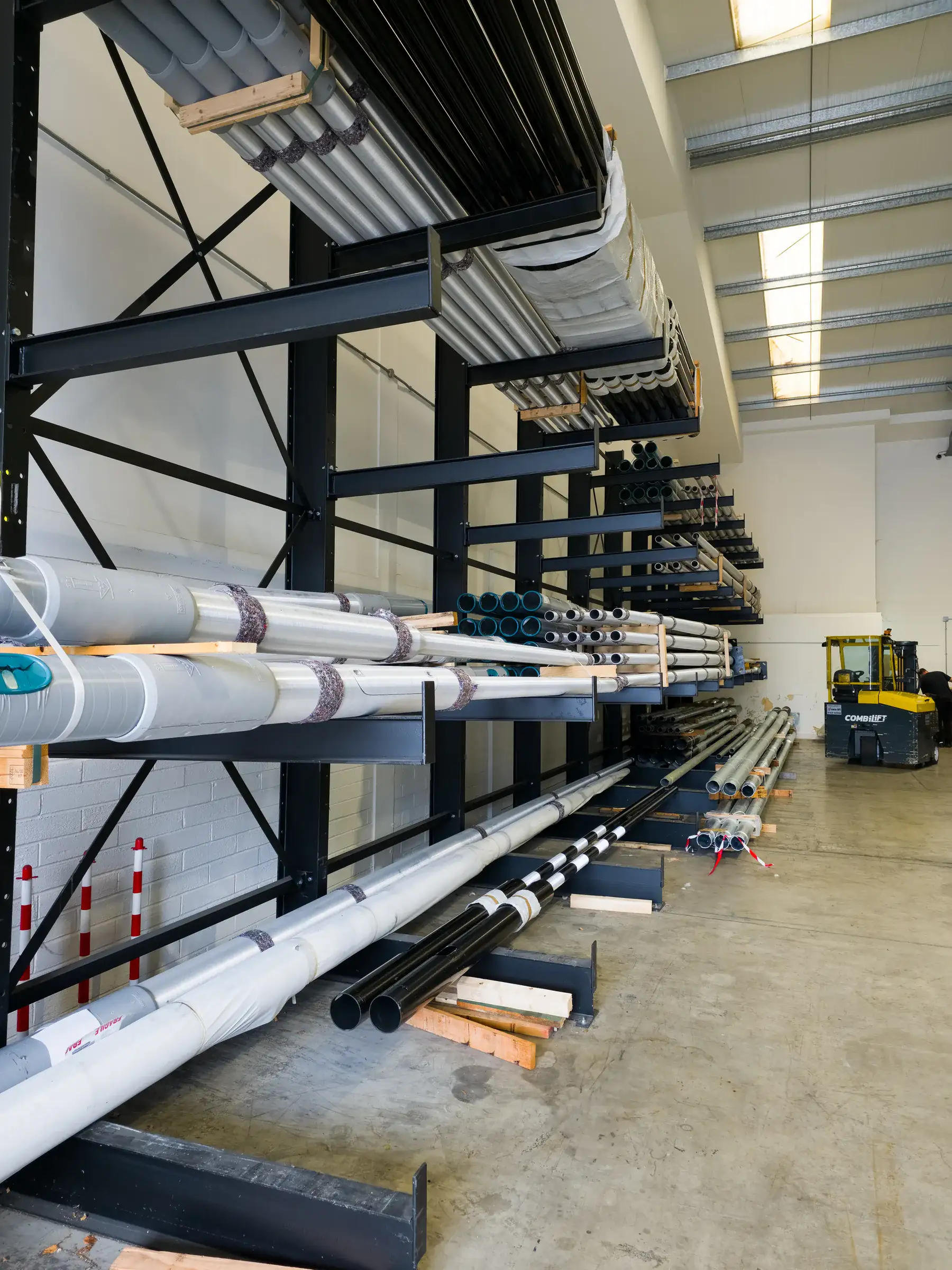
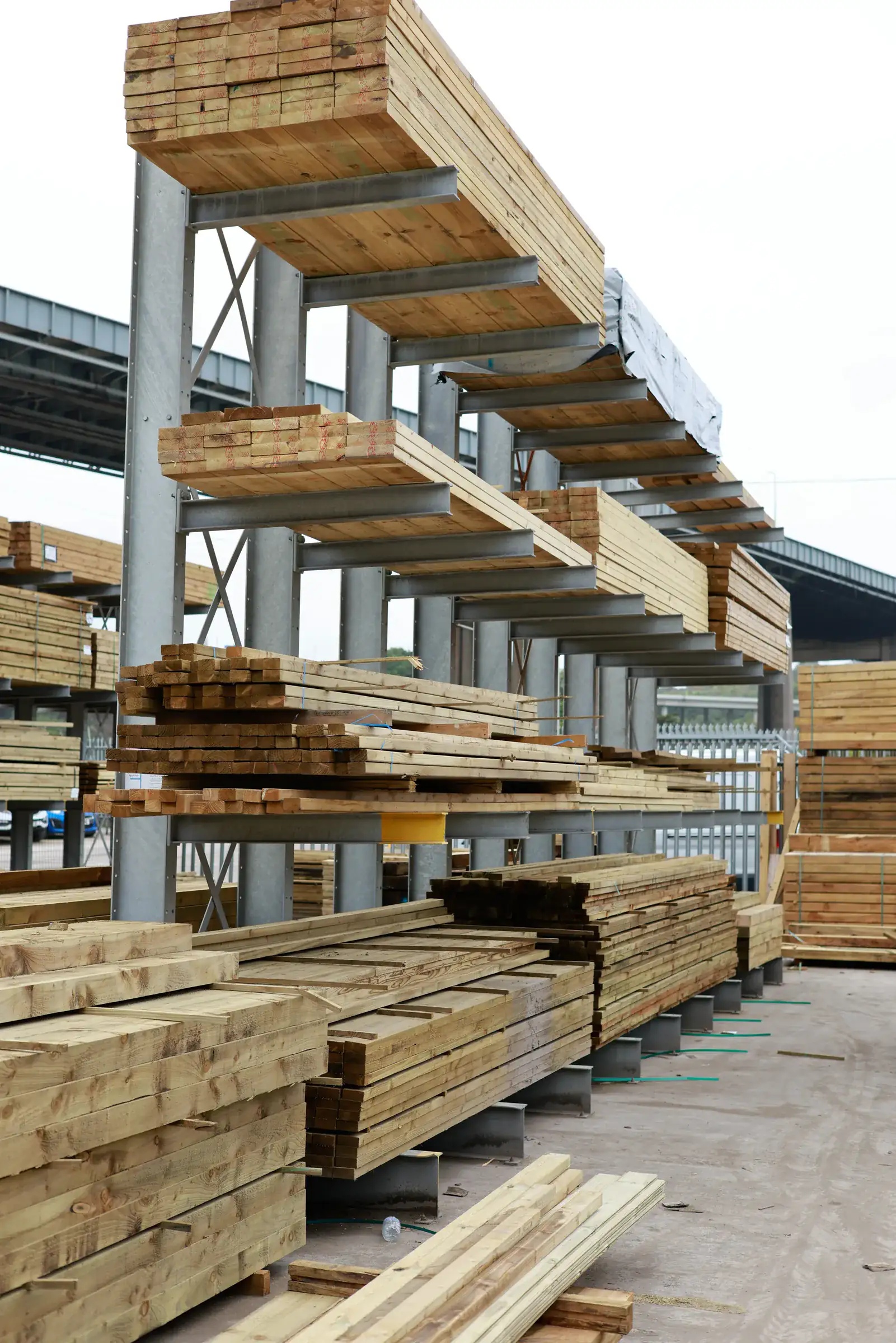
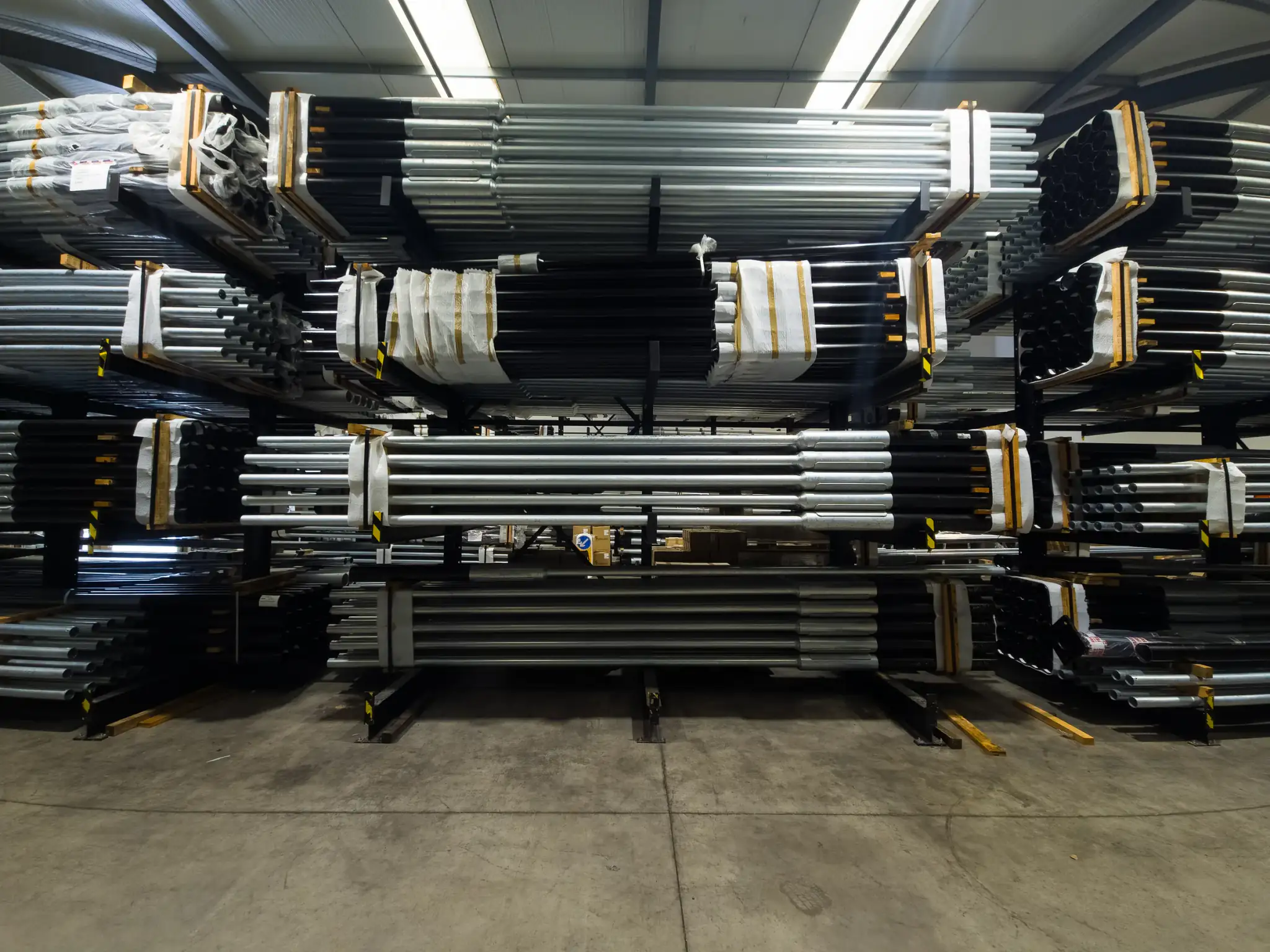
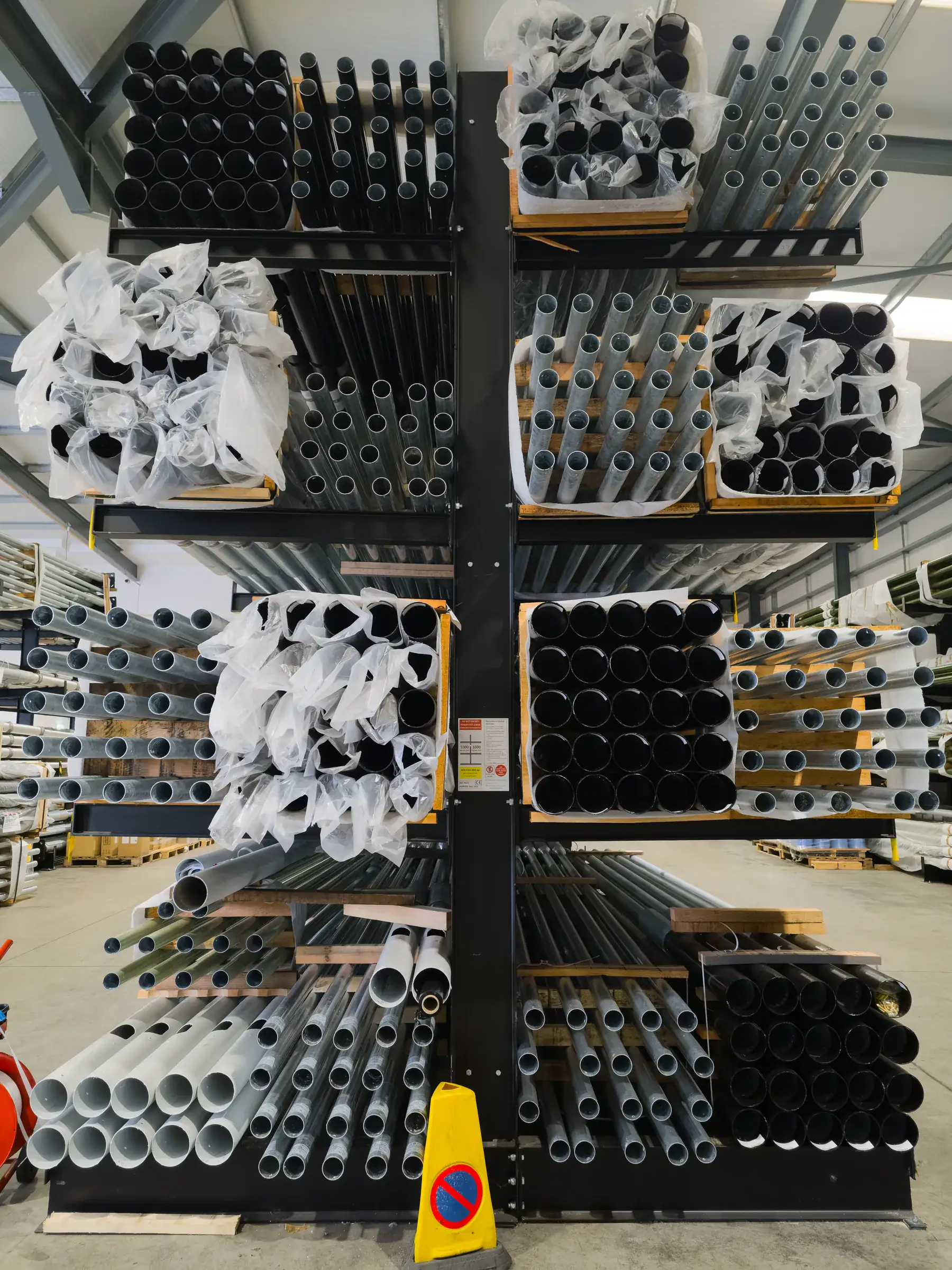
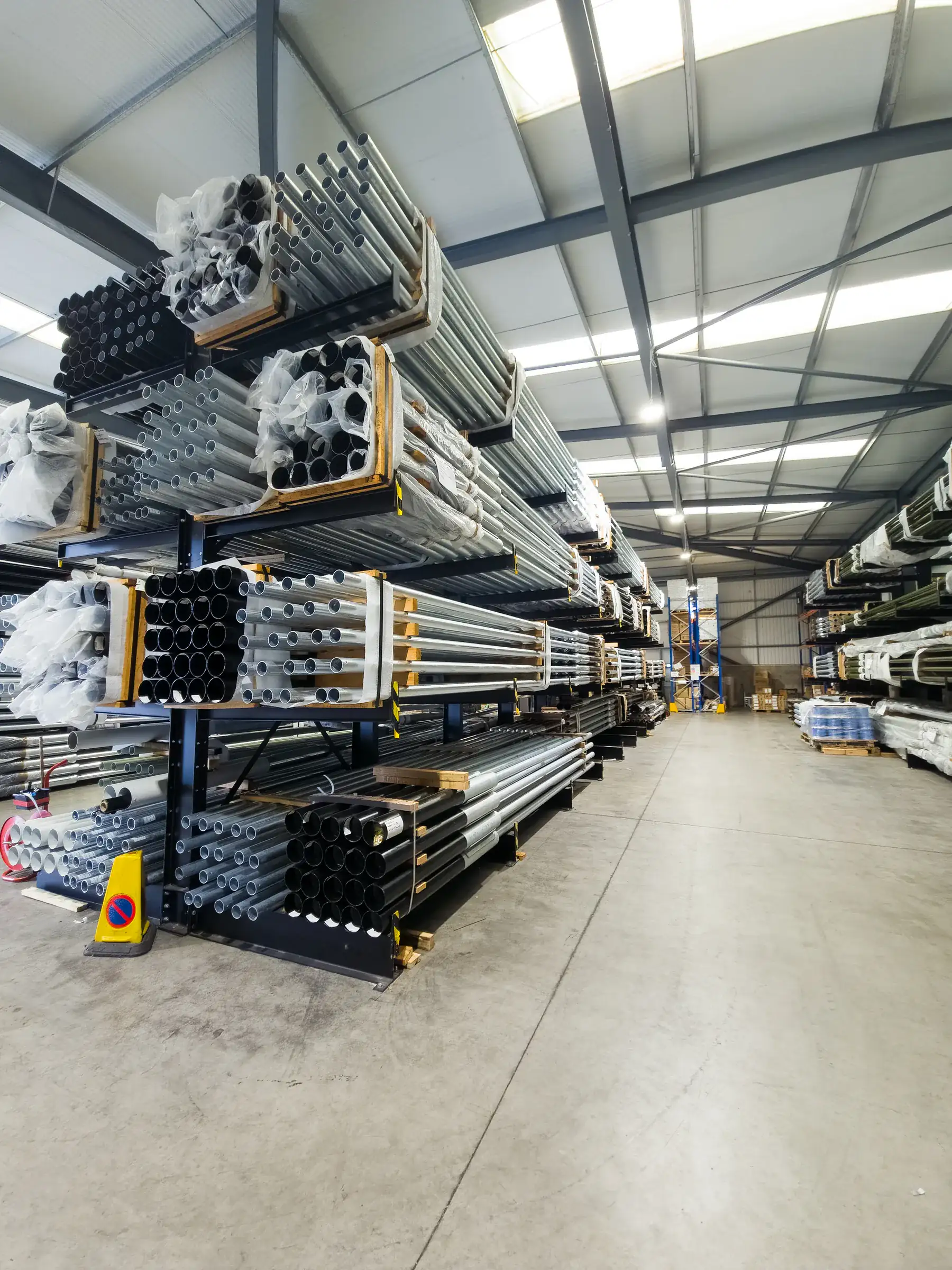
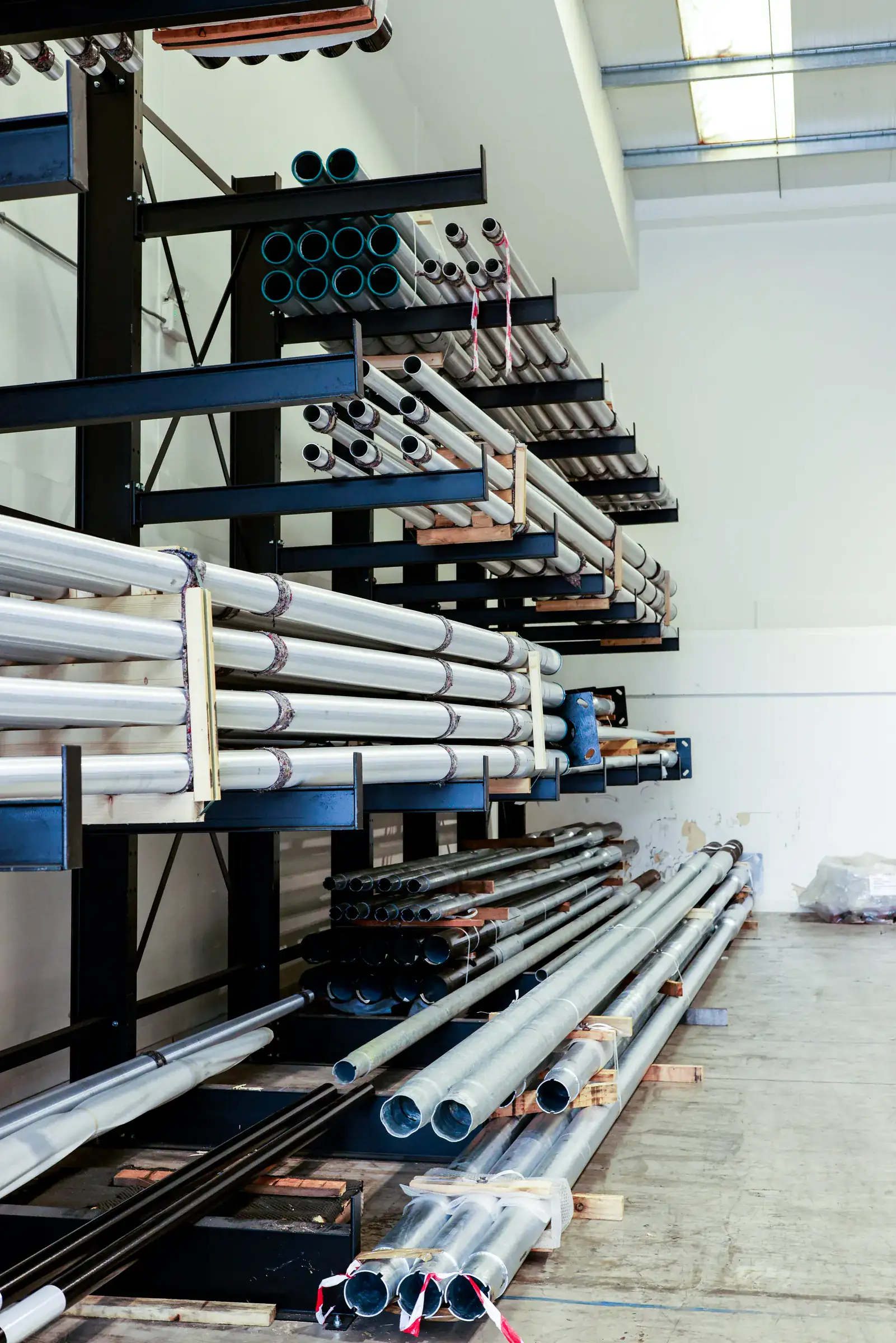
Long stock on cantilever.
Lengths stacked on the floor bow, get damaged by the weight above, and have to be unstacked to pick the one at the bottom. Cantilever puts each profile on its own arm level, supported along its length.
With no front upright, lengths load from the side by sideloader, forklift or crane. Arm spacing is set so the shortest lengths still sit on at least two arms, and single-sided runs use wall height that is usually empty. Detail on cantilever racking.
Coil cradles.
A cylinder on a flat beam is a load waiting to roll. Shaped cradles hold the coil, spread the point load, and let you store two or more tiers with every coil individually accessible.
Cradle size suits the range of coil diameters and widths you run, and the aisle is set by the coil ram truck and the longest coil. In the Newport case study, floor positions doubled from 36 to 72 on the same footprint. See coil racking.
Castings and heavy duty racking.
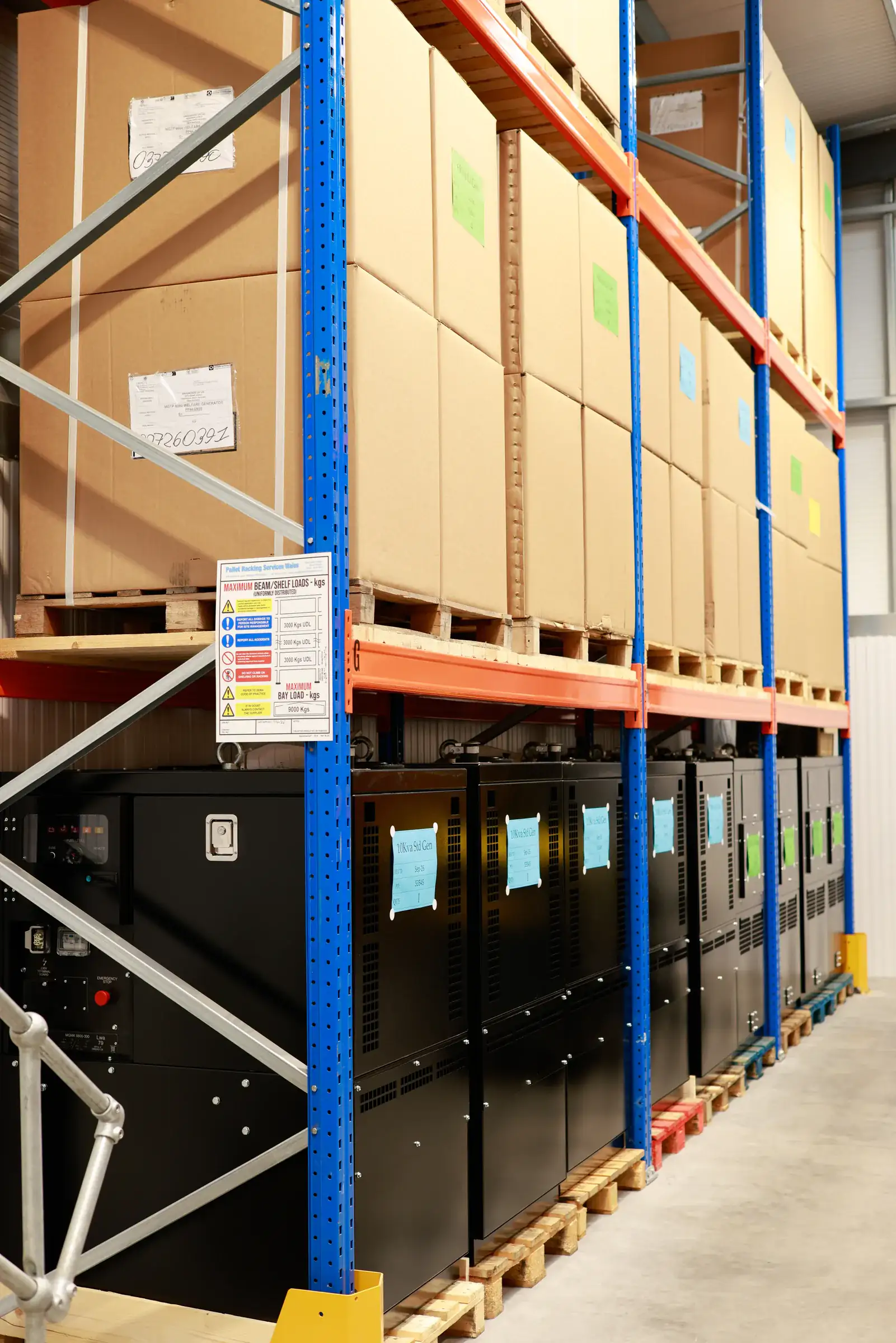
Dense loads leave no margin for guesswork. An inherited run with mixed components and no load notices is a real risk in a foundry or machine shop, not a paperwork gap.
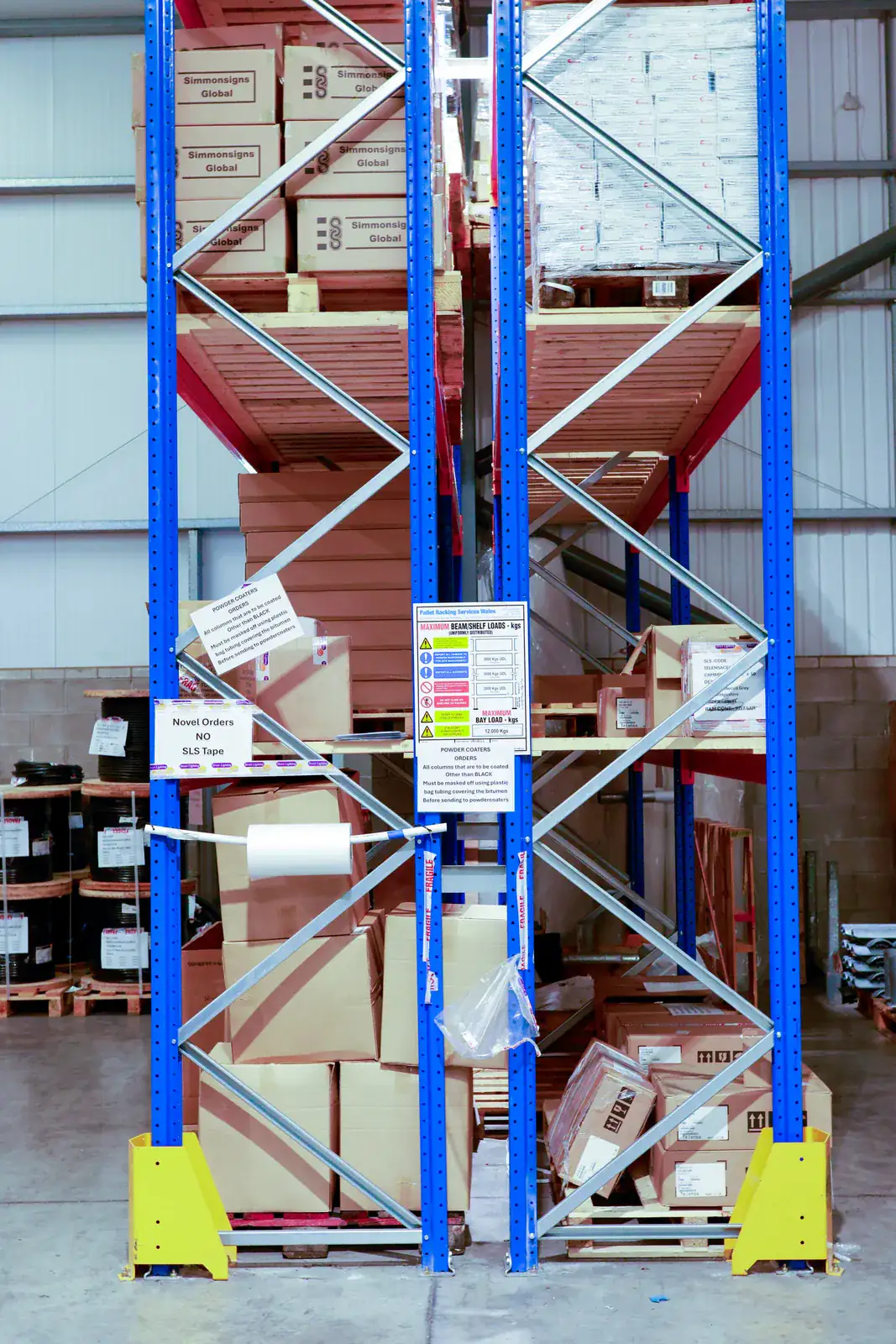
Heavy duty adjustable pallet racking is specified from the manufacturer's data against your actual loads, with steel or timber decking for irregular parts, and every run handed over with a load notice. The rated capacity per beam level is stated on that notice: Set by the manufacturer's design for your loads.
Tool and jig storage.
Press tools and jigs stored on the floor or on timber bearers put lifting operations and walkways in conflict every shift.
Double-sided cantilever with height adjustable arms lets an overhead crane place tools directly from above or the side, with every tool at a numbered location. In the Swansea workshop case study, 48 arm positions replaced floor storage in two days without a production stoppage, and the cleared floor became a marked laydown area beside the presses.
- Arm length set by the deepest jig
- Arm spacing set so the shortest fixture sits on two arms
- Crane access kept clear along the full run
- Rack end protection where the run meets a truck route
Shelving for spares and consumables.
Hand loaded means shelving. Maintenance spares, fasteners, consumables and small components belong at picking height on industrial steel shelving, with bins and dividers, or on longspan shelving where items are bulky but still hand handled.
Duty tiers sit around 200, 400 and 800kg per level depending on the system and the span. The rating for your configuration is stated on the load notice, not assumed from a catalogue.
- Light duty, per level
- ≈200kg
- Medium duty, per level
- ≈400kg
- Heavy duty, per level
- ≈800kg
- Lead time
- 4 to 8 wks
Mezzanine production floors.
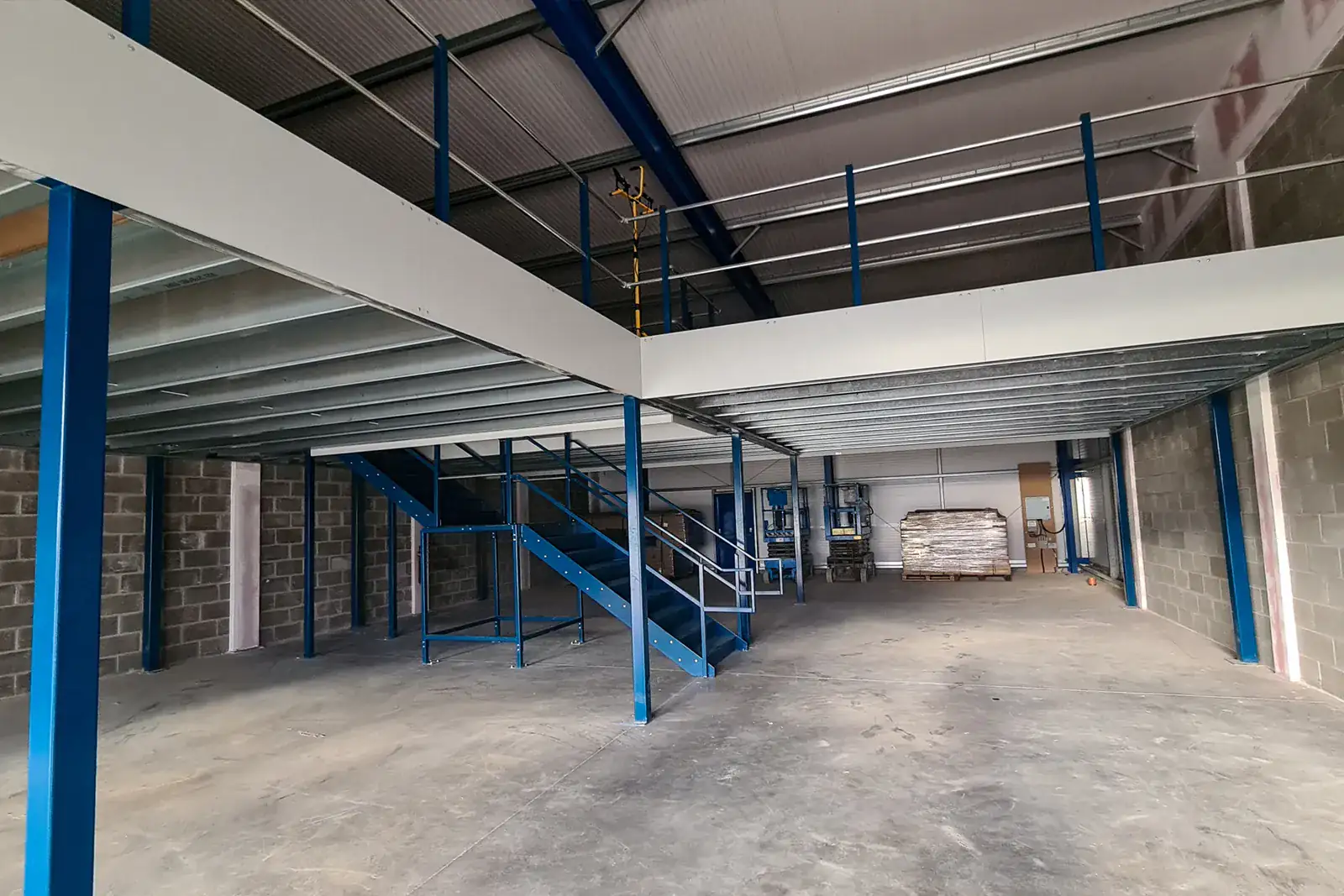
When the factory floor is full, the cheapest square metre is the one above it. A mezzanine can carry assembly, kitting, packing or offices over storage or plant.
Production use needs a higher design loading than light storage, plus fire protection, means of escape and balustrading. Building Regulations approval under Approved Documents A, B, K and M (Wales has its own editions) is arranged and managed for you. The design loading is set by the structural engineer for the use: Set by the structural engineer. Read mezzanine flooring.
Partitions and tool cribs.
High value tooling, calibrated equipment and controlled stock need a lockable space without building a wall. Mesh partitions and security cages make a tool crib, a quarantine area or a hazardous store that stays ventilated and visible, and they relocate when the layout changes.
Where racking backs onto a walkway, anti-collapse mesh stops anything falling through, and rack protection goes where trucks actually strike.
- Tool cribs with hatch or door issue points
- Quarantine and inspection areas for goods-in
- Segregated stores for controlled or hazardous stock
- Reconfigurable as production layouts change
Four manufacturing case studies.
Swansea, Neath, Newport and Llanelli. Each one leads with positions before and after and the floor recovered.
Manufacturing storage questions.
Cantilever racking. It has no front upright, so lengths load from the side by sideloader, forklift or crane, and arms are spaced so even the shortest lengths sit on at least two arms. Single-sided runs go against a wall; double-sided runs stand in the middle of a bay. Arm levels are pitch adjustable as profiles change.
On shaped cradles, not flat beams. A cradle stops the coil rolling and spreads the point load. Coil racking takes coils two or more tiers high with each coil individually accessible, and the aisle is set by the coil ram truck and the longest coil, confirmed at survey.
Often, but only against a calculated rating. Dense castings concentrate load, and irregular parts usually need decking rather than pallets alone. The beam and frame selection comes from the manufacturer's data and the actual loads, and each run is handed over with a load notice stating what it is rated for.
Yes. A production or assembly floor needs a higher design loading than light storage, plus fire protection, means of escape, balustrading and Building Regulations approval under Approved Documents A, B, K and M. The design loading is set by the structural engineer for the intended use; we manage the approval process.
Heavy jigs suit open-fronted cantilever arms that a crane can reach from above. Smaller tooling and spares suit industrial steel shelving or longspan, with duty tiers around 200, 400 and 800kg per level, inside a mesh partition tool crib where access needs controlling.
Yes. Installations are phased around shifts, including late shift and weekend working, and crane access and walkways are kept clear while work runs. The four manufacturing case studies on this page were all delivered without a production stoppage.
Bring the awkward stock to the survey.
The coil, the six metre lengths, the jig nobody can lift by hand. A free survey measures the floor, the crane and the trucks, and lays them out as one plan. No charge, no obligation.