
Industrial shelving. Hand loaded means shelving.
Hand loaded and hand picked means shelving. Palletised and forklift handled means racking. Mixed means longspan. That one line settles most warehouse shelving enquiries before anyone quotes, and it is the first question we ask.
Industrial steel shelving, longspan, carton live and light duty variants, supplied and installed across South Wales and the West.
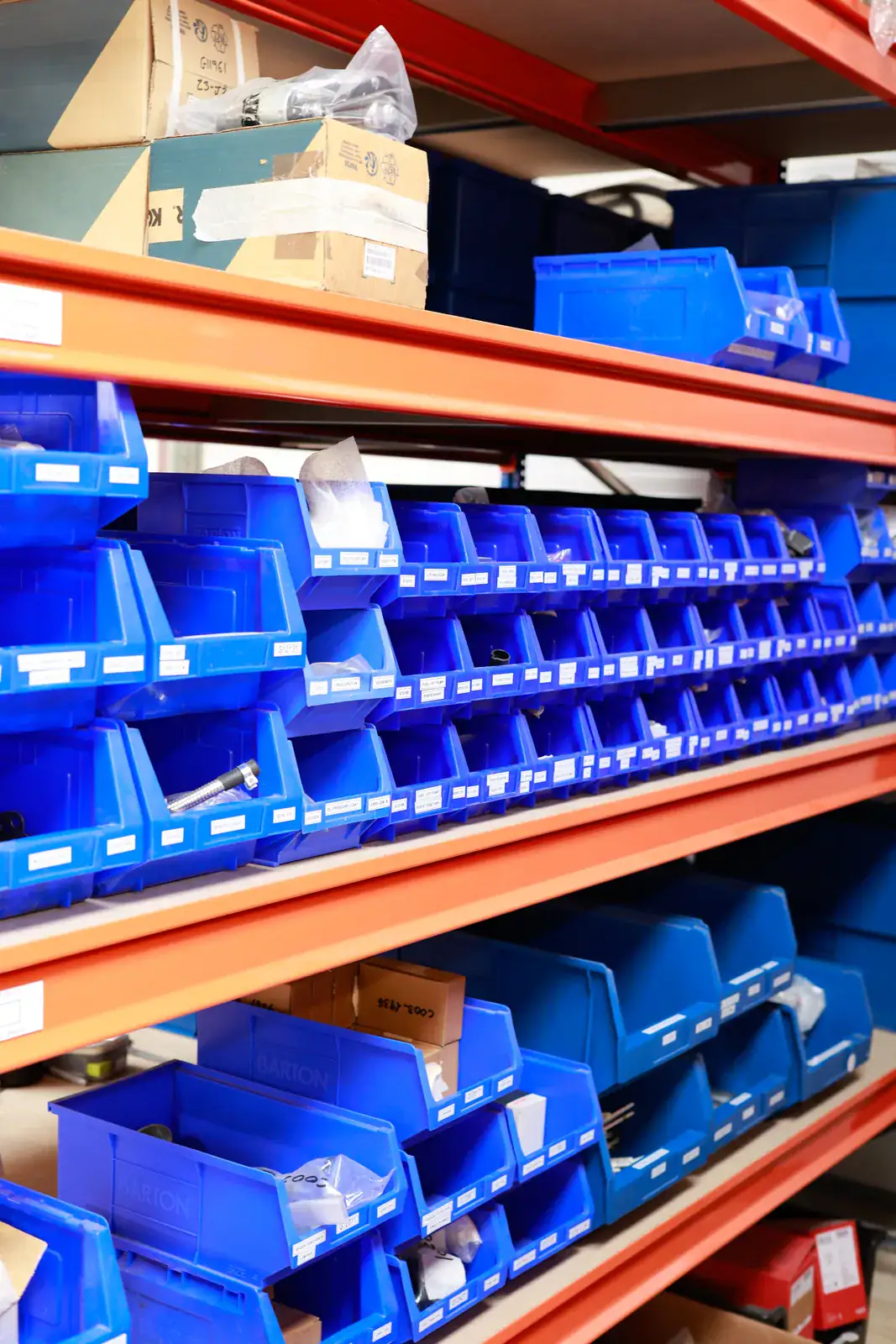
- Longspan light duty
- ≈200kgper level
- Longspan medium duty
- ≈400kgper level
- Longspan heavy duty
- ≈800kgper level
- Typical lead time
- 4 to 8 wks
The rule that settles shelving against racking.
Ask how a unit of stock is moved on and off the storage, not how heavy the whole order is. The answer chooses the product family.
Hand loaded and hand picked
Shelving.
Palletised and forklift handled
Racking.
Mixed, bulky or varied sizes
Longspan.
The rule breaks down in one place: a warehouse that receives pallets but picks individual cartons. That site usually needs racking for reserve stock above, and shelving or carton live storage at the pick face below, which is why we survey the whole flow from goods in to dispatch before choosing.
Warehouse shelving types.
Four families cover almost every hand loaded store. Each has a page of its own with specifications and limits.
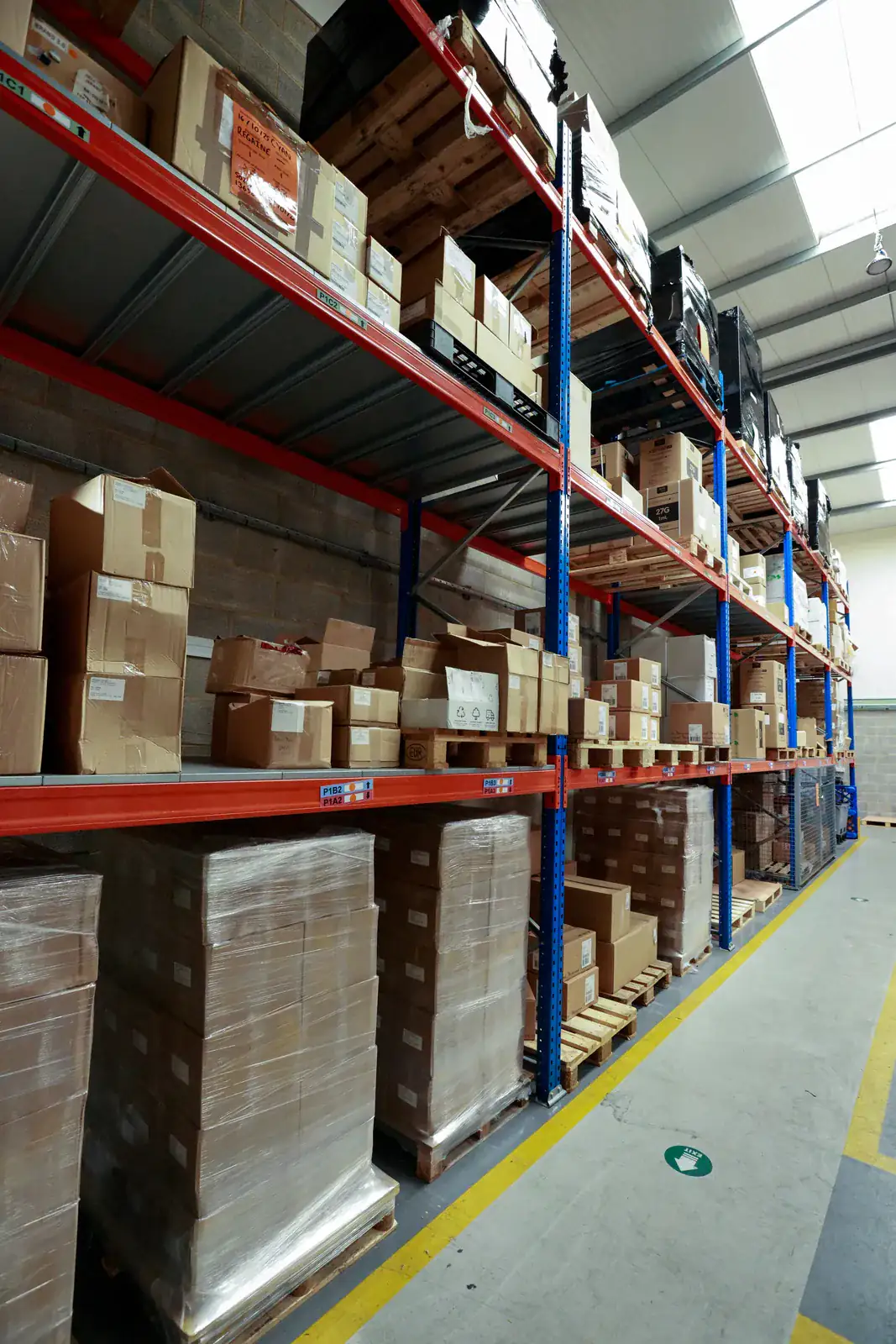
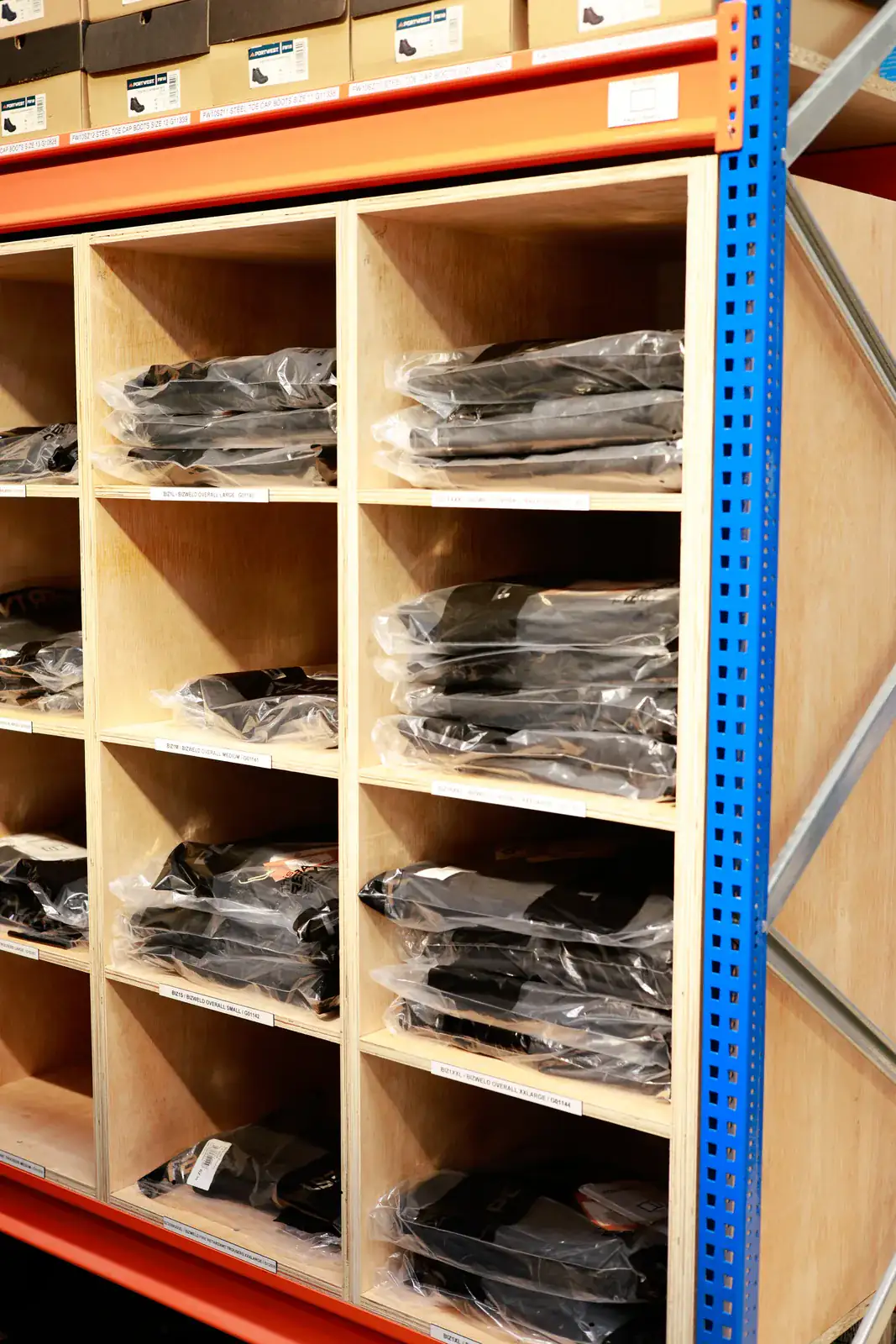
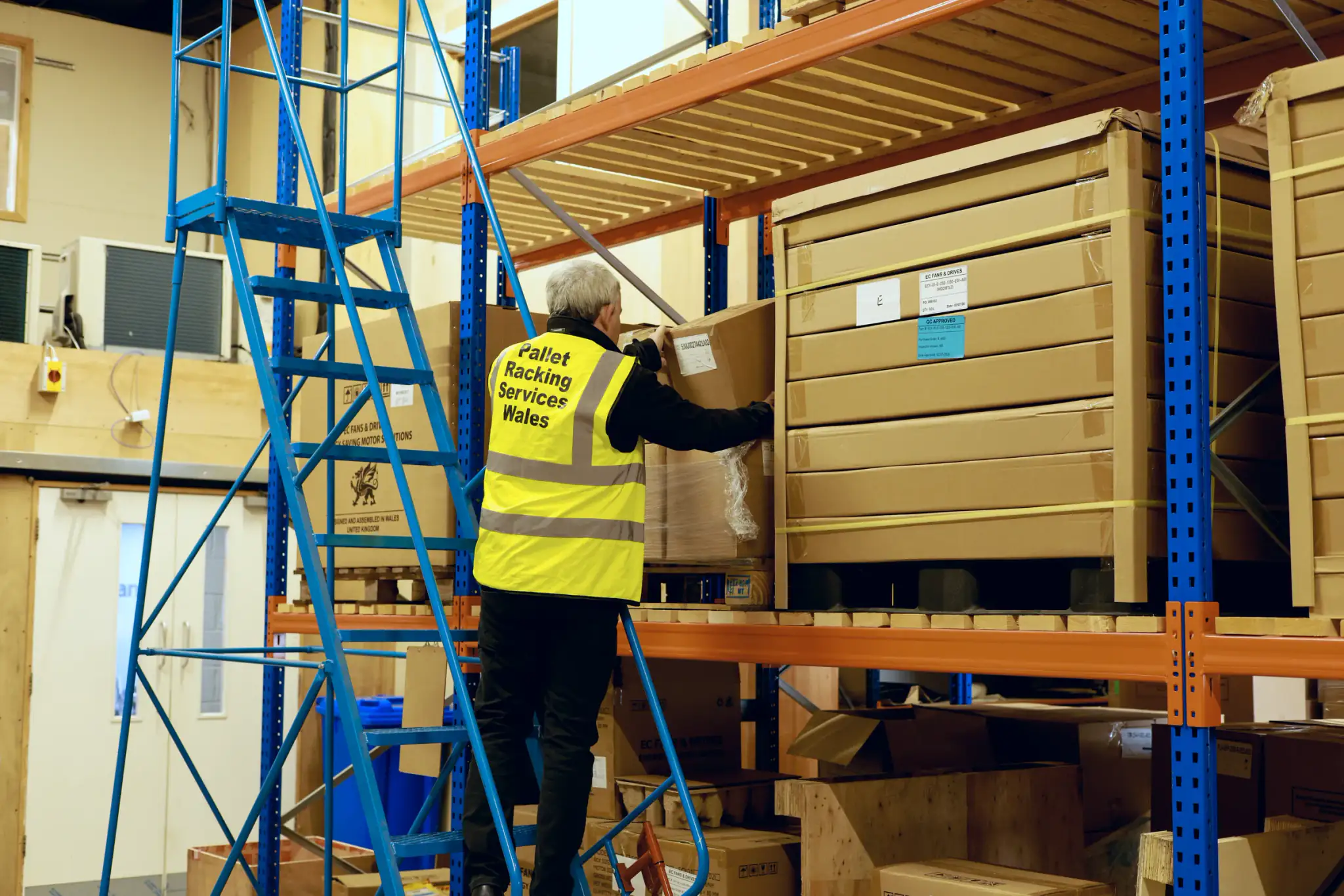
Light duty, boltless, wire and mobile shelving.
Not every store is an industrial one. Offices, stockrooms, archives, medical stores and clean or damp rooms need lighter steel shelving, and the right variant depends as much on the room as on the load.
Where airflow and light penetration matter, an open wire deck beats a solid one: it does not trap moisture, it lets light reach the lower levels, and it is quick to clean. Where floor space is the constraint, mobile shelving on floor tracks closes the access aisles until they are needed.
Boltless shelving
Chrome wire shelving
Mobile shelving
Office and archive shelving
Shelving capacity, by type and duty.
Published figures where a published figure exists. Ratings for a specific configuration always come from the manufacturer's data and are written on the load notice for that run.
| Attribute | Light duty and wire | Industrial steel | Longspan | Carton live |
|---|---|---|---|---|
| Loaded by | Hand | Hand | Hand, sometimes with lifting aids | Hand, from the rear |
| Typical stock | Office, retail, medical, food | Parts, boxed goods, tooling | Bulky, mixed size, archive boxes | Fast moving cartons |
| Load per level | Per manufacturer data | Per manufacturer data | Around 200, 400 or 800kg | Per lane, per manufacturer data |
| Level adjustment | Clip or slot positions | Fully adjustable pitch | Adjustable beam levels | Fixed inclined lanes |
| Deck options | Steel, wire | Steel or chipboard | Chipboard, steel or mesh | Roller track |
| Cladding and accessories | Limited | Clad, drawers, doors, dividers | Open | Pick face labels |
| Rotation | Manual | Manual | Manual | FIFO automatic |
Shelving families compared. Longspan tiers are typical per level figures; other ratings are confirmed per configuration.
- Loaded by
- Hand
- Typical stock
- Office, retail, medical, food
- Load per level
- Per manufacturer data
- Level adjustment
- Clip or slot positions
- Deck options
- Steel, wire
- Cladding and accessories
- Limited
- Rotation
- Manual
The longspan tiers are typical figures for standard bay widths. Wider bays, heavier decks and point loads change the rating, so the survey confirms it for your layout.
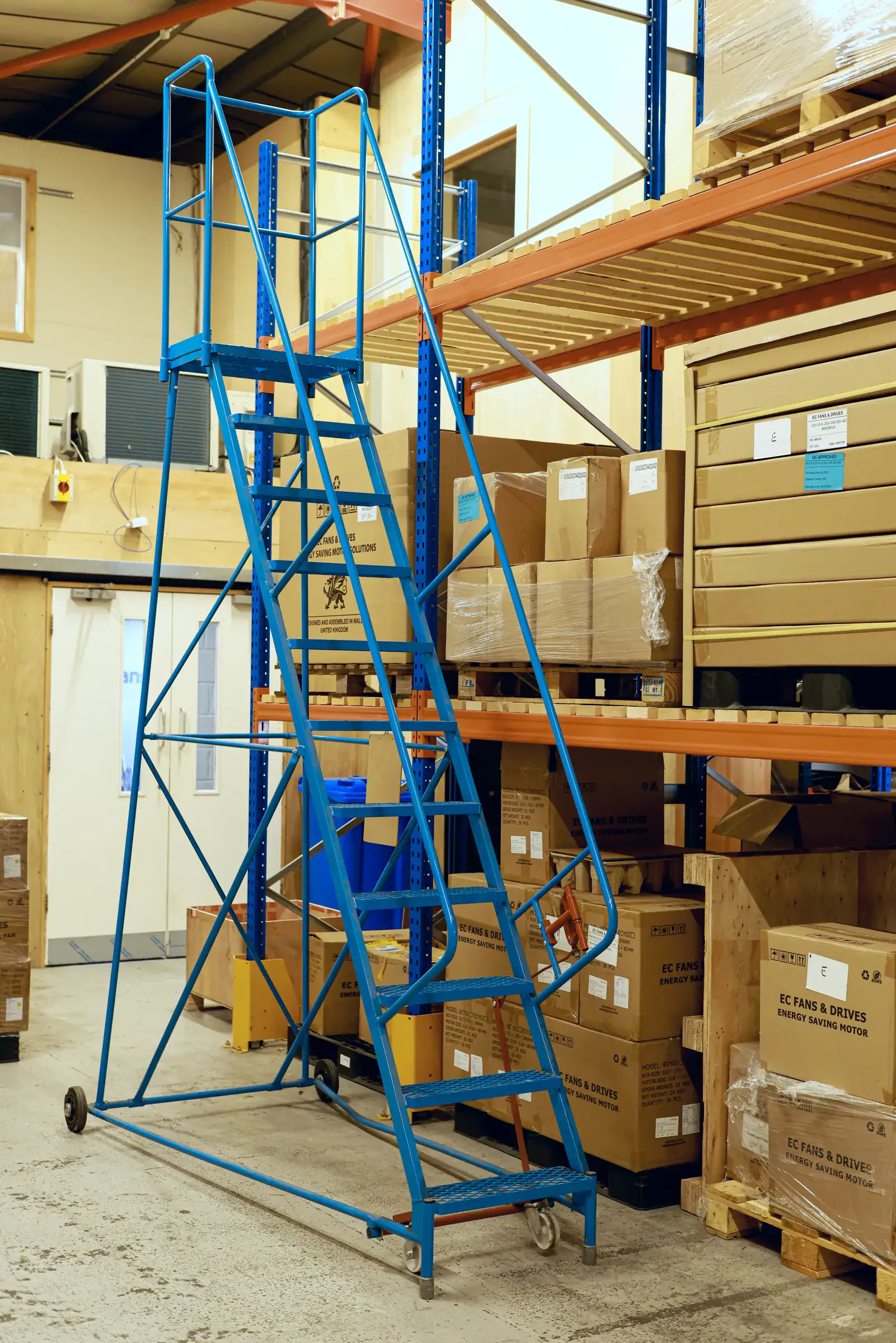
Where shelving works hardest.
The building and the people using it decide the variant as often as the stock does.
- Warehouse pick faces and goods in areas, where steel shelving sits beside pallet racking
- Engineering and maintenance stores holding spares, tooling and consumables
- Stockrooms and retail back rooms that need quick reconfiguration
- Archive and records stores, where mobile shelving recovers aisle space
- Medical, laboratory and food stores, where wire decks keep air moving and surfaces cleanable
- Offices and mailrooms, where clad shelving keeps shared spaces tidy
Warehouse shelving and racking, in one layout.
Most buildings need both. The cost of getting the boundary wrong is paid every day in pick walks and wasted height.
Reserve above, pick below
When shelving is the wrong answer.
Shelving is cheap to buy and easy to misuse. These are the cases where we will recommend something else.
- Anything loaded by forklift. Shelving is not designed for mechanical handling, so palletised stock belongs on adjustable pallet racking.
- Long lengths of bar, tube or timber. Uprights get in the way, which is what cantilever racking is for.
- Very fast moving cartons picked all day. Static shelving makes pickers walk, and carton live storage brings the stock to them.
- A building with height to spare and nowhere to put more shelving. A mezzanine floor adds a level of floor space rather than a taller bay nobody can reach.
Standard shelving bays, ready to order
Longspan and steel shelving bays, add-on bays and spare levels are stock lines in the racking and shelving department of the online store: standard bays, extension bays, beams, longspan and steel shelving off the shelf. Designed layouts still come through the free survey.
- Racking & shelving (opens the online store in a new tab)
- Storage (opens the online store in a new tab)
- Safety & premises (opens the online store in a new tab)
- Trucks & trolleys (opens the online store in a new tab)
- Steps & ladders (opens the online store in a new tab)
- Lifting, drum & cylinder (opens the online store in a new tab)
- Workshop & environment (opens the online store in a new tab)
- Office & mailroom (opens the online store in a new tab)
Shelving questions, answered.
If stock is loaded and picked by hand, you need shelving. If it arrives on pallets and moves by forklift, you need pallet racking. If it is a mix of bulky, heavy or awkwardly sized items that are not on pallets, you need longspan. That one rule settles most enquiries before anyone draws a layout, and the survey confirms it against the actual stock.
It depends on the shelving type, the shelf width and the deck. Longspan shelving is typically supplied in duty tiers of around 200kg, 400kg and 800kg per level. Industrial steel shelving and light duty shelving carry their own ratings per shelf, which are taken from the manufacturer's data for the exact configuration and written on the load notice. Never estimate a shelf rating from the look of the steel.
Longspan uses beams spanning between frames to create wide open bays, so it suits bulky and mixed sized items and heavier loads per level. Industrial steel shelving uses bolted frames with shelves fixed at close, fully adjustable pitches, so it suits smaller items, parts and boxed goods, and can be clad and fitted with drawers, doors and dividers.
No. Shelving is designed to be loaded by hand, level by level. Racking is designed to be loaded by mechanical handling equipment, usually with pallets. Many sites need both, and the boundary between them is longspan, which carries heavier hand loaded and bulky items without committing to pallet positions.
Chrome wire shelving is the usual choice where airflow and light penetration matter, for example cold rooms, food stores, medical stores and clean areas, because the open wire deck does not trap moisture or dust. Mesh decks on longspan give a similar effect at heavier duty. The deck choice is confirmed against cleaning regimes and any sprinkler design at survey.
Yes. Longspan and industrial steel shelving are modular. Add-on bays share a frame with the bay before them, levels reposition along the frame, and runs extend in height and width as the stock grows. Keep the original manufacturer and profile when extending, because components are not interchangeable between brands.
Both. Stock bays can be ordered from the online store for self assembly. Designed layouts, mixed shelving and racking schemes, mezzanine level shelving and anything over a few bays are surveyed, drawn and installed by our teams, phased around a live operation where needed.
Shelving is work equipment, so it must be suitable, maintained and used within its rated loads. Damaged frames, missing locking pins and overloaded levels should be reported and dealt with in the same way as racking. Longspan and heavy duty shelving are commonly included in the annual racking inspection, and load notices should be displayed on every run.
Tell us how the stock is handled and we will tell you what fits.
Item sizes, weights and how often each line is picked are enough to choose between shelving, longspan and racking. The survey turns that into a measured drawing and a price.