Warehouse storage solutions. Chosen by how your stock moves.
Every warehouse storage system is a trade-off between how many units fit, how quickly each one can be reached, and the trucks or hands that move them. We supply and install the full range, so the recommendation follows the stock rather than the catalogue.
Hand loaded means shelving. Palletised means racking. Mixed means longspan.
- Racking systems
- 9
- Shuttle lane depth
- 30 to 50
- Longspan duty tiers
- 200 to 800kg
- Racking lead time
- 4 to 8 wks
Pallet shuttle systems, where density meets flow.
High density storage removes aisles and stores pallets many deep, which creates an access problem. A battery powered shuttle runs the lane so the forklift stays at the face. We are the Wales distributor for Spacemaker Systems semi-automated pallet shuttles.
- Lane depth, typical
- 30 to 50
- Max pallet load
- 1500kg
- Freezer rating, two-way
- −40°C
- Rotation
- FIFO or LIFO
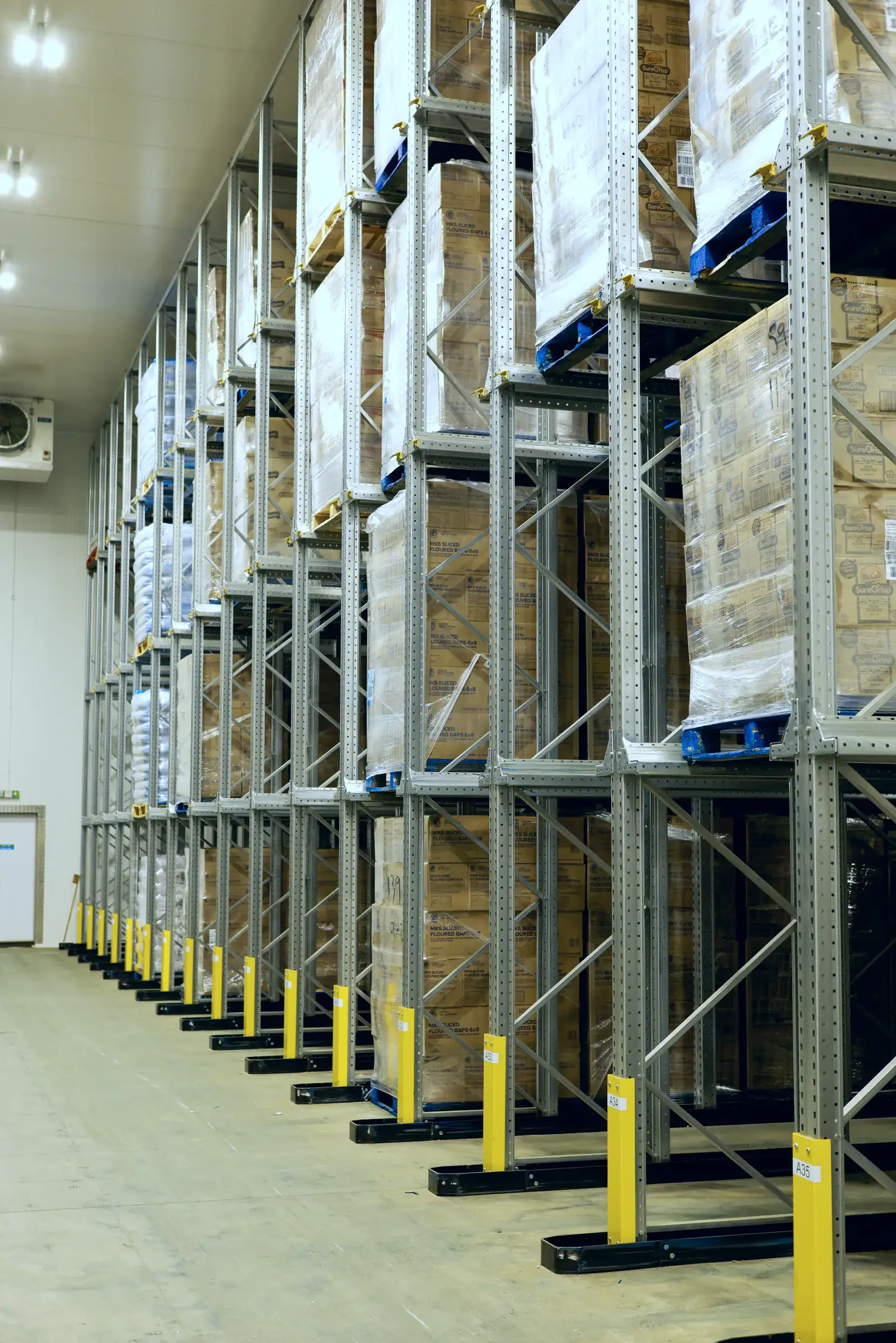 Pallet shuttle systems
Every storage product we supply.
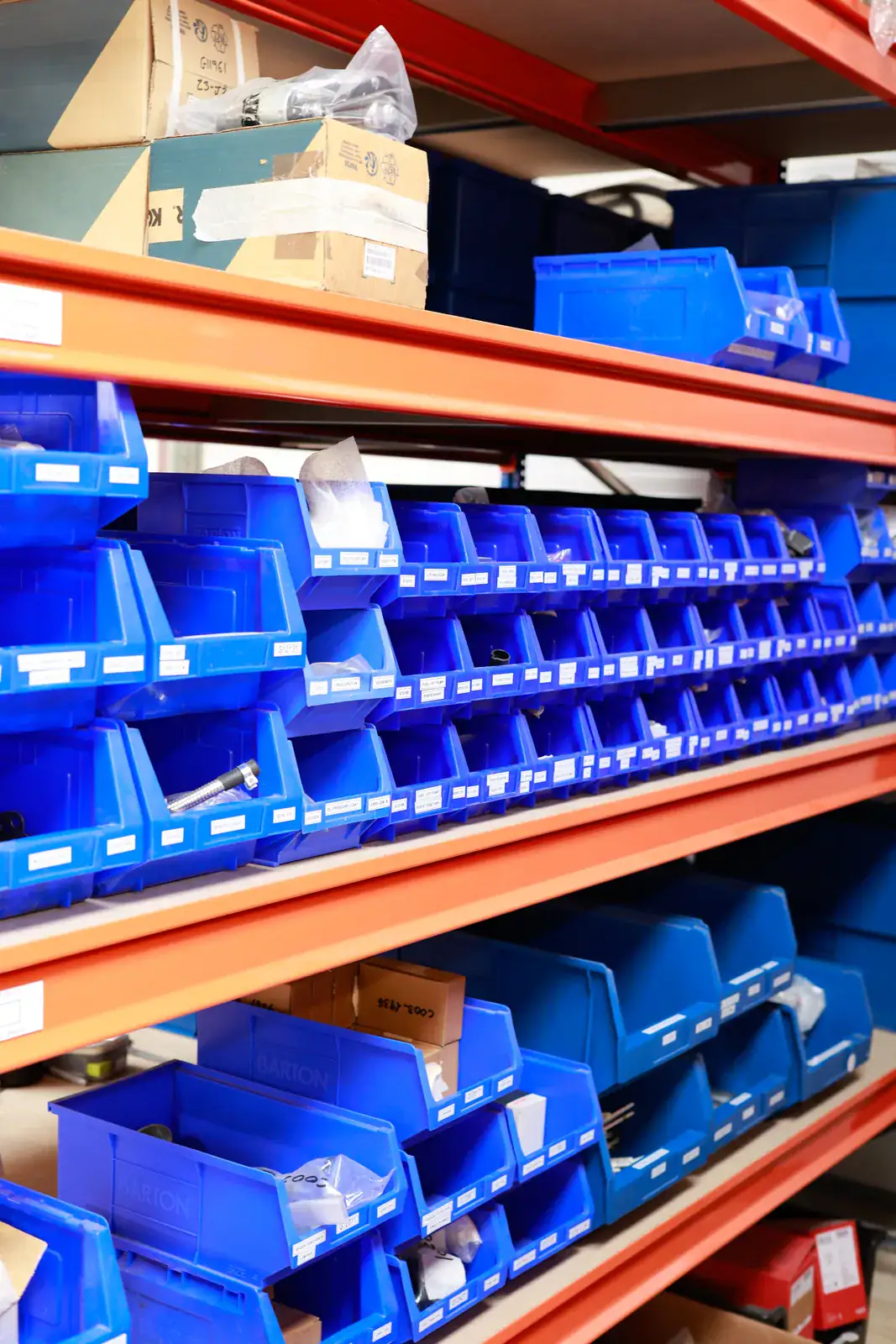
Racking for pallets, shelving for hands, floors for the air above, and the kit that keeps the building working around them.
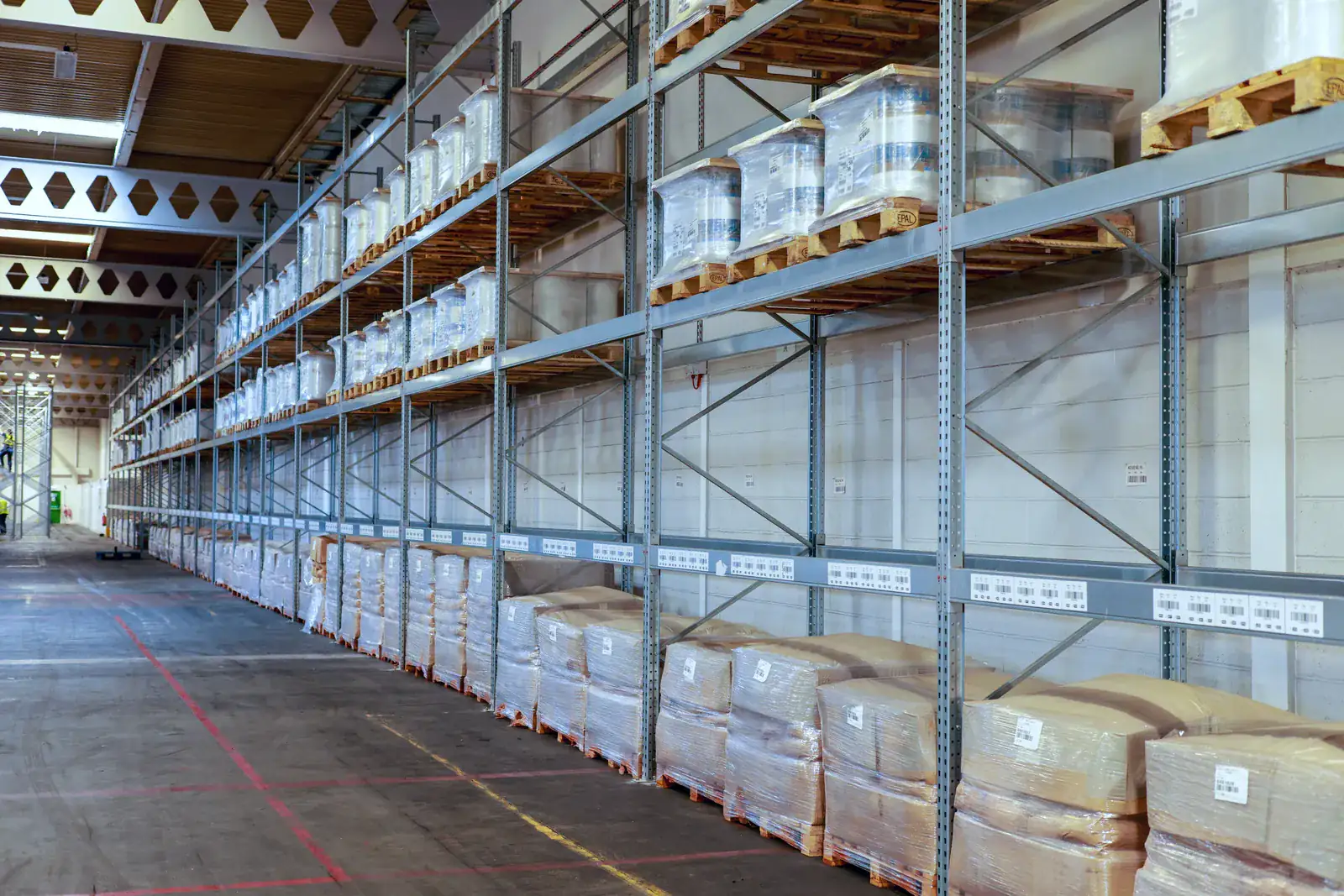
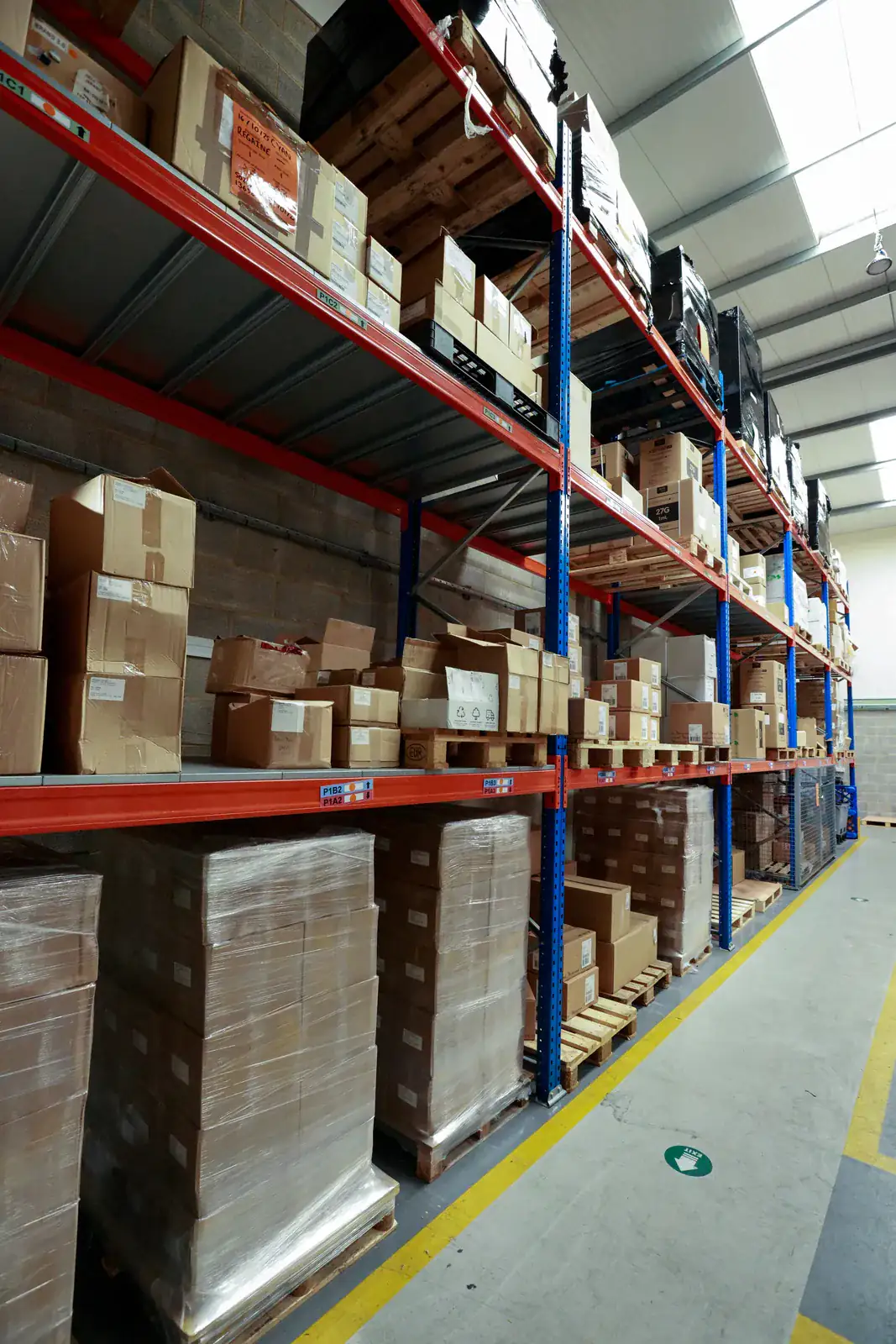
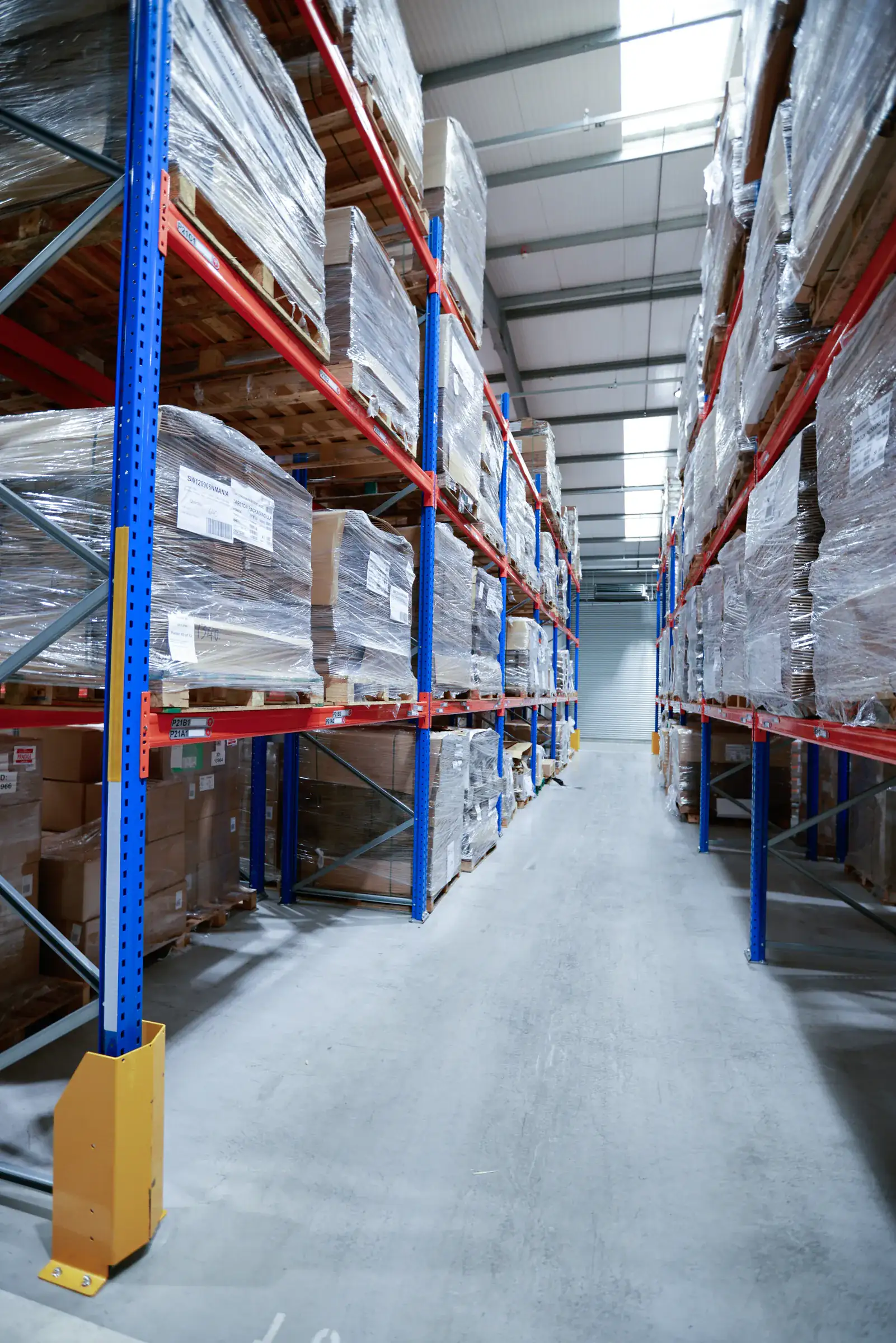
The nine pallet racking systems.
Each one is a different answer to the same question: how many pallets of each product do you hold, and in what order must they leave.
Not sure where to start? The pallet racking overview explains each system in plain terms, and the warehouse space calculator gives a first capacity figure from your building dimensions.
How to choose, in one line.
The handling method settles the product family before anyone draws a layout.
Hand loaded and hand picked
Shelving.
Palletised and forklift handled
Racking.
Mixed, bulky or varied sizes
Longspan.
Then trade density against selectivity.
Once pallets are on racking, every extra position bought with depth costs you direct access. The table shows where the main families sit. The full comparison adds aisle widths per truck class and rotation rules for every system.
| Family | Selectivity | Density | Rotation |
|---|---|---|---|
| Adjustable pallet racking | 100% | Low | FIFO or LIFO |
| Narrow aisle racking | 100% | Medium | FIFO or LIFO |
| Drive-in and drive-through racking | Per lane | Very high | LIFO or FIFO |
| Double deep racking | 50% | Medium | LIFO |
| Push back racking | Per lane | High | LIFO |
| Pallet live and gravity flow racking | Per lane | High | FIFO |
| Mobile pallet racking | 100% | Very high | FIFO or LIFO |
| Pallet shuttle lanes | Per lane | Very high | Software selected |
Density against selectivity for the pallet storage systems. Drive-in is LIFO; drive-through is FIFO.
- Adjustable pallet racking
- 100%
- Narrow aisle racking
- 100%
- Drive-in and drive-through racking
- Per lane
- Double deep racking
- 50%
- Push back racking
- Per lane
- Pallet live and gravity flow racking
- Per lane
- Mobile pallet racking
- 100%
- Pallet shuttle lanes
- Per lane
Stock lines ship from the online store
Standard shelving bays, lockers, bin trolleys, steps and handling equipment are priced and ready to order at palletrackingwales.shop. Designed systems still come through the free survey, because a layout has to be measured before it can be priced.
- Racking & shelving (opens the online store in a new tab)
- Storage (opens the online store in a new tab)
- Safety & premises (opens the online store in a new tab)
- Trucks & trolleys (opens the online store in a new tab)
- Steps & ladders (opens the online store in a new tab)
- Lifting, drum & cylinder (opens the online store in a new tab)
- Workshop & environment (opens the online store in a new tab)
- Office & mailroom (opens the online store in a new tab)
Storage questions, answered plainly.
Start with how the stock is handled. Hand loaded and hand picked goods belong on shelving. Palletised goods moved by forklift belong on pallet racking. Mixed, bulky or long items that are too heavy for shelving but not on pallets belong on longspan. Inside pallet racking the choice then turns on pallets per SKU, rotation rules and the trucks you run, which is what the racking system comparison sets out side by side.
Selectivity is the share of pallets you can reach without moving another one. Adjustable pallet racking is 100 percent selective but gives a large share of the floor to aisles. Density is how many pallets fit in the space. Drive-in, push back, mobile and shuttle systems raise density by storing pallets several deep, which lowers selectivity because each lane holds one product. Every system is a position on that trade-off.
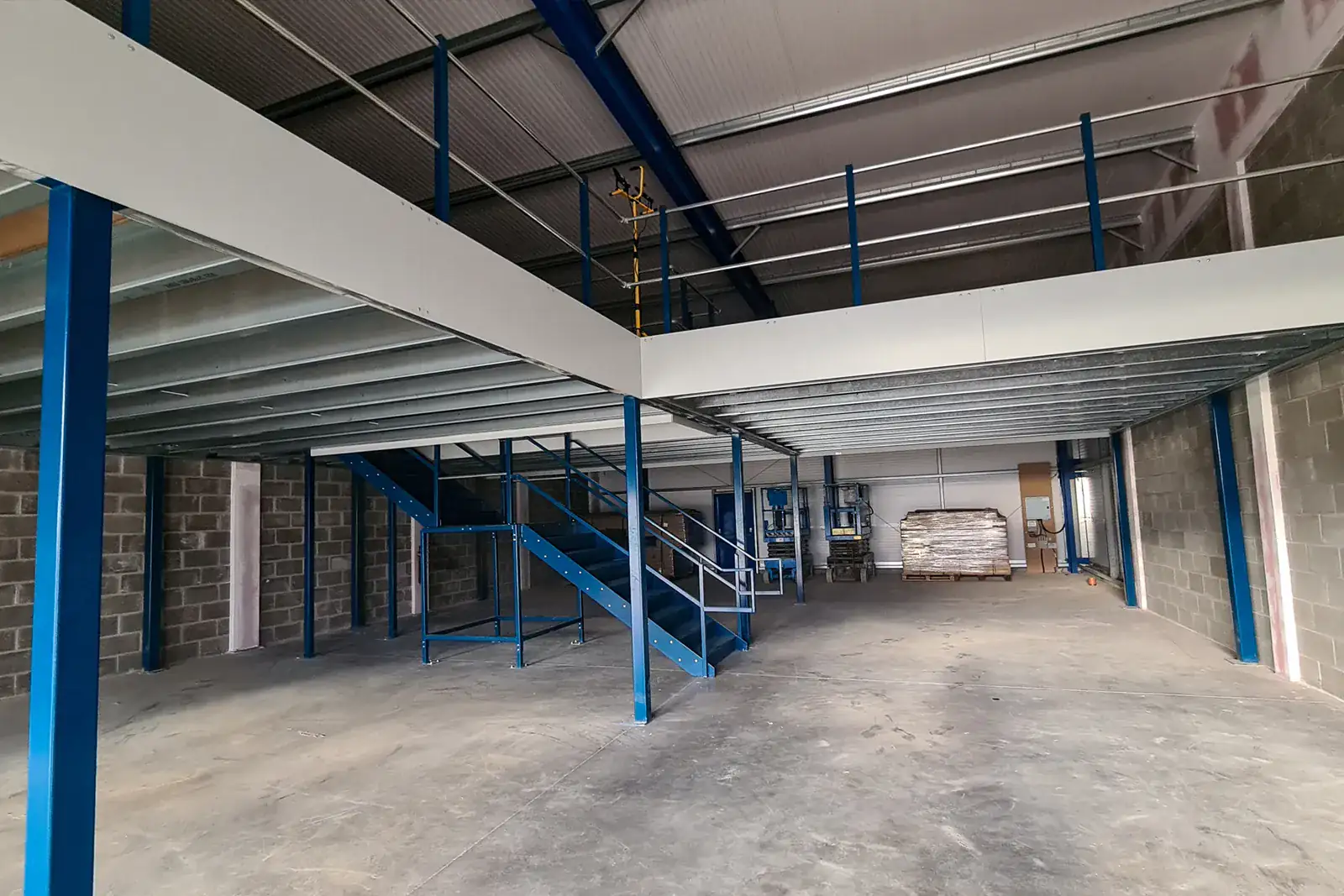
Yes, and most buildings should. A common layout runs adjustable or narrow aisle racking for the long tail of SKUs, a deep lane block for the few high volume lines, longspan or shelving for hand picked parts, and a mezzanine over the dispatch area. The survey drawing shows each zone with its own capacity figure.
Most racking and shelving projects run 4 to 8 weeks from order, and are phased around a live operation where needed. Pallet shuttle systems run 12 to 16 weeks from order, longer for multi-level systems. Lockers, PVC curtains and handling equipment are usually shorter, and stock lines from the online store ship directly.
Yes. Used pallet racking, longspan shelving and PVC curtains are all available, checked before sale and matched to the system they are going into. Components are not interchangeable between manufacturers, so used stock is identified by brand and profile and never sold as a mixed run.
Yes. The survey produces a measured drawing, a CAD layout, a capacity figure and a priced quotation, plus the alternative routes and phasing options. There is no charge and no obligation, and you keep the drawing whatever you decide.
Send us the clear height and the stock profile.
Those two facts narrow the choice to one or two systems before anyone visits. The survey then turns that into a measured drawing, a capacity figure and a price.