
Pallet racking safety. The duty sits with the operator.
Racking is work equipment. Whoever uses it must keep it in safe condition, check it, have it inspected and keep vehicles and people apart around it. Most of that is cheap. All of it has to be written down.
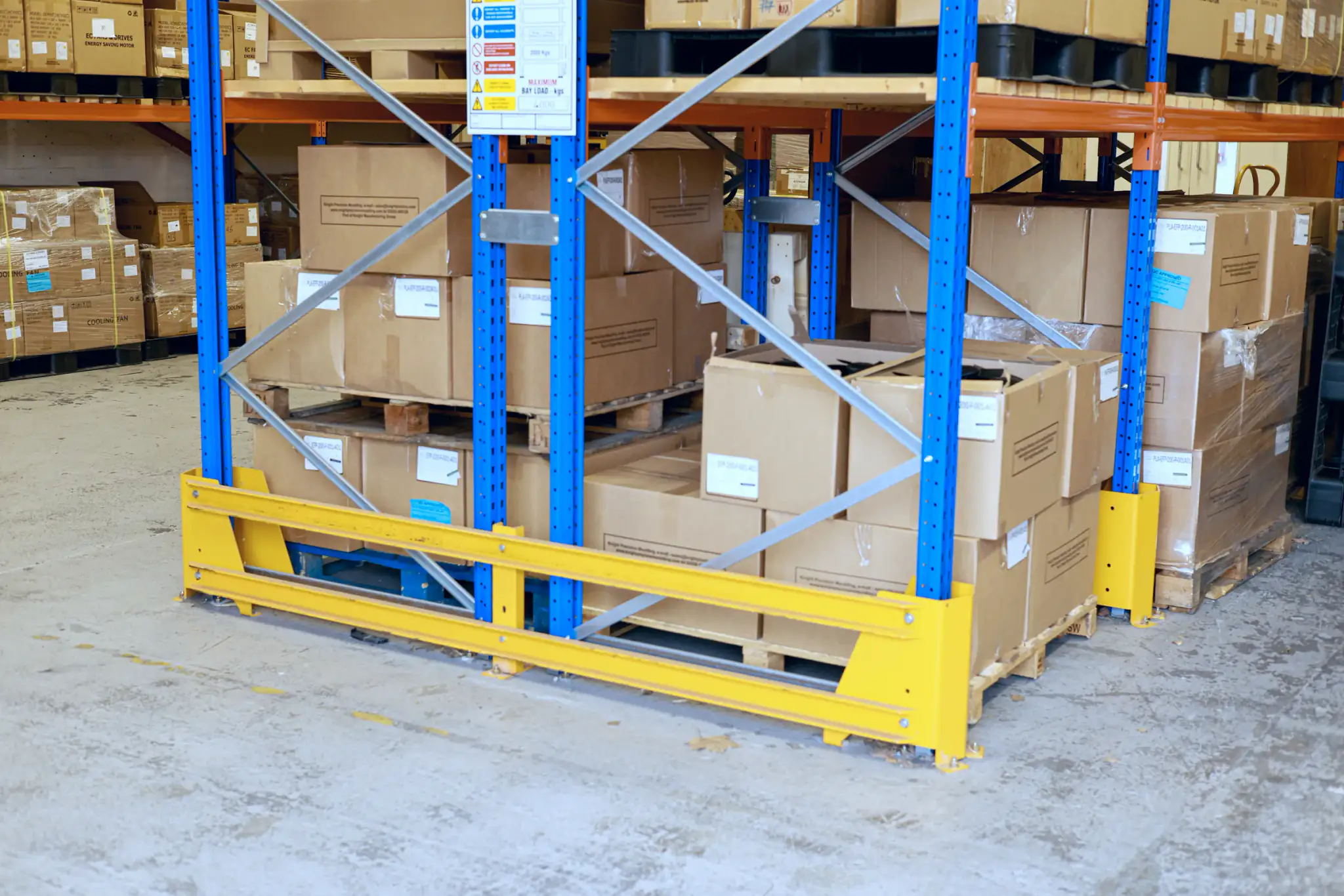
Protection, containment and segregation are the physical part of the duty.
- Racking is
- Work equipmentPUWER 1998
- Expert inspection
- 12 monthsAt least, HSG76
- Recorded checks
- RegularOften weekly
- Risk categories
- Red · amber · green
Protection, containment and segregation.
Four ways of keeping vehicles, stock and people where they belong. Each page covers what it is, where it goes and when it is the wrong answer.
The duty holder overview.
Three pieces of law and guidance, read together. None of them sets a millimetre figure for you. They set the duty, and your inspector applies the manufacturer's data to your racking.
| Source | What it requires | What it means on your floor |
|---|---|---|
| PUWER 1998 | Work equipment is suitable, maintained in safe condition and inspected at suitable intervals by a competent person | Racking is work equipment. Damage is repaired, inspections are recorded, and use stays within the load notice |
| Workplace Regulations 1992 | Traffic routes are organised so pedestrians and vehicles circulate safely, and people are protected from falling objects | Segregated walkways, barriers at crossings, and rear containment where runs back onto routes |
| HSG76, Warehousing and storage | HSE guidance on how warehouses meet those duties, including the person responsible for racking safety and the three levels of check | Appoint a person, run recorded visual checks, report damage at once, and book an expert inspection at least every 12 months |
| EN 15635 | Use and maintenance of steel static storage systems, including inspection and red, amber and green damage categories | The framework your inspector grades findings against, using limits from the manufacturer's data |
| EN 15512, EN 15620, EN 15629 | Design of racking, tolerances and clearances, and specification | What the racking was designed to carry, and the gaps it needs to stay safe in use |
What each regulation or guidance document asks of a warehouse operator, in plain terms.
- PUWER 1998
- Work equipment is suitable, maintained in safe condition and inspected at suitable intervals by a competent person
- Workplace Regulations 1992
- Traffic routes are organised so pedestrians and vehicles circulate safely, and people are protected from falling objects
- HSG76, Warehousing and storage
- HSE guidance on how warehouses meet those duties, including the person responsible for racking safety and the three levels of check
- EN 15635
- Use and maintenance of steel static storage systems, including inspection and red, amber and green damage categories
- EN 15512, EN 15620, EN 15629
- Design of racking, tolerances and clearances, and specification
The three levels of check are covered in full on the racking inspections page. The awareness course that makes in-house reporting reliable is on the rack safety training page.
Where racking gets hurt.
Most damage is predictable. It happens in the same few places on almost every site, which is why protection goes there first.
Protection is one stage of a loop.
Each stage produces the next. Repeated damage in the same location is a symptom, and the cause is usually layout, systematic overloading or truck and aisle geometry.
- Step 1InspectAnnual expert inspection, plus the recorded visual checks your appointed person runs.
- Step 2RepairDamaged components replaced like for like across brands, never straightened.
- Step 3Protect (this page)Rack protection inside, Armco barriers in the yard, fitted where the strikes actually happen.
- Step 4TrainAwareness course so the people who see damage first can classify and report it.
- Step 5Re-inspectAnnual date set at handover, so nothing lapses quietly.
Racking regulations, answered.
Annual inspections booked 12 months ahead
Start with the report.
An expert inspection gives you the graded findings, the repair quotation and the protection positions from one visit, with your next inspection date set at the same time.