Pallet rack repair. Replaced like for like, never straightened.
Inspection finds the damage. Repair is the part that makes the report go away. Uprights, beams, bracing, baseplates, decking and safety components replaced across every system type, matched to the manufacturer you actually own.
Most repairs are done bay by bay, with the rest of the run still loaded and working.
- Repair method
- ReplaceNo heat, no welding
- Working unit
- One bayNot the whole run
- Brands identified
- 5+Components never mixed
- Common components
- 1 to 2 wksIndicative lead time
Can it stay in use while it waits?.
The answer is in the risk category, not in how bad the dent looks. Every finding in an expert inspection report is graded, and the grade tells you what to do before the repair team arrives.
If you do not have a report yet and someone has just reported a strike, treat it as red until a competent person has looked at it. Offload the location, keep people and trucks away from it, and tell your person responsible for racking safety.
The millimetre limits behind each grade
Set by your inspector against the manufacturer's design data
We do not publish general dent or bow limits, because the correct figure depends on the profile, the frame and the load it was designed for.
Immediate action
Red risk
Offload and isolate the location now. It does not return to use until the component is replaced.
Unload from the safe side where possible, cordon the bay, and mark it so nobody reloads it on the next shift. Adjacent bays sharing the damaged frame are offloaded with it.Remedy within a period
Amber risk
Continue in use, and remedy within the period stated against the finding in the report.
Once an amber location has been offloaded it should not be reloaded until it has been repaired. If the period lapses without repair, treat it as red.Monitor
Green risk
Acceptable for now. Recorded and re-checked at each recorded visual check.
Green findings are the ones to watch for change. A green mark that grows between checks is information about how that aisle is being driven.
What gets replaced.
The structure is only part of a repair list. Locking pins, load notices and decking are where most reports find the cheap fixes that nobody had got round to.
Every component is replaced with a part made for that system and that frame, and every repaired location is recorded against the original finding, so the next inspector can see what was done and when. Where a repair changes a bay's configuration, the load notice is reissued to match.
Repairs are carried out by SEIRS registered installers working to the manufacturer's instructions and SEMA guidance, with risk assessments and method statements issued before attendance.
Uprights and frames
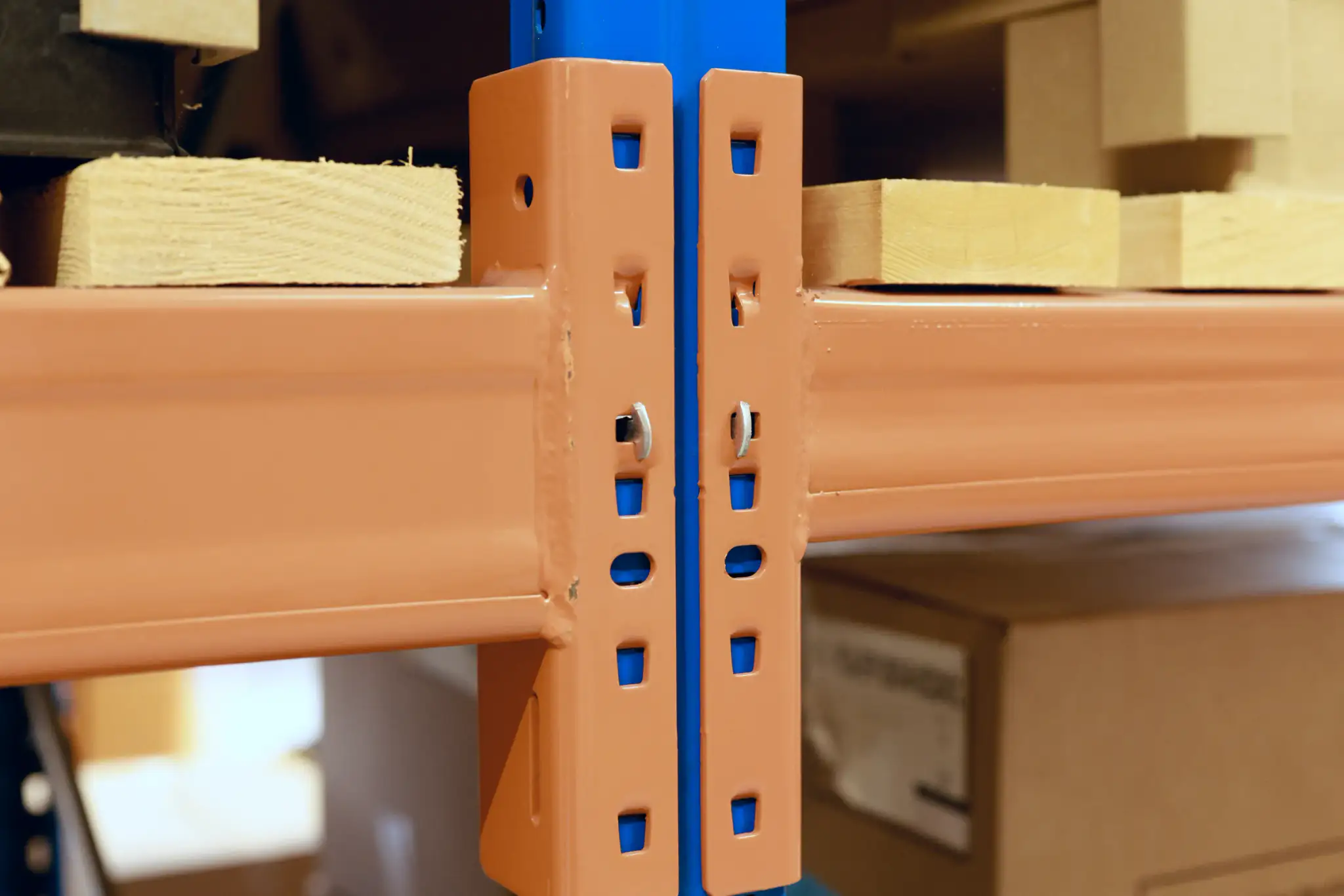
Full upright or complete frame replacement. Manufacturer approved bolt-in base repair sections only where that system's design data allows them.Beams and connectors
Beam pairs replaced at the same level and length, with connectors matched to the upright's hole pattern.Bracing
Horizontal and diagonal bracing replaced to the frame's original pattern. Missing bracing is a finding in its own right.Baseplates and floor fixings
Distorted plates replaced, anchors re-drilled into sound slab, shims corrected where a frame has been levelled badly.Beam locking pins
A safety pin at every beam end. The cheapest item on most lists and the one most often missing.Decking and row spacers
Timber, steel or mesh decking, plus the row spacers that tie back-to-back runs together.Load notices
Reissued wherever a repair or reconfiguration changes what a bay can carry.
Components do not interchange between brands.
A Dexion beam does not belong on a Link 51 upright, even when it appears to hook on. Hole pitch, connector geometry and upright profile differ between manufacturers, and the design capacity of the bay assumes the parts were made to work together.
Older sites rarely know what they own. Racking gets bought second hand, extended over twenty years and inherited with the lease. We identify the system from the upright profile, the connector and the hole pattern before quoting, and source matching components across brands, including discontinued profiles.
Systems we identify and supply for
- Dexion, current and discontinued profiles
- Link 51, current and discontinued profiles
- Apex, current and discontinued profiles
- Esnova, current and discontinued profiles
- Sperrin, current and discontinued profiles
- Mixed installations where previous repairs used the wrong brand
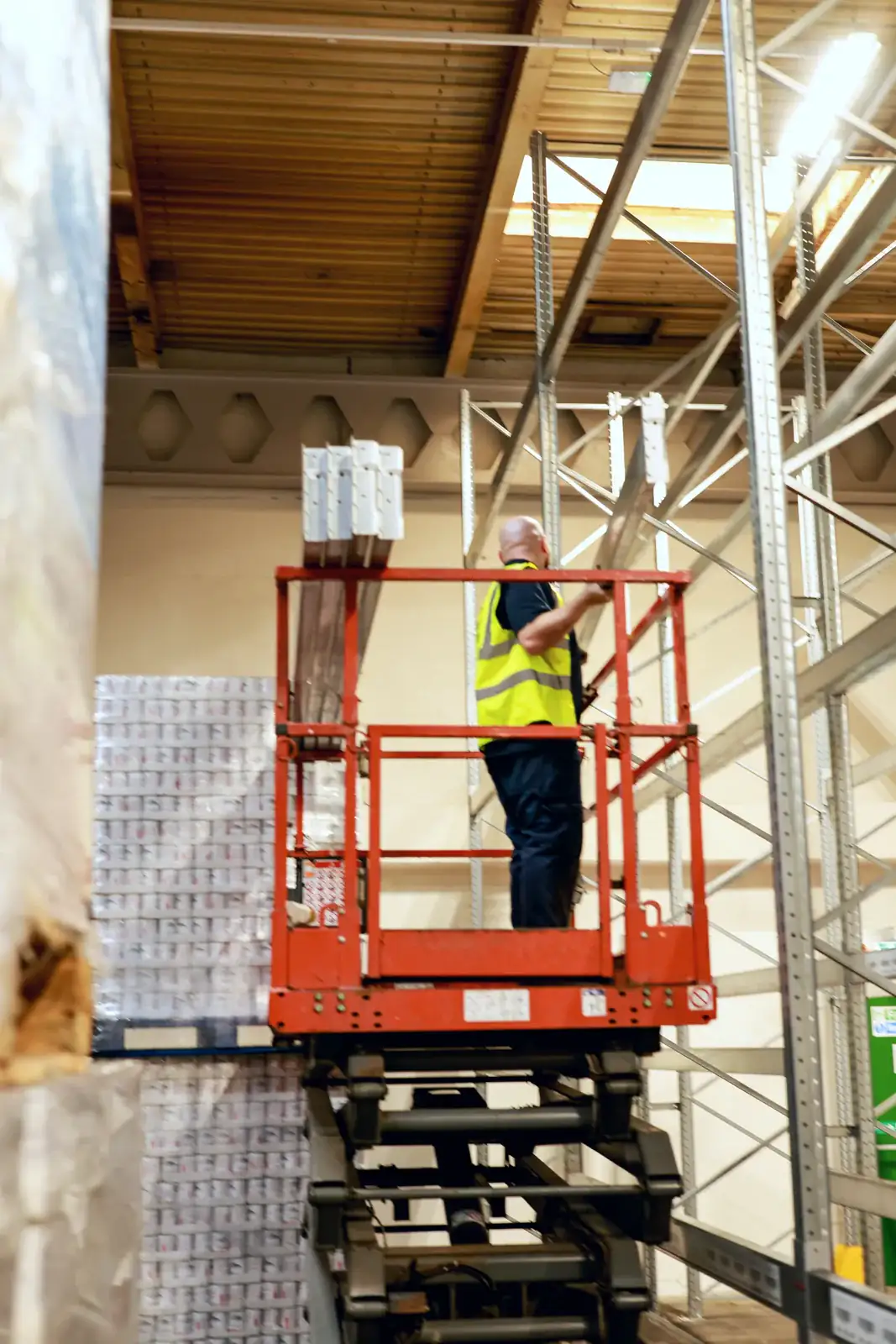
Replaced, never heated, straightened or welded.
Pallet racking uprights and beams are cold-formed steel. Their strength comes partly from the forming process itself, and heat or a straightening press changes that.
- Heating alters the material properties the design capacity depends on
- A straightened section can look true and still carry less than the load notice says
- Field welding introduces brittle zones no inspector can verify by eye
- A replaced component carries the manufacturer's rating again, and the record shows it
If a quotation offers to straighten an upright in place, ask what capacity it will carry afterwards and who is certifying it.
How a repair visit runs.
Most repair lists are completed in one or two days on site. The sequence is the same whether it is one beam or forty components.
- Step 1
Report or photographs
Your inspection report, or photographs and locations if a strike has just happened. Red findings are isolated straight away.
- Step 2
System identification
Manufacturer, profile and connector confirmed, so the parts ordered actually fit.
- Step 3
Quotation and method statement
Each finding priced against its location, with the bays to offload listed in the method statement.
- Step 4
Offload the affected bays
Only the bay and adjacent levels the method statement names. The rest of the run keeps working.
- Step 5
Replace and reload
Components fitted, pins checked, decking refitted, load notices reissued where the configuration changed.
- Step 6
Record against the finding
Each repair logged against the original report reference, ready for the next inspection.
Same bay, third strike this year.
Repeated damage in the same location is a symptom, and replacing the upright every few months treats the symptom. The cause is usually one of three things.
Poor layout
Systematic overloading
Truck and aisle geometry
We record repeat locations from one visit to the next. Where strikes concentrate, the answer is often rack protection at the aisle ends and turning points, and where the aisle is genuinely too narrow for the truck, it is a layout change through a free site survey.
When repair is the wrong answer.
Sometimes replacing components one by one costs more than the problem deserves. We will say so.
The system cannot be identified or supplied
It is overloaded by design
Corrosion, not impact
Inspect, repair, protect, train, re-inspect.
Each stage produces the next. Repeated damage in the same location is a symptom, and the cause is usually layout, systematic overloading or truck and aisle geometry.
- Step 1InspectAnnual expert inspection, plus the recorded visual checks your appointed person runs.
- Step 2Repair (this page)Damaged components replaced like for like across brands, never straightened.
- Step 3ProtectRack protection inside, Armco barriers in the yard, fitted where the strikes actually happen.
- Step 4TrainAwareness course so the people who see damage first can classify and report it.
- Step 5Re-inspectAnnual date set at handover, so nothing lapses quietly.
Racking repair questions, answered.
It depends on the risk category the inspector gave the damage. Red means immediate action: offload the location and isolate it now, and it does not return to use until the component is replaced. Amber means the location can continue in use but must be remedied within the period stated against the finding in the report, and it must not be reloaded once offloaded until the repair is done. Green means monitor: acceptable now, recorded, and re-checked at the next recorded visual check. The damage limits that place a dent in each category are set by your qualified inspector against the manufacturer's design data, not by a general rule.
No. Repairs are usually carried out bay by bay. The affected bay is offloaded, and the adjacent bays and levels are offloaded only as far as the method statement requires for the component being replaced. A beam swap usually needs only that beam level emptied. An upright replacement needs the bays either side of that frame emptied, because both rely on it. Everything else in the run stays loaded and working.
On site, a single beam pair is typically replaced in under an hour and a full upright frame in two to four hours, including offloading and reloading the affected bays. A typical annual inspection repair list of ten to twenty components is usually completed in one or two days. The longer part is often component supply, which depends on the system you own.
As an indicative guide, common current profiles from the main manufacturers are usually available within one to two weeks, and less common or discontinued profiles can take three to six weeks or need a compatible alternative approved for the system. Red risk locations stay isolated while parts are sourced. Lead times are confirmed in writing with the quotation.
No. Damaged cold-formed racking components are replaced, never heated, straightened or welded in the field. Those processes change the material properties that the design capacity depends on, so a straightened upright can look right and carry less load than the notice on the end of the run says it can.
Yes, but identification comes first. Components are not interchangeable between manufacturers, and beam connectors, hole pitch and upright profile differ between Dexion, Link 51, Apex, Esnova, Sperrin and others. We identify the system from the upright profile, the connector and the hole pattern, and source matching components. The rack identification guide shows what to photograph if you want to start the process before we visit.
A report makes the quotation exact, because every finding already has a location, a component and a risk category. Without one, we can quote from photographs and a description, or carry out the inspection and quote the repairs from the same visit. Red risk damage should be isolated immediately in either case.
Replacing it restores the capacity, but repeated damage in the same location is a symptom. The cause is usually layout, systematic overloading, or truck and aisle geometry that leaves too little room to turn. We record repeat locations, fit protection where strikes concentrate, and tell you when the aisle or the truck is the real problem.
Repairs quoted from the same visit as the inspection
Send the report. We will price every line.
One visit produces the inspection report, the repair quotation and the protection recommendations. If you already have a report, send it and we will quote against each finding, with lead times confirmed in writing.