
Distribution warehouse racking. More positions inside the lease you already hold.
Relocating a distribution centre costs years and a new lease. Most near-capacity sites have the positions they need already inside the walls, in aisle width, unused height and lanes too shallow for the stock they hold.
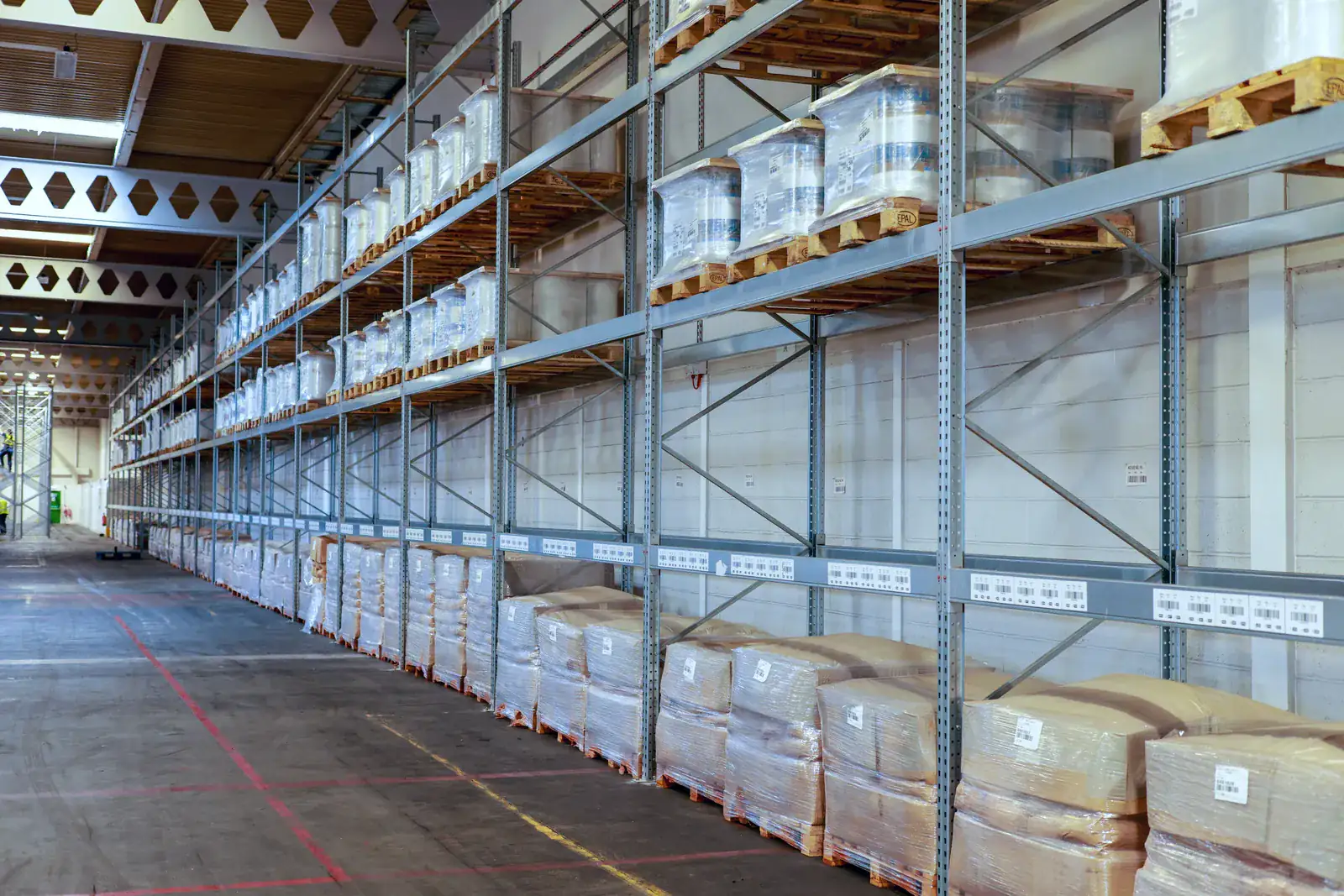
- Port Talbot, positions
- 1,180 → 1,870
- Narrow aisle, guided
- 1.6 to 1.9m
- Shuttle lane depth
- 30 to 50
- Racking lead time
- 4 to 8 wks
Recover aisle floor with a narrow aisle conversion.
Aisle width is set by the truck, not the racking. Change the truck class and every aisle in the building gives floor back, without touching the lease.
| Truck class | Typical aisle width | What it suits |
|---|---|---|
| Counterbalance | 3.5 to 4.2m | Yard and dock work, mixed duties, low racking |
| Reach truck | 2.7 to 3.2m | The standard warehouse truck, racking to mid heights |
| Reach truck, telescopic forks | 2.9 to 3.4m | Double deep racking |
| Articulated truck | 1.8 to 2.1m | Narrow aisle without guidance, works the dock as well |
| Guided narrow aisle truck | 1.6 to 1.9m | Maximum density, very high bay, guided by rail or wire |
Typical working aisle widths by truck class. Confirmed against your fleet, mast and load dimensions at survey.
- Counterbalance
- 3.5 to 4.2m
- Reach truck
- 2.7 to 3.2m
- Reach truck, telescopic forks
- 2.9 to 3.4m
- Articulated truck
- 1.8 to 2.1m
- Guided narrow aisle truck
- 1.6 to 1.9m
Moving from reach trucks to guided narrow aisle trucks takes more than a metre out of every aisle. Across a building with a dozen aisles that is often two or three extra runs of racking, and it usually allows taller racking too because narrow aisle trucks lift higher.
The trade-offs are real: guided trucks need a floor flat to the tolerance their manufacturer specifies, guidance rail or wire, and transfer aisles at the run ends. The survey prices the floor preparation and the trucks alongside the racking so the comparison is honest. See narrow aisle racking.
- Both layouts drawn: current trucks and narrow aisle trucks
- Floor flatness surveyed before a narrow aisle option is quoted
- Clear height and sprinkler clearances checked for taller racking
- Phasing plan that keeps dispatch running throughout
Shuttle lanes where pallets per SKU support the depth.
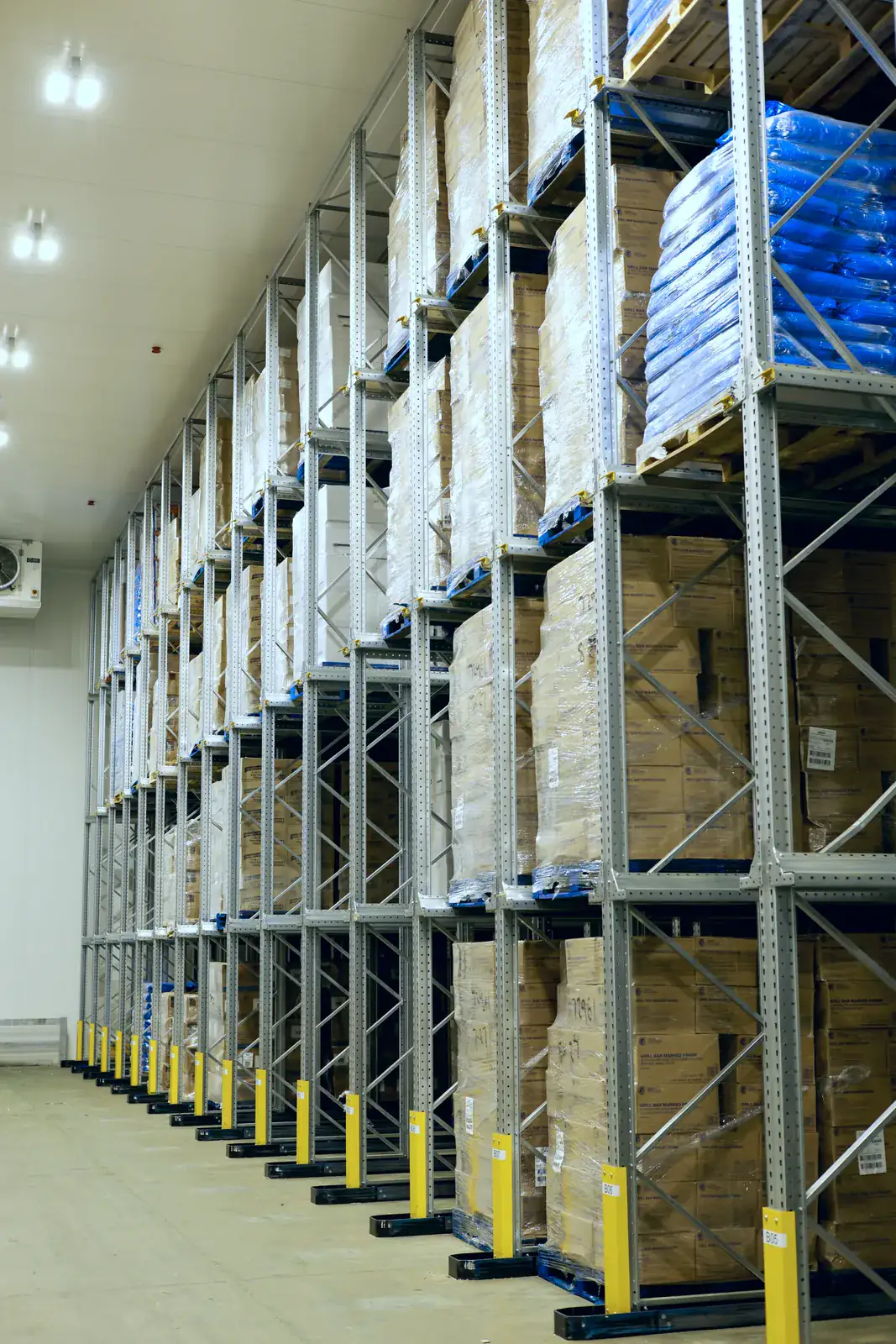
Where a few products move in quantity, depth beats aisles. A pallet shuttle runs lanes 30 to 50 pallets deep while the forklift stays at the face.
Rotation is a software setting, so the same lane runs FIFO for date coded stock or LIFO for bulk. Throughput is around 30 pallets per hour per shuttle at a 40 percent duty cycle, and capacity scales by adding shuttles. It is the wrong product where pallets per SKU are low or case picking is the bottleneck. Read pallet shuttle systems, including when not to buy one.
Multi-client and multi-temperature zoning.
A third party logistics site has to change shape every time a contract starts or ends. The storage has to be reconfigurable, and each client's stock has to be visibly and physically separate.
Mesh partitions and security cages divide clients, bonded or high value stock without blocking sightlines or ventilation. Ambient, chilled and frozen zones under one roof are separated at the openings with PVC strip curtains, and the cold zones follow the ratings on cold storage and food.
Client separation
High value and bonded stock
Temperature zones
Reconfiguration
Phased installation around live dispatch.
Dispatch cannot stop for a racking project. The installation is planned as a sequence of zones, each completed and handed back before the next is started.
- Step 1
Zone the building
Split the layout into sections that can be emptied one at a time.
- Step 2
Decant
Move stock from the first zone into spare or temporary positions.
- Step 3
Install and sign off
Build, check and fix load notices before the zone is reloaded.
- Step 4
Repeat
Out of hours or weekends where dispatch is busiest.
Risk assessments and method statements are issued before attendance and CDM 2015 duty holder roles are agreed in writing. Read more on installation, relocation and dismantling.
Carton live picking.
When full pallets are solved but case and each picking is the bottleneck, the answer is at the pick face, not in the pallet store.
Carton live storage presents stock on inclined roller tracks, replenished from the back and picked from the front, so rotation is first in, first out by gravity and pickers never wait for a replenishment truck. In the Cardiff case study, 96 shelf pick faces became 144 live lanes, installed overnight.
Rack protection in busy aisles.
More trucks, tighter turns and shift pressure mean more strikes. Protection goes where the damage actually happens, and the inspection tells you where that is.
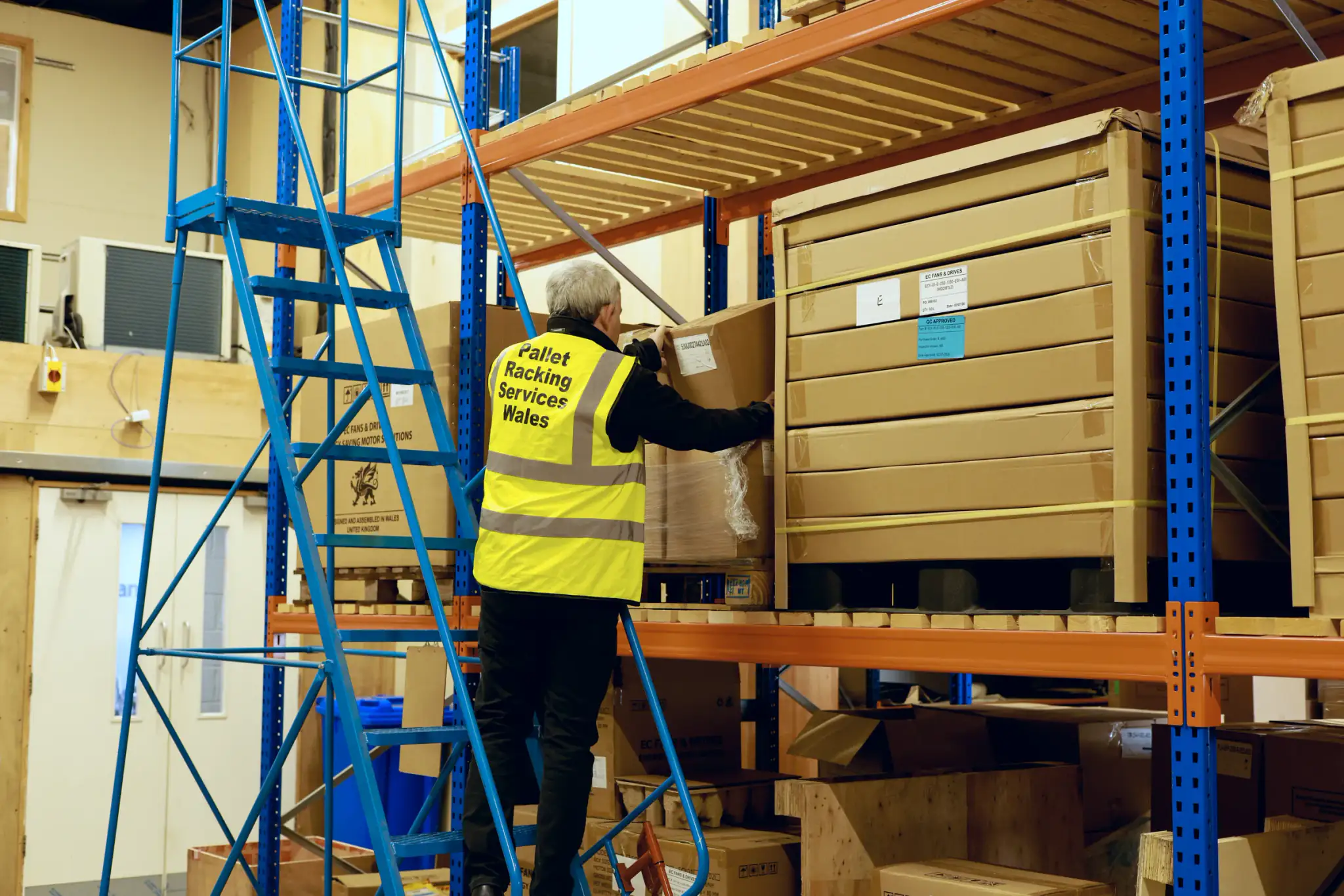
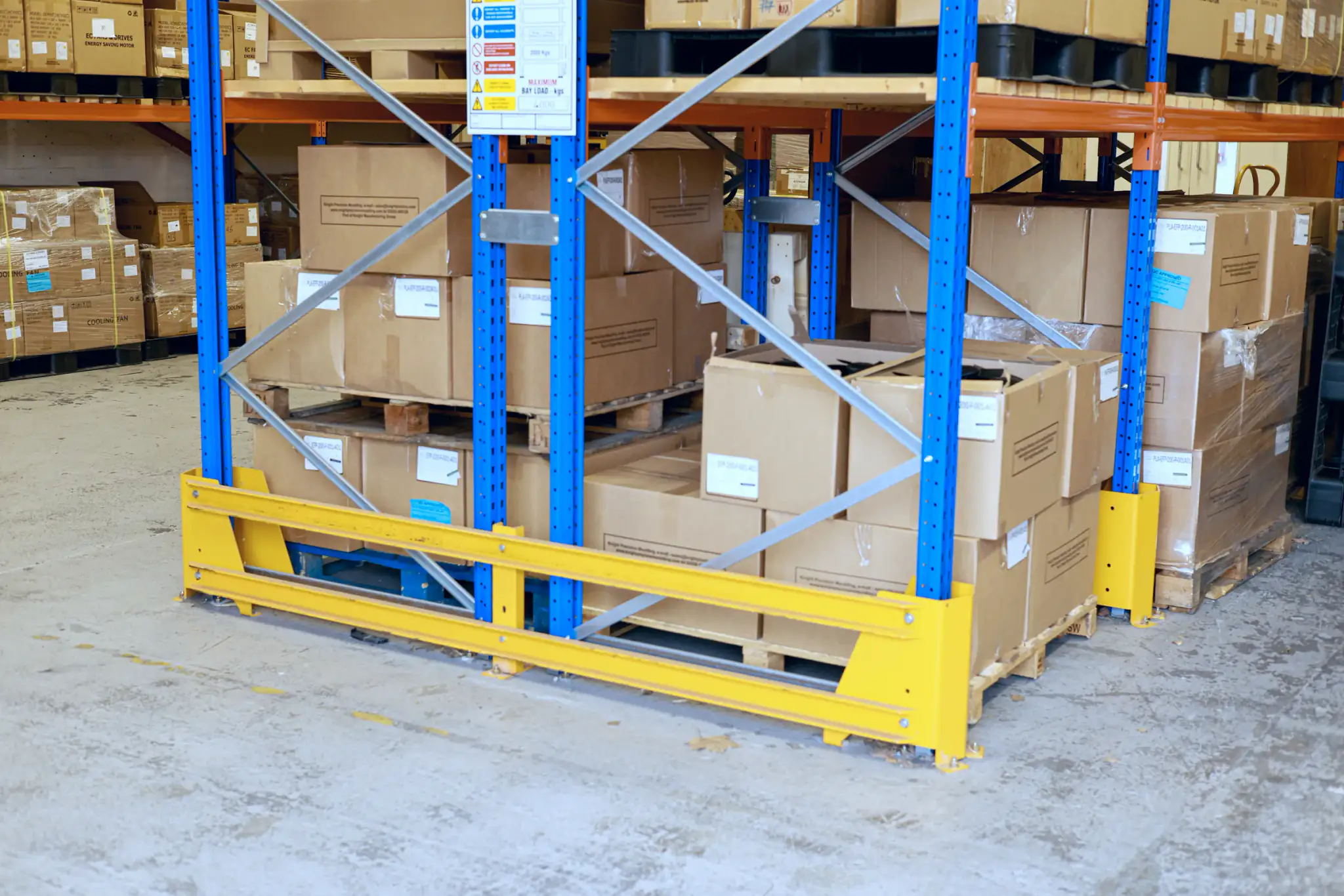
Aisle end barriers, upright protectors on cross aisles and dispatch lanes, and Armco along yard and dock routes. Annual racking inspections grade every finding, and repeated damage in one place is treated as a layout or truck geometry problem rather than a repair line. See rack protection.
Distribution case studies.
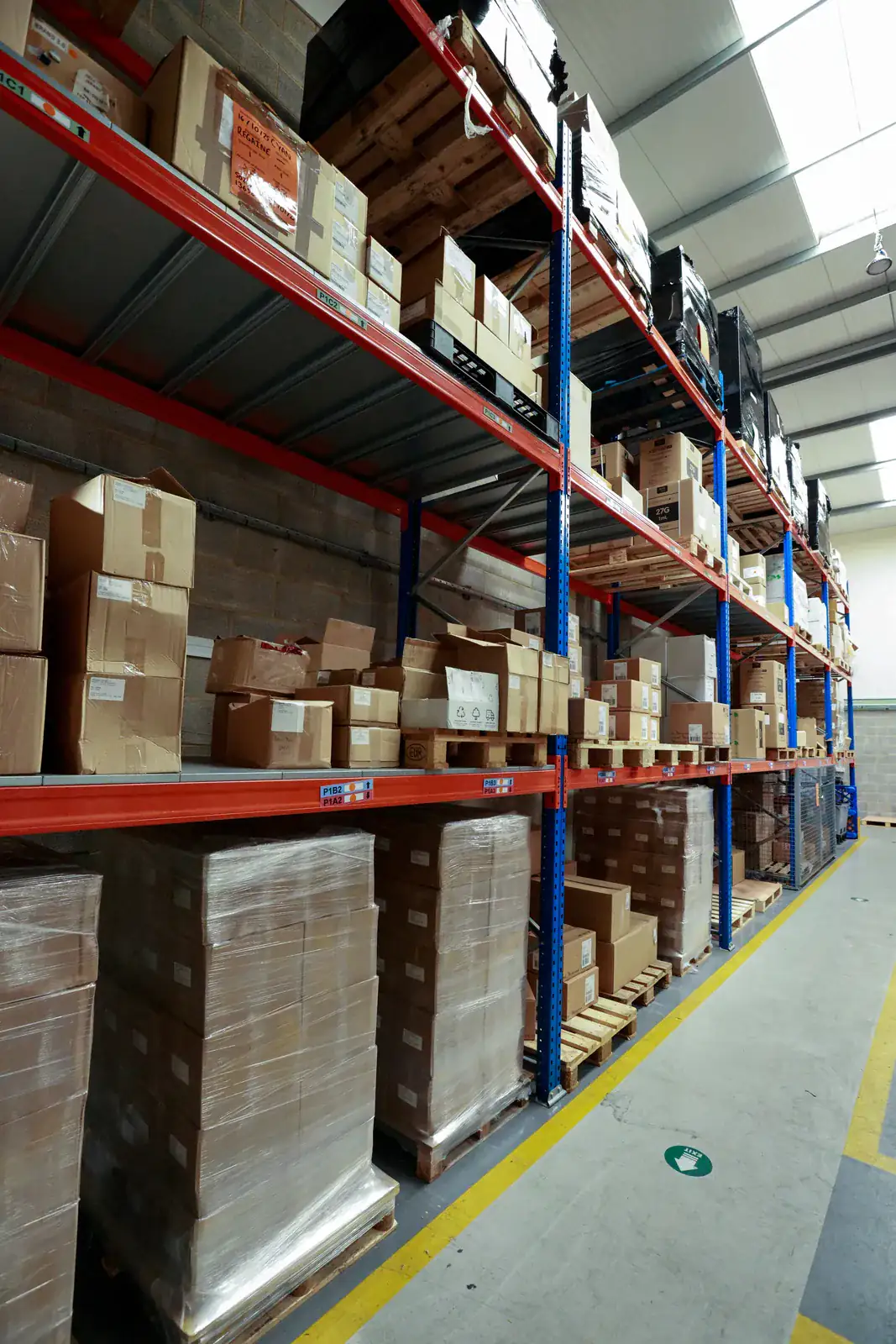
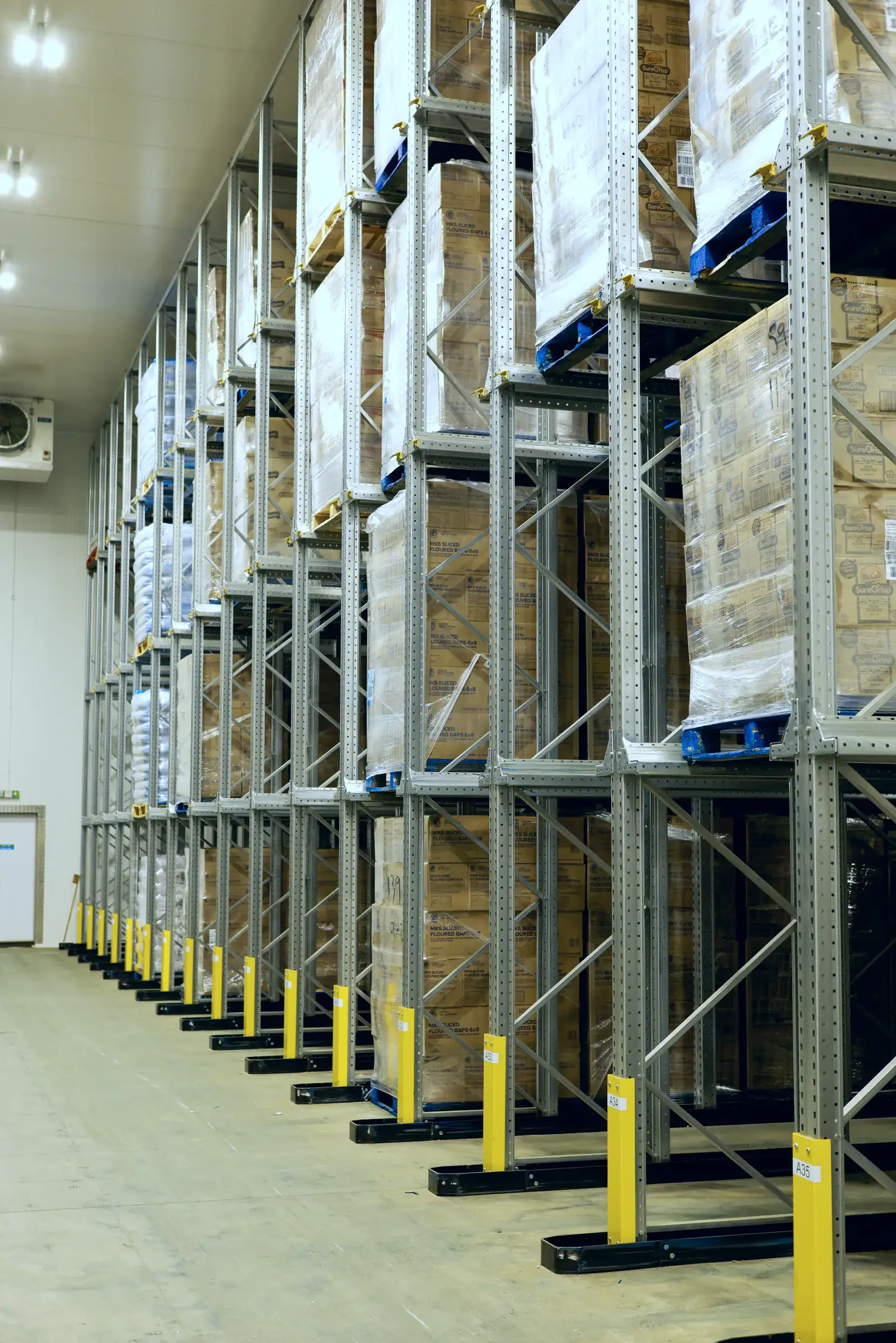
Cardiff and Port Talbot. Positions before and after, floor recovered, and how the work fitted around dispatch.
Distribution racking questions.
It depends on the truck you move from and to. Counterbalance aisles typically run 3.5 to 4.2 metres, reach truck aisles 2.7 to 3.2 metres, articulated truck aisles 1.8 to 2.1 metres and guided narrow aisle trucks 1.6 to 1.9 metres. Taking two metres out of every aisle across a building often adds whole runs of racking. The survey draws both layouts so you can see the difference in positions.
Guided narrow aisle trucks need a floor flat to the tolerance their manufacturer specifies, and many existing slabs need grinding or local repair to meet it. Articulated trucks are more forgiving. The floor is surveyed before a narrow aisle option is quoted, so the cost of preparing it is in the comparison rather than discovered later.
When pallets per SKU are high and full pallets move in and out. A shuttle lane holds 30 to 50 pallets of one product and moves around 30 pallets per hour per shuttle. It is the wrong answer for wide ranges held one or two pallets deep, and for operations whose bottleneck is case picking.
Yes. Installations are phased zone by zone, with stock decanted into completed sections before the next is started, and out of hours or weekend working where needed. The Port Talbot case study was phased across three weekends with dispatch running throughout.
Mesh partitions and security cages divide clients and controlled stock while keeping sightlines and ventilation, and PVC strip curtains separate ambient and chilled zones at the openings. Both reconfigure when contracts change, which matters on fixed-term 3PL contracts.
Where the strikes actually happen: aisle ends, uprights beside cross aisles and dispatch lanes, and anything facing a turning truck. Repeated damage in one location is a symptom of layout or truck geometry, and the annual inspection is where that pattern shows up.
Send us the drawing and the truck list.
Two things decide most distribution layouts: the building dimensions and the trucks you run. A free survey draws your current layout and the alternatives side by side, priced. No charge, no obligation.