Identify your pallet racking. Dexion, Link 51, Apex and the rest.

Components are not interchangeable between manufacturers, so identification comes before any repair, extension or spares order. Four features narrow it down: the slot pattern, the beam connector, the baseplate and the colour. Photograph them, compare against the gallery, or send the photographs to us.

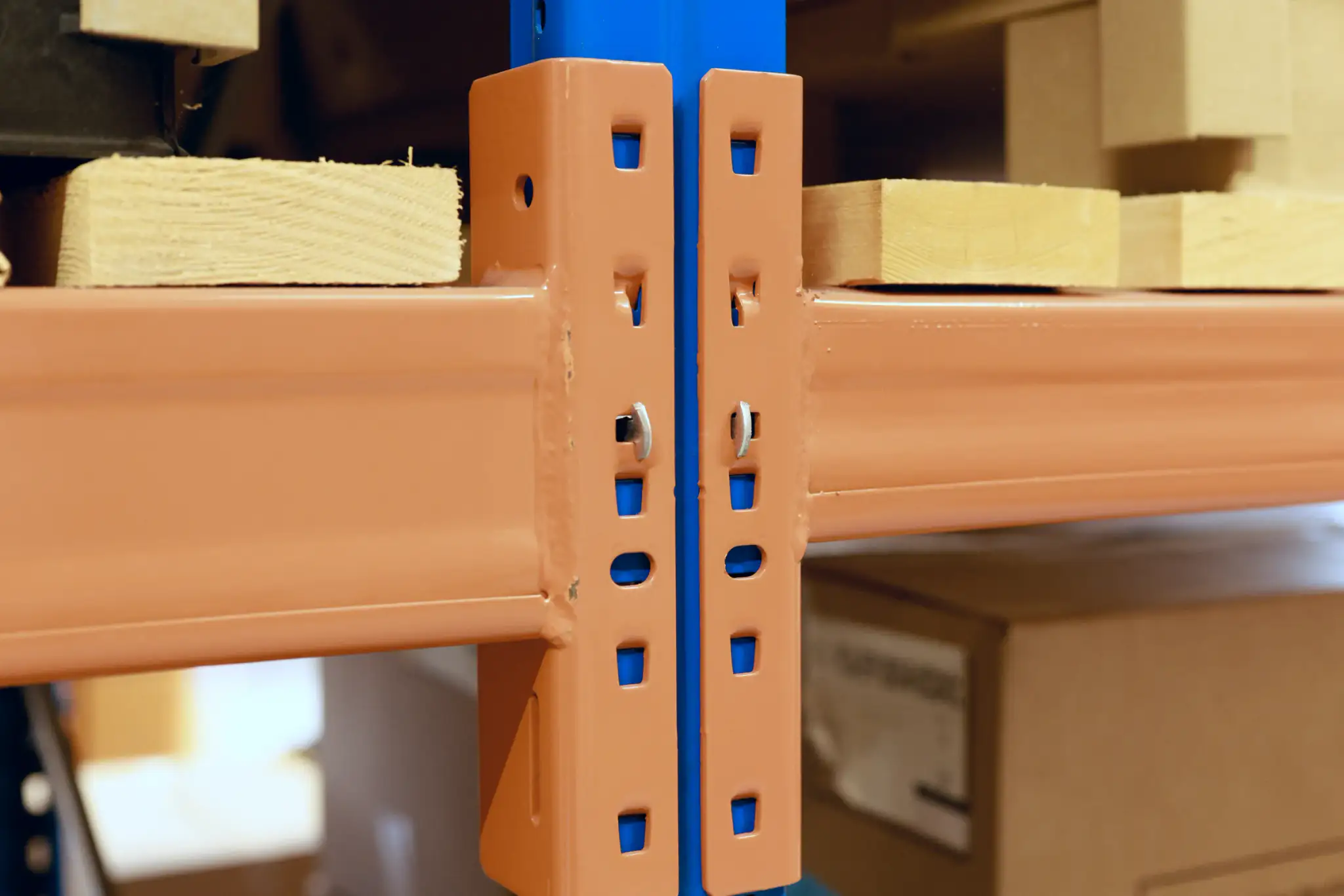
Close up of a pallet racking beam connector with timber decking
Photographs needed
4
Systems in the gallery
10
Beam pitch
50 to 75mmBy manufacturer
Reply to a photo
1 working day

What to photograph.

Four photographs, taken straight on in good light, identify most systems. Wipe off dust over the slots first: the slot shape matters more than anything else.

  1. Step 1

    The upright face

    Straight on, including at least three slots in a row, so the shape and spacing both show.

  2. Step 2

    A beam end connector

    Side on, with the locking pin or clip visible. Count the lugs if you can.

  3. Step 3

    The baseplate

    Including any stamped markings and the floor fixings.

  4. Step 4

    Labels and stamps

    Load notices, frame stickers and anything stamped into the steel. Even a partial label helps.

How to measure it.

Three measurements decide whether a component will fit. Take them in millimetres and add them to the message with your photographs.

Upright depth

Front to back across the frame, outside face to outside face. Standard frames are usually 900 or 1100mm.

Beam length between uprights

The clear distance between the two uprights a beam spans, not the beam's overall length. Usually somewhere from 1500 to 5000mm.

Pitch

The vertical distance between slot centres. Beam levels move in steps of 50 to 75mm depending on the manufacturer, so the pitch is a strong clue in itself.
Beam length between uprightsPitchUpright depth
Schematic, not to scale. Front of a bay on the left, side of the frame on the right.

Upright profiles, matched to manufacturer.

Each schematic shows the slot shape as it is typically described for that system, beside a generic upright section. Colours are the reported factory finishes. Treat every entry as a starting point: series, duty and repaints all vary, and a photograph settles it.

  • Dexion

    Speedlock and P series

    UK

    Face and section

    Teardrop slots in a single line down the face

    Frames
    Blue
    Beams
    Orange
    Slots
    Typically teardrop or keyhole shaped, evenly spaced, with the connector locking into the narrow end. Often described as the easiest system to recognise.
    Connector
    Clip-in beam connectors with a separate locking pin on Speedlock.
    Series
    Speedlock is the long-established range. Later P series uprights carry a designation such as P90, which identifies the section.
    Colours
    Typically blue frames and orange beams. Repaints are common, so check the slot before the colour.
    Markings
    Look for embossed or stamped Dexion markings on beams and frames.

    Schematic, not to scale. Typical features only.
  • Apex

    UK

    Face and section

    Horizontal locating slots

    Frames
    Varies
    Beams
    Varies
    Slots
    Typically identified by horizontal locating slots on the upright face, which sets it apart from the vertical or teardrop patterns of most other UK systems.
    Colours
    Supplied in a variety of colours, so colour alone will not identify it.
    Supply
    Still manufactured in the UK, so new matching components are generally obtainable.

    Schematic, not to scale. Typical features only.

  • Esnova

    Spain

    Face and section

    Frames
    Blue (RAL 5019)
    Beams
    Orange (RAL 2004)
    Colours
    Catalogue standard is blue uprights in RAL 5019 with orange beams in RAL 2004. Grey is offered as an alternative.
    Connector
    Reported to use flat locking pins, which is a useful cue against systems that use round pins.
    Slots
    Not reliably documented in public sources. Check for stamps and labels rather than relying on the slot.

    Schematic, not to scale. Typical features only.

  • Sperrin

    UK

    Face and section

    Frames
    Dark grey
    Beams
    Varies
    Colours
    Reported as dark grey.
    Supply
    A UK manufactured system still widely in use.
    Slots
    Not reliably documented in public sources. Send a photograph of the upright face.

    Schematic, not to scale. Typical features only.

  • Redirack

    SD and HD

    UK

    Face and section

    Welded frame: look at the bracing joints

    Frames
    Orange
    Beams
    Orange
    Frames
    Typically a welded frame system: the bracing is welded to the uprights rather than bolted. That alone separates it from most UK used stock.
    Colours
    Frames and beams are mostly orange.
    Supply
    Parts are reported to be still obtainable.

    Schematic, not to scale. Typical features only.

  • Stow

    Belgium

    Face and section

    Key-shaped slots, wider at the bottom

    Frames
    Varies
    Beams
    Varies
    Slots
    Typically key-shaped locations with a wider hole at the bottom, sometimes described as an upside-down letter p.
    Upright
    Described as an angled upright profile.

    Schematic, not to scale. Typical features only.

  • Mecalux

    Spain

    Face and section

    Square slot with a narrow neck

    Frames
    Blue
    Beams
    Varies
    Slots
    Typically a square location slot with a narrow neck.
    Markings
    The frame duty is often stamped into the front face of the upright.
    Colours
    Generally blue frames.

    Schematic, not to scale. Typical features only.

  • PSS

    Planned Storage Systems, M series

    UK

    Face and section

    Look for the diagonal zig zag on the upright

    Frames
    Varies
    Beams
    Varies
    Upright
    Reported to be identifiable by a diagonal zig zag pattern on the uprights.
    Slots
    Not reliably documented in public sources. Send a photograph to confirm.

    Schematic, not to scale. Typical features only.

  • Hi-Lo

    KS Hi-Lo, Premier Rack

    UK

    Face and section

    Thin rectangular connector slots

    Frames
    Varies
    Beams
    Orange
    Slots
    Typically thin rectangular connector slots in the frames.
    Colours
    Beams are mostly orange.

    Schematic, not to scale. Typical features only.

Not on the list, or two of them look alike? Send us a photo. We also identify AR Racking, Polypal, Provost, Schaefer, Stackapal and other systems found in used stock.

Why mixing brands is a problem.

A beam from one manufacturer can sometimes be persuaded into another manufacturer’s upright. That does not make it a connection. Nobody has tested or load rated that combination, so nobody can tell you what it holds.

Untested connections

Lug shape, slot shape and pitch differ. A partial engagement can look seated and still not be.

Load notices stop being true

Published capacities assume one manufacturer's components throughout. A mixed bay has no valid notice.

Inspection findings

Non-original components are a standard check on an expert inspection, and a common reason for an amber or red finding.

Harder to repair

Repairs need like-for-like parts. Identifying the system first is what makes that possible.

Identification questions.

Dexion uprights typically carry teardrop or keyhole shaped slots in a single line down the face, with the beam connector locking into the narrow end. Speedlock is the long-established range and later P series uprights carry a designation such as P90. Frames are often blue with orange beams, but repaints are common, so check the slot shape and any stamped markings before the colour.

Apex is typically identified by horizontal locating slots on the upright face. Link 51 XL uprights typically have small diamond or teardrop-like holes, and older Link 51 stock may show square holes in a continuous line. Both are UK systems and components do not interchange between them.

No. Connector lugs, slot shapes and pitches differ between manufacturers, and even where a beam appears to fit, the connection has not been tested or load rated in that combination. Mixed-manufacturer runs are one of the most common findings on a racking inspection.

The upright depth front to back, usually 900 or 1100mm on standard frames, the frame height, the beam length between the uprights, usually somewhere from 1500 to 5000mm, and the beam pitch, which adjusts in 50 to 75mm increments depending on the manufacturer.

Used racking is legitimate capacity provided the components are structurally sound, matched to the system they are going into and the finished configuration is designed and load rated properly. We will not sell a mixed-manufacturer run, and we check components before sale.

Most racking in service has lost its labels. Photograph the upright face straight on including the slots, a beam end connector with the locking pin visible, and the baseplate, then send them to us using the form on this page. We reply inside one working day.

Still not sure? Send us a photo.

Up to three photographs: the upright face, a beam connector and the baseplate. We identify the manufacturer and series, tell you whether matching parts are available, and reply inside one working day. No charge.

Prefer email? Send the photographs to sales@palletrackingwales.co.uk.

Send photographs of your racking

Photographs (up to 3)

The upright face with its slots, a beam end connector and the baseplate. Resized in your browser before sending.

No charge. We reply inside one working day.