
Used pallet racking. Checked, matched and load rated.
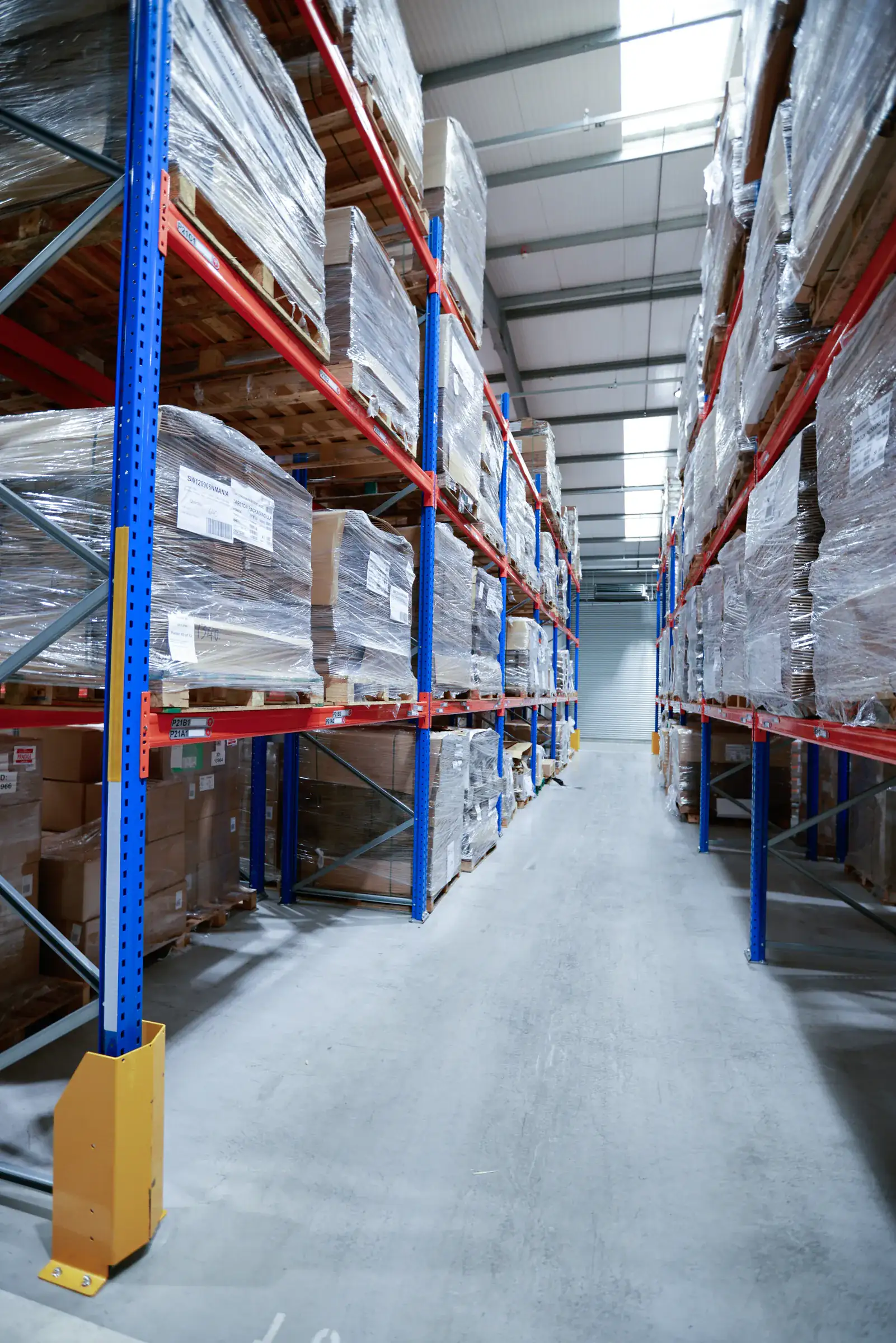
Second hand racking is a legitimate way to add capacity at a fraction of new cost. It only stays legitimate if the components are sound, they match the system they are going into, and the finished configuration is designed and rated rather than assembled from whatever was in the yard.
Every used bay leaves here with a load notice for the configuration as built.
- Conditions that must hold
- 3
- Mixed manufacturer runs sold
- 0
- Load rating
- Recalculated
- Buy-back
- Available
Three conditions, or we do not sell it.
New and used runs through everything this business does. The difference between a sensible used purchase and a liability is not the age of the steel. It is whether these three things are true.
1. Structurally sound
2. Matched to the system
3. Designed and rated
What we check before sale.
Used racking comes back to us through dismantling, relocation and clearance work. Before any of it is offered for sale, every component goes through the same checks.
Manufacturer and series
Uprights
Bracing
Beams
Beam connectors
Safety locks
Baseplates and fixings
Coating and corrosion
No previous repairs
Damage acceptance limits: Set by EN 15635 and manufacturer data, applied by the inspector. A component that would be red or amber on a live site inspection is not sold.
Why mixing manufacturers is a problem.
Pallet racking looks generic. It is not. Components are not interchangeable between manufacturers, and often not between series from the same manufacturer.
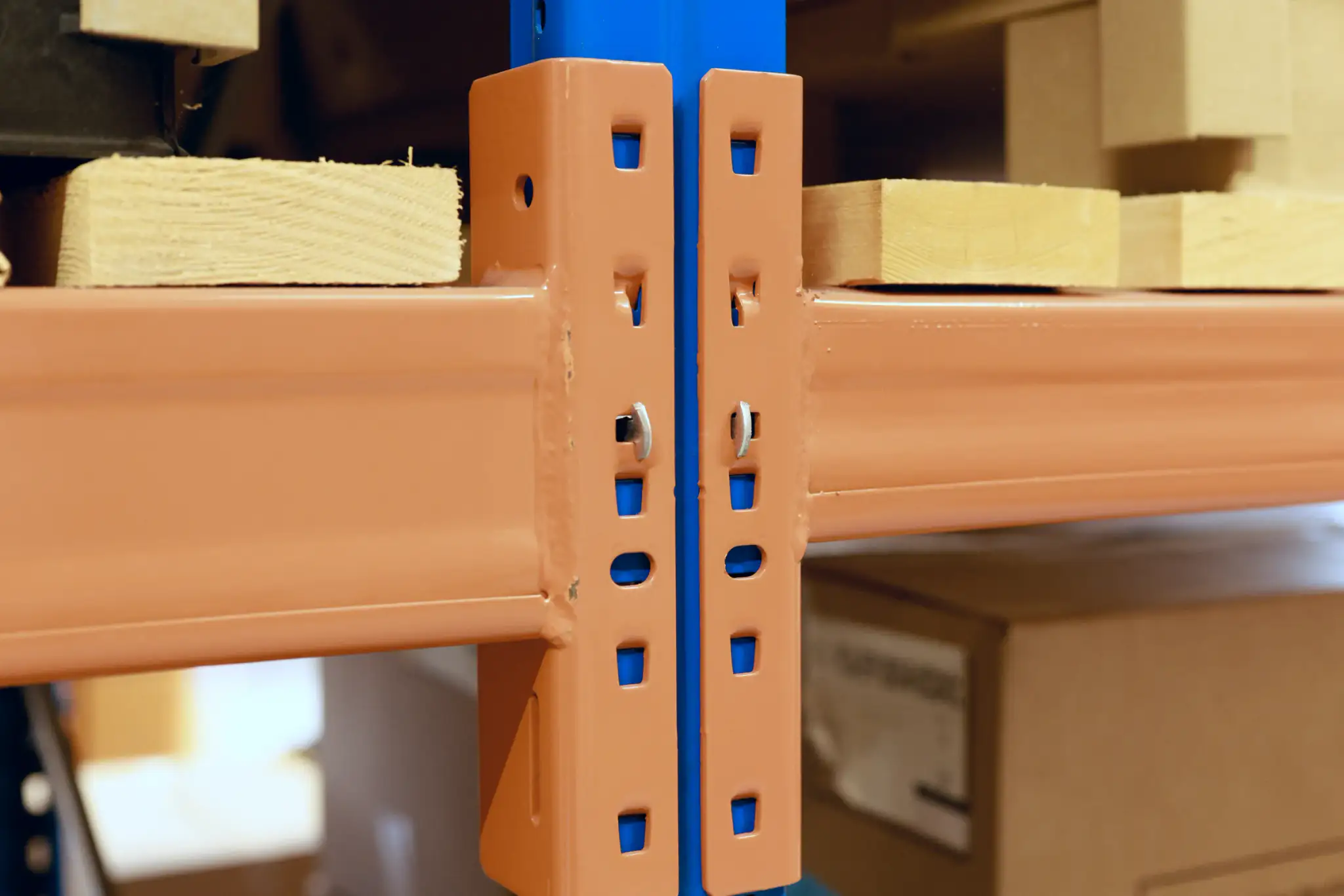
A beam from one system may hook into another system's upright and even look secure. But the perforation pitch, the connector geometry, the safety lock and the steel section all differ, and every load table a manufacturer publishes was tested on its own components together. Put two systems together and there is no test, no data and no load rating. Nobody can say what that bay will hold.
Mixed runs are one of the most common findings on sites that bought cheap second hand racking. The Llanelli castings project started with exactly that: an inherited run assembled from more than one manufacturer, with no load notices and no record of what it was rated for. It was replaced.
Four features identify a system.
1. Upright profile
The shape of the upright section in plan, and its depth.
2. Perforation pattern
The shape and pitch of the slots the beams hook into.
3. Beam connector
The number and shape of hooks, and the safety lock type.
4. Baseplate
The plate shape, the fixing holes and any stamped markings.
Our rack identification guide shows each feature for Dexion, Link 51, Apex, Esnova, Sperrin and others.
How a used configuration is load rated.
The load notice from the old site is not transferable. A different number of levels, a different first beam height or a different beam length all change the rating, so it is worked out again for the racking as it will stand.
- Step 1
Identify
Manufacturer and series confirmed for every component type in the configuration.
- Step 2
Confirm the components
Upright section, beam type, beam length and connector taken from the manufacturer's data for that series.
- Step 3
Design the configuration
Beam levels, height to the first beam, bay widths and run layout drawn for your building and your loads.
- Step 4
Rate it
Load per beam level and per bay taken from manufacturer data for that exact configuration.
- Step 5
Install and notice
Installed by SEIRS registered installers. Load notices fixed to every run, matching the drawing.
- Step 6
Record and inspect
Layout drawing and ratings handed over, and the first annual inspection booked.
- Load per beam level
- Manufacturer data for the configuration
- Load per bay
- Manufacturer data for the configuration
- Source of rating
- Manufacturer
What we will not sell.
Cheap racking that cannot be rated is not cheap. These are scrapped or recycled, never offered at a discount.
Damaged components
Straightened components
Repair welded components
Mixed manufacturer runs
Unidentified components
Racking with no route to a rating
New or used: the honest comparison.
Used is not always the right answer. This is the table we talk customers through at survey.
| Question | Used racking | New racking |
|---|---|---|
| Price | A fraction of new, depending on make and condition | Full list price, steel price dependent |
| Lead time | Days when matching stock is on hand | Typically 4 to 8 weeks |
| Extending an existing system | Only with the same manufacturer and series | Only with the same manufacturer and series |
| Exact frame heights and beam lengths | Whatever is available | Any size in the manufacturer's range |
| Colour match | Varies by batch | Specified |
| Load rating | Recalculated from manufacturer data | Manufacturer data |
| Load notice | Issued for the configuration as built | Issued for the configuration as built |
| Installation | SEIRS registered installers | SEIRS registered installers |
| Best for | Adding capacity fast and on budget | New layouts, specific sizes, long term growth |
New against used pallet racking, decision by decision.
- Price
- A fraction of new, depending on make and condition
- Lead time
- Days when matching stock is on hand
- Extending an existing system
- Only with the same manufacturer and series
- Exact frame heights and beam lengths
- Whatever is available
- Colour match
- Varies by batch
- Load rating
- Recalculated from manufacturer data
- Load notice
- Issued for the configuration as built
- Installation
- SEIRS registered installers
- Best for
- Adding capacity fast and on budget
Buy-back and clearance for redundant racking.
The other half of the used market. If you are relocating, changing systems or closing a site, redundant racking has a value, and we will collect it.
We dismantle, remove and clear pallet racking, shelving and cantilever, and buy back components that meet our checks. What fails them is recycled as scrap steel, so the site is left clear either way. Dismantling is carried out by the same SEIRS registered teams who do our installation and relocation work.
- Photograph the upright face, a beam connector and a baseplate
- Count frames by height and beams by length
- Tell us the access, the timescale and whether the floor must be left clear
New frames, beams and spares online
If you need a few bays rather than a run, standard bays, extension bays, beams, decking and safety locks are on the online store, new. For a used configuration, or anything that has to match an existing system, start with a survey.
- Racking & shelving (opens the online store in a new tab)
- Storage (opens the online store in a new tab)
- Safety & premises (opens the online store in a new tab)
- Trucks & trolleys (opens the online store in a new tab)
- Steps & ladders (opens the online store in a new tab)
- Lifting, drum & cylinder (opens the online store in a new tab)
- Workshop & environment (opens the online store in a new tab)
- Office & mailroom (opens the online store in a new tab)
Used racking questions, answered.
It is as safe as the checks behind it. Used racking is a legitimate way to add capacity provided three things hold: every component is structurally sound, every component is matched to the system it is going into, and the finished configuration is designed and load rated from manufacturer data. Racking that meets all three performs the same as new.
Typically a substantial fraction of the new price, depending on the manufacturer, the condition and current steel prices. As an indicative guide, used frames and beams often come in at roughly half to two thirds of the new equivalent, before installation. A free site survey gives you a priced comparison of used and new for the same layout.
Only if it is the same manufacturer and a compatible series. Components are not interchangeable between manufacturers: perforation patterns, beam connectors, safety locks and section properties all differ. We identify your existing system first, then source matching used components or tell you there are none.
From the manufacturer's design data for the exact components and configuration: the upright section, the beam type and length, the number of beam levels and the height to the first beam. The rating is not taken from the old site's load notice, because a different configuration has a different rating. A new load notice is issued for the racking as built.
Damaged, straightened or repair welded components; components we cannot identify to a manufacturer and series; mixed manufacturer runs; and anything without a route to a load rating from manufacturer data. If it fails any of those, it is scrapped, not sold.
Commonly Dexion, Link 51, Apex, Esnova, Sperrin and others, depending on what has come back through buy-back and clearance. Availability changes week to week, so the fastest route is to tell us what you run and what you need.
Yes. Used racking is installed by SEIRS registered installers to the same standard as new, with a layout drawing and load notices at handover. We will also install used racking you have bought elsewhere, after it has been identified and inspected.
Yes. We buy back and clear redundant pallet racking, shelving and cantilever, including dismantling and removal. Send photographs of the upright face, a beam connector and a baseplate, with the quantities, and we will come back with an offer.
Faster than new when matching stock is on hand, often within days for standard frames and beams. When it has to be sourced, it can take longer than ordering new. We tell you which at quotation, with both options priced.
Yes, like any racking. Regular recorded visual checks by your Person Responsible for Racking Safety, and an expert inspection at least every 12 months under HSG76 and EN 15635. We recommend booking the first inspection at handover.
Tell us what you run and what you need.
We will identify your existing system, price used and new side by side for the same layout, and tell you plainly which one makes sense.