
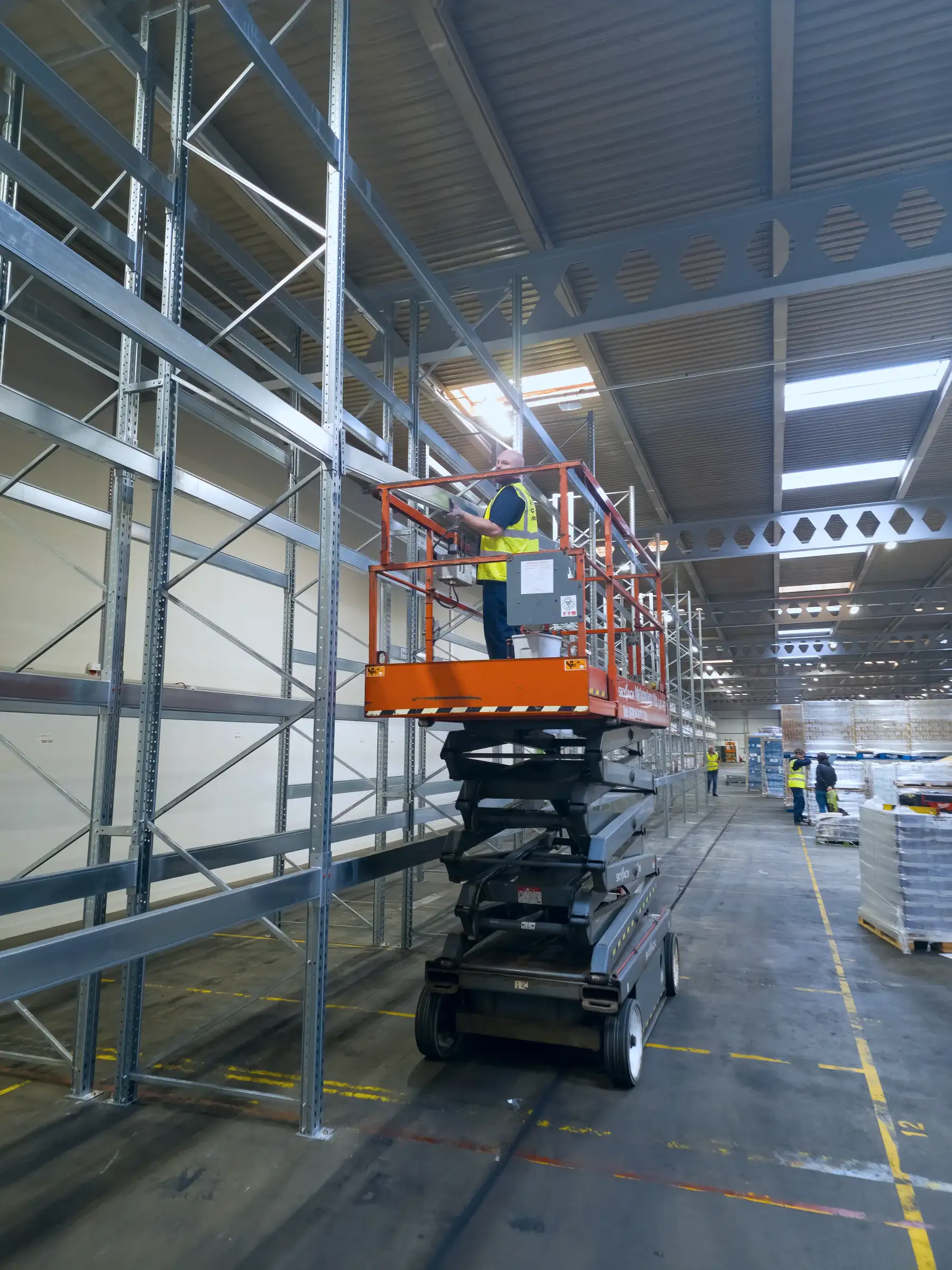
Pallet racking installation. Built around a live warehouse.
Supply and fit, reconfiguration of the racking you have, and full site moves: dismantled at the old building and rebuilt or upgraded at the new one. One project manager from the survey to the handover pack.
Phased and out of hours, so the warehouse keeps shipping while it changes shape.
- Lead time
- 4 to 8 wksFrom order, typical
- Installers
- SEIRSRegistered teams
- RAMS
- BeforeIssued ahead of attendance
- Point of contact
- OneSurvey to handover
- Working hours
- FlexiblePhased, nights, weekends
Five kinds of installation job.
Most enquiries are one of these. The survey is the same for each, because every one of them starts with the building, the trucks and the stock.
Reconfiguration
How disruptive it actually is.
A warehouse cannot close for a month while racking goes in. The building is divided into phases, one zone is segregated at a time, and the operation runs around it.
- Phases sequenced around your delivery and dispatch windows
- Working zones segregated with barriers, signage and a banksman where trucks pass
- Evening, night and weekend shifts where a phase would block a critical route
- Stock moved ahead of each phase, not all at once
- Out of hours working priced openly, so you choose speed or less disruption
Facilities and health and safety teams ask the same questions before admitting a contractor. Answers to all of them are in the paperwork before the first van arrives.
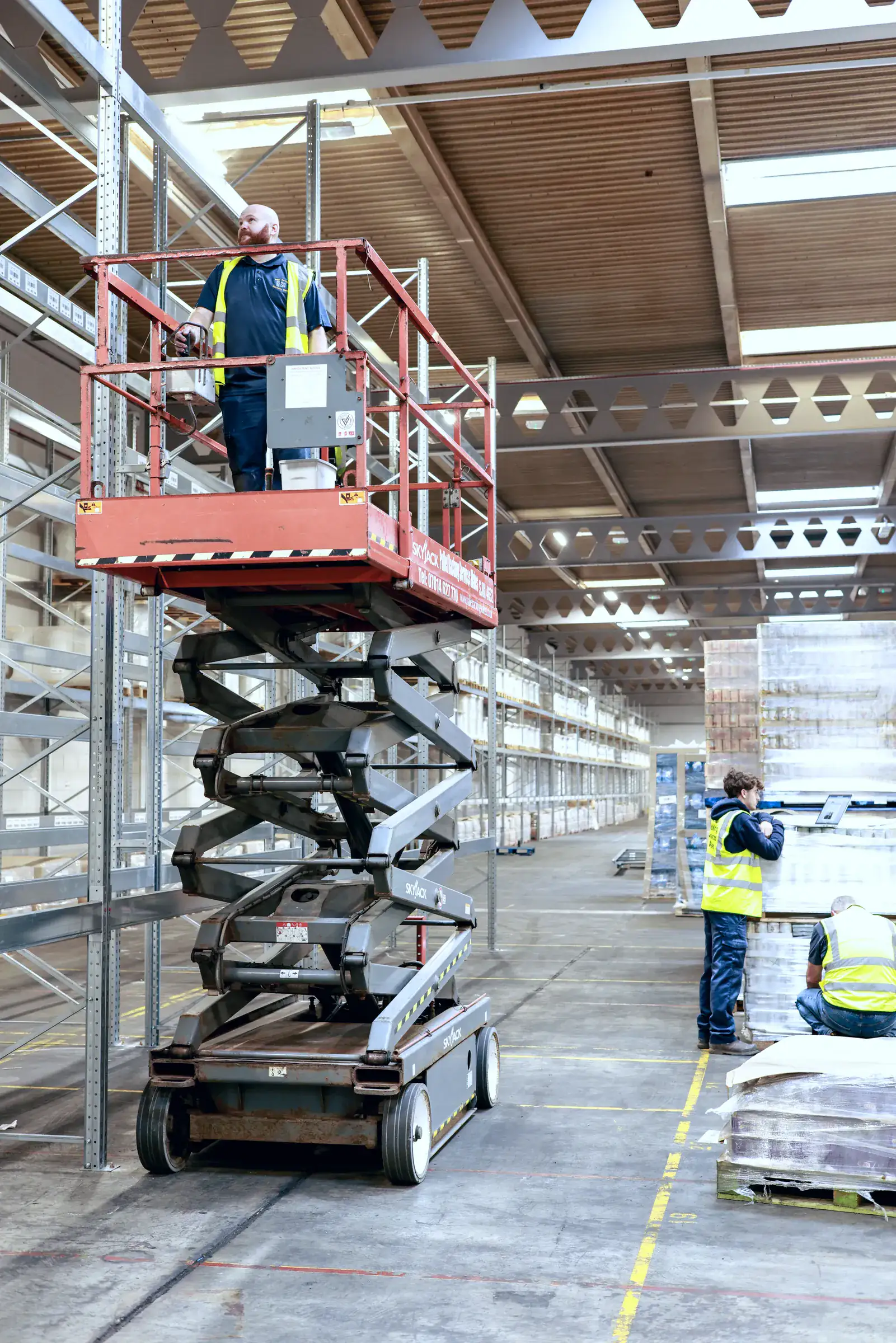
CDM 2015, settled before anyone arrives.
Racking installation is construction work under the Construction (Design and Management) Regulations 2015. That puts duties on you as well as on us, and the roles are agreed in writing first.
Where more than one contractor will work on the project, the client must appoint a principal designer and a principal contractor. On a racking-only project we are usually the only contractor on site. On a wider fit-out, we work within the principal contractor's arrangements and provide what their plan requires.
Client
You. Make suitable arrangements for the project, provide pre-construction information such as floor details and services, and appoint the other duty holders where required.Principal designer
Plans, manages and coordinates health and safety in the pre-construction phase where there is more than one contractor.Principal contractor
Plans, manages and coordinates the construction phase, including the construction phase plan and site inductions.Risk assessments and method statements
Issued for every phase before attendance, covering segregation, lifting, working at height and truck movements.Accreditation
SEIRS registered installers and SafeContractor approval, the evidence most procurement teams ask for first.
Four to eight weeks, from order to handover.
Typical for a standard adjustable pallet racking project. Most of that is manufacture and delivery, which runs while the phasing plan is agreed. Specialist systems take longer, and pallet shuttle projects typically take 12 to 16 weeks.
- Step 1
Survey and layout
Building measured, trucks and stock profile recorded, CAD layout drawn with a capacity figure.
- Step 2
Quotation and order
Itemised, covering protection, decking, installation and any out of hours working.
- Step 3
Planning
Phases agreed, CDM roles confirmed, risk assessments and method statements issued.
- Step 4
Manufacture and delivery
Delivered in phase order so the yard is not full of steel on day one.
- Step 5
Installation
Built phase by phase by SEIRS registered teams, each zone signed off before stock returns.
- Step 6
Handover
Layout drawings, load notices, the RAMS used, and your first inspection date.
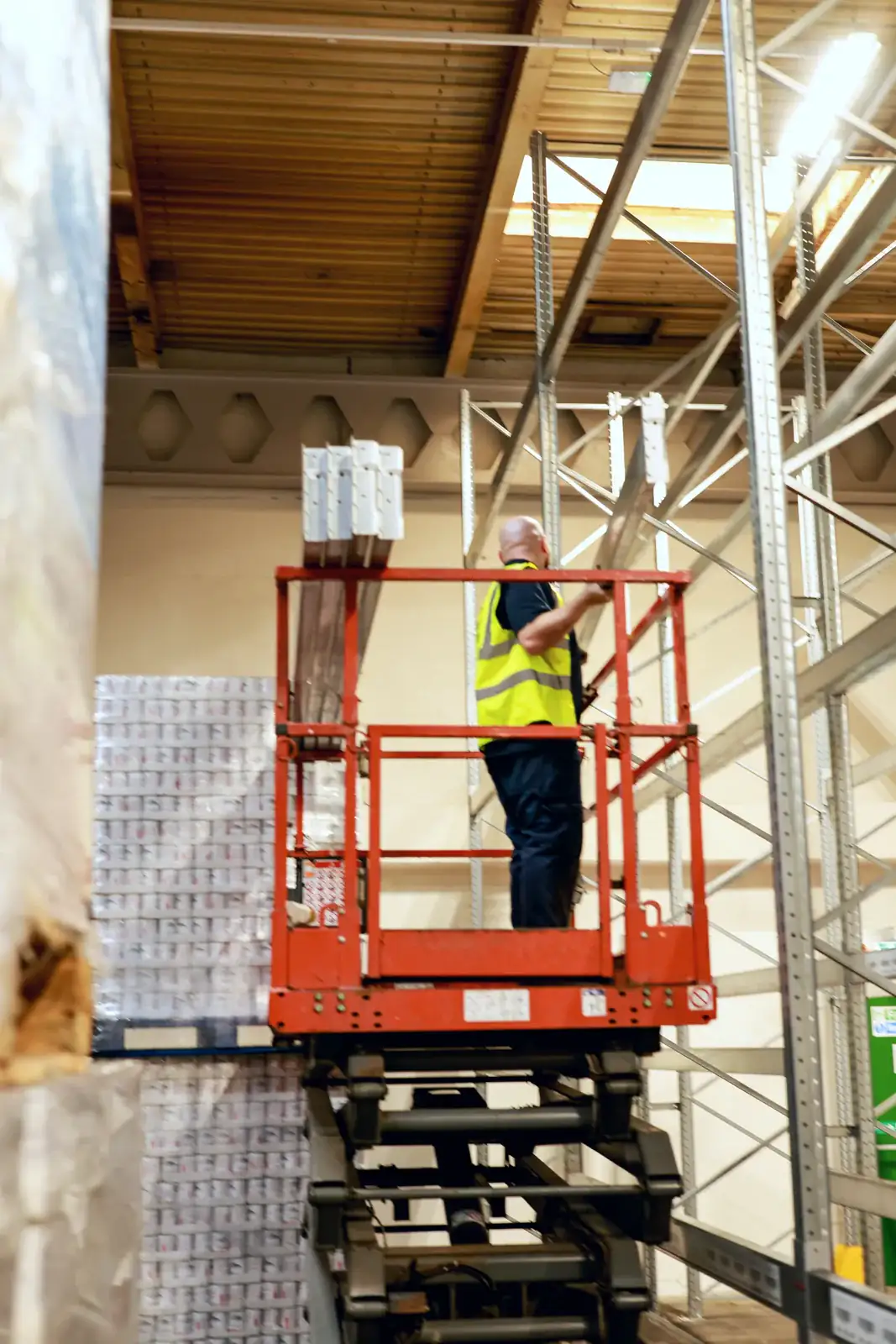
Racking relocation and dismantling.
A site move is two projects joined by a lorry. The racking comes down at one building, goes back up at another, and the new building decides the layout.
Both buildings surveyed
Floor, columns, doors, sprinklers and truck routes at the new site, so the layout fits the building it is going into.Condition check on strip-down
Every component looked at as it comes down. Damaged parts are replaced, not shipped and rebuilt.Labelled and transported
Frames and beams labelled by run, so the rebuild is quick and nothing goes missing.Rebuild or upgrade
Reinstalled to a new layout, often taller or with narrower aisles, and topped up with matching new components.New load notices
Issued for the new configuration. The old notices do not travel with the steel.
Racking you already own.
We will install customer-owned and second-hand racking on the same terms as new. Three checks come first, and none of them is optional.
If the racking was bought at auction or came with the building, start with the rack identification guide. If you are still choosing, compare it with our used pallet racking, which is checked and load rated before sale.
- Step 1
Condition check
Damaged, corroded or modified components are replaced, never reused.
- Step 2
Identification
Manufacturer and profile confirmed, because components do not interchange between brands.
- Step 3
Load rating
Every bay rated for the configuration it is built to, with a load notice to match.
Racking that cannot be identified or rated is not installed. We will tell you why, and what it would take to replace it.
When installation is not the first step.
Some projects need a decision or a survey before anyone orders steel.
Floor unknown
Second hand of unknown origin
Who builds it.
Trading since 2009, with more than 35 years of combined experience across the directors. Handover sets the date of the first annual inspection, which is where the inspection cycle starts.



Health and safety competence independently assessed and audited annually through SafeContractor, which is what most procurement teams ask for before admitting a contractor.
SEIRS registered installers
Installation teams hold current registration under the Storage Equipment Installers Registration Scheme, so the people building the racking are trained to the standard the design assumes.
SEMA codes of practice
Design, installation and inspection follow SEMA guidance, including the codes covering the use, maintenance and inspection of storage equipment.
Trading since 2009
More than 35 years of combined industry experience across the three directors, with annual rack inspections carried out for customers as a statutory requirement.
Installation questions, answered.
Less than most people expect, because the work is phased. The building is divided into zones, one zone is segregated with barriers and signage while the rest keeps running, and stock is moved ahead of each phase rather than all at once. Deliveries, picking and dispatch continue around the work. Where a phase would block a critical route, it is scheduled out of hours.
Typically 4 to 8 weeks from order to completion for a standard adjustable pallet racking project, most of which is manufacture and delivery. On site, a team of installers usually builds several hundred pallet positions a week in a clear building, fewer in a phased live installation. The programme is set out in writing with the quotation, phase by phase.
Yes. Evening, night and weekend working are planned in where daytime work would stop the operation, and phases are sequenced around your delivery and dispatch windows. Out of hours working is priced openly in the quotation so you can choose between a shorter programme and less disruption.
Yes, after three checks. A condition check, because damaged components are replaced rather than reused. Identification, because components from different manufacturers do not interchange. And a load rating, so every bay can carry a correct load notice for the configuration it is built to. Racking that cannot be identified or rated is not installed.
Yes. Dismantling at the old building, labelling, transport, a condition check during strip-down, and reinstallation or upgrade at the new one. Both buildings are surveyed first, because the new floor, columns, doors and truck routes decide the layout, not the old one.
You are the client under CDM 2015. Where more than one contractor will work on the project, the client must appoint a principal designer and a principal contractor in writing. We confirm who holds each role before work starts, provide risk assessments and method statements, and take on the contractor or principal contractor duties as agreed for the project.
Layout drawings showing the installed configuration, load notices fixed to every run, the risk assessments and method statements used, and the date of your first expert inspection. That pack is what an auditor or insurer asks for, and what the inspector checks against.
Installation teams are SEIRS registered, under the Storage Equipment Installers Registration Scheme, and work to SEMA codes of practice and the manufacturer's instructions. Pallet Racking Services Wales is SafeContractor approved, which most facilities and health and safety teams ask about before admitting a contractor to a live site.
Installations typically 4 to 8 weeks from order
Start with the building, not the brochure.
The free site survey produces a measured drawing, a CAD layout, a capacity figure and a phased installation programme, with a priced quotation. No charge and no obligation.