
Sell pallet racking. Valued from photos, cleared by installers.
Redundant racking after a refit, a closure or a lease end is worth more standing than scrapped. We buy it, dismantle it safely, take it away and leave the floor clear.
Send four photographs and a few measurements. That is usually enough for a valuation range.
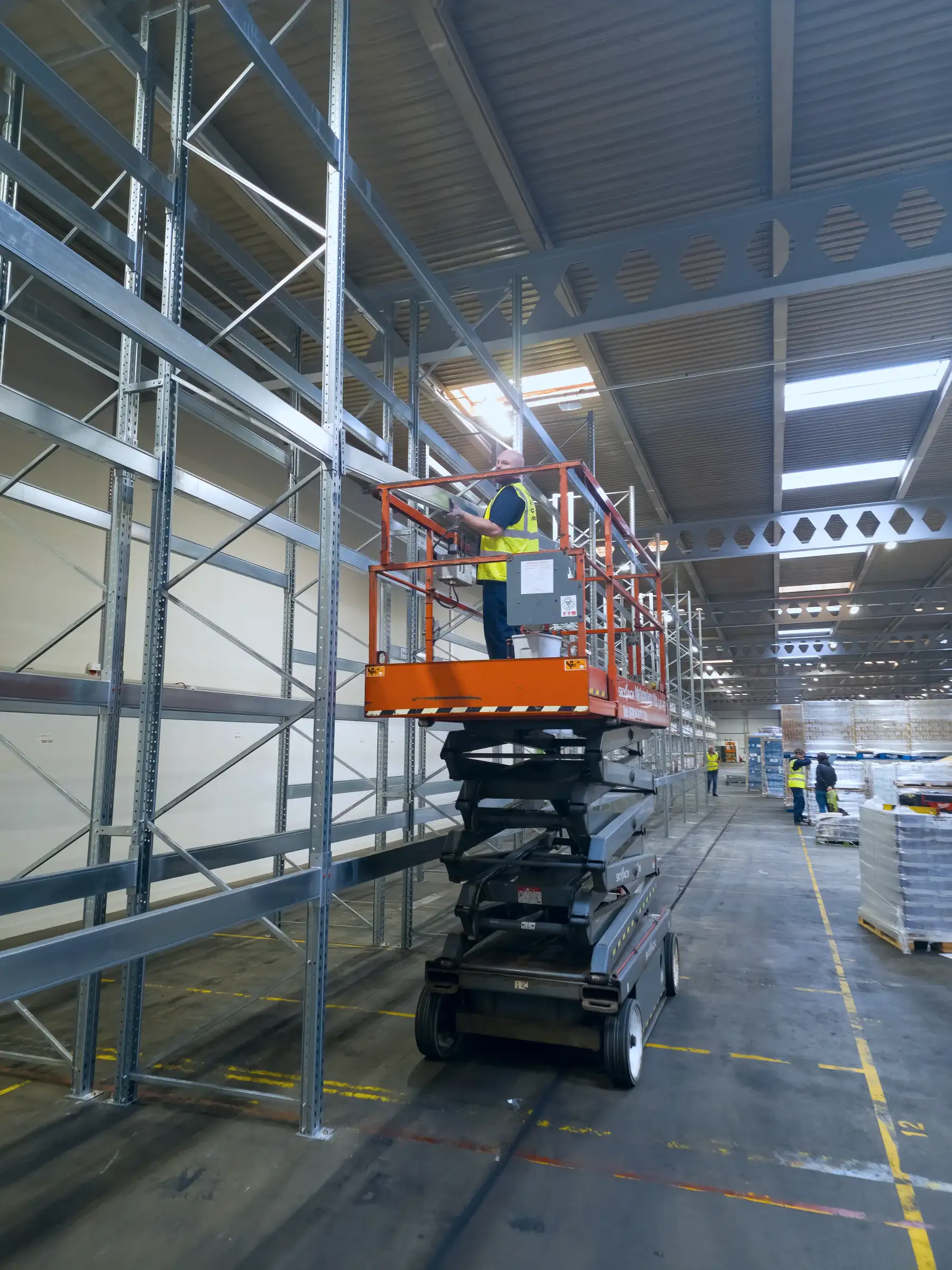
- Valuation
- 2 daysFrom photos, typical
- Dismantling
- SEIRSRegistered installers
- Brands bought
- 5+Main manufacturers
- Site left
- ClearAnchors out, floor swept
From photographs to a clear floor.
Seven steps, most of which happen without anyone visiting. A site visit is only booked once the valuation range is worth confirming.
- Step 1
Send photos and measurements
Four photographs and the numbers listed below, through the form or by email.
- Step 2
Identification
Manufacturer and profile confirmed from the upright, connector and hole pattern.
- Step 3
Valuation range
Usually within two working days, based on brand demand, quantity and condition.
- Step 4
Site check
A short visit confirms condition, quantity and access before a firm offer.
- Step 5
Offer and programme
A firm figure, the dismantling date and the method statement.
- Step 6
Dismantling and removal
SEIRS registered installers, working area segregated, loaded straight onto transport.
- Step 7
Site left clear
Anchors removed or cut flush, fixings collected, floor swept.
What to photograph and measure.
The more of this you send, the tighter the valuation range. Nothing here needs a ladder.
The two photographs that matter most are a close-up of the upright face showing the hole pattern, and the end of a beam showing its connector. Those identify the manufacturer, and the manufacturer sets most of the value. The rack identification guide shows what each brand looks like if you want to check first.
Upright close-up
The face of an upright with its hole pattern visible, at about head height.Beam connector
The end of one beam where it hooks onto the upright, from the side.Any labels
Manufacturer stickers, load notices or stamped part numbers on frames and beams.A whole run
One photograph down an aisle so we can see the configuration and general condition.Frame sizes
Height and depth of the frames. A tape measure across the frame is enough.Beam lengths and quantities
Length of each beam size, and how many frames and beam pairs in total.Access and timing
Ground floor or upper, door sizes, yard access for a lorry, and any lease end date.
What decides the value.
Used racking is priced by what it will sell for once refurbished and checked, less the cost of dismantling, transport and any components that need replacing.
Brand and profile
Condition
Quantity and consistency
Frame heights
Access
Timescale
What we cannot buy back.
Some racking has no resale value, and some should not be resold at all. Saying so on the first call saves a site visit.
Where we cannot pay for racking, we can still dismantle and clear it as a charged service, using the same installers and leaving the same clear floor.
- Damaged beyond economic repair, with most frames carrying red or amber findings
- Heavily corroded, typically from wet, external or chilled environments
- Welded, cut or modified frames and beams, which cannot be load rated again
- Mixed brands assembled together in a way that cannot be separated
- Obsolete systems with no compatible components available anywhere
- Very small quantities far from South Wales, where collection costs more than the steel is worth
Racking clearance for lease ends and refits.
A lease end, a closure or a building change of use usually comes with a date and a dilapidations schedule. Clearance is planned to both.
Dismantling racking is not demolition. Frames become unstable once beams are released at height, and an untrained team can damage the slab, the sprinklers or themselves. Every clearance is carried out by SEIRS registered installers to a method statement, the same people who install and relocate racking.
Buy-back
Resaleable racking bought, dismantled and removed. You receive a payment.Part exchange
Value offset against new or used racking for the next building or the next layout.Clearance
Racking with no resale value dismantled and removed at a charge, still to the same standard.Relocation instead
If the racking suits your next building, moving it may be worth more than selling it.
Buying rather than selling?.
Racking we buy back is checked, refurbished where needed and load rated before it is resold. If you need capacity rather than space, see used pallet racking, or compare systems in the racking system comparison.
Selling racking, answered.
From photographs and a few measurements first. We need the manufacturer or a close-up of the upright profile and beam connector, frame heights and depths, beam lengths, quantities, overall condition and how the site is accessed. That is usually enough for a valuation range within two working days. A site visit confirms the figure before an offer is made.
The main manufacturers with a resale market, including Dexion, Link 51, Apex, Esnova and Sperrin, plus common adjustable pallet racking profiles from other makers. Longspan shelving and steel shelving are considered case by case. Brand, profile and condition decide demand, so the valuation always starts with identification.
Racking that is damaged beyond economic repair, heavily corroded, welded or modified, mixed between brands in ways that cannot be separated, or so obsolete that no compatible components exist. Very small quantities a long way from South Wales may also not cover the cost of collection. We will still offer to dismantle and clear it, at a charge rather than a payment.
SEIRS registered installers, working to a method statement, with the area segregated while the work is done. Racking is unloaded by you before dismantling unless agreed otherwise. Dismantling is the stage most likely to cause injury or damage the building, which is why it is not handed to a scrap contractor.
Yes. Frames, beams, decking and fixings are removed, anchor bolts are removed or cut flush with the floor, and the area is swept. That matters at a lease end, where the landlord's dilapidations schedule usually requires the floor returned clear.
Yes. The buy-back value can be offset against new or used racking, and the strip-out and the new installation can be phased so the building is only partly out of use at any time. That is often the cheapest way to change systems.
Collection is usually arranged within two to four weeks of an accepted offer, faster where a lease end date is fixed. A typical warehouse of a few hundred pallet positions is dismantled and removed in one to three days.
Usually, yes. Racking must be empty before it is dismantled, and stock is your responsibility. Where stock removal is part of a wider move, it can be built into the programme with the installation team.
Buy-back, part exchange and clearance across Wales
Send four photos. Get a valuation range.
An upright close-up, a beam connector, a whole run, and the frame sizes, beam lengths and quantities. That is usually enough for a range within two working days, with a site visit only to confirm it.