
Coil racking. Cradles for loads that roll.
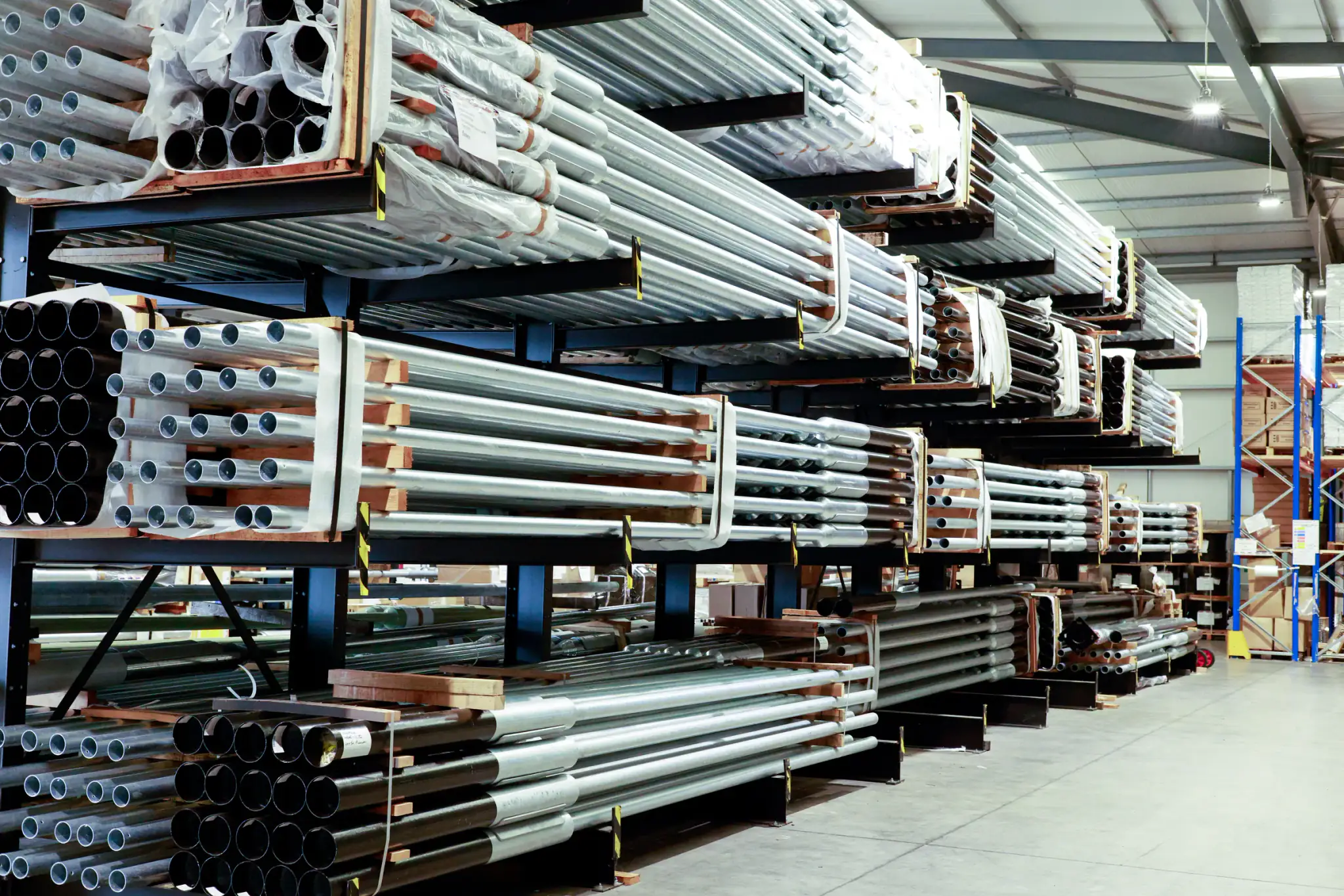
Steel coil, reels and cylindrical loads cannot sit safely on a flat beam. A shaped cradle holds the coil against rolling and spreads its weight into the structure, so coils come off the floor, stack in tiers and stop relying on timber chocks.
Specified on diameter, width and weight, never on a pallet footprint.
- Load type
- Coil, reel, cylinder
- Specified on
- 3diameter, width, weight
- Typical tiers
- 2
- Working aisle
- 3.0 to 4.2m
Why a coil does not belong on a beam.
A coil sitting on a flat beam touches it along a single line. The weight is concentrated instead of spread, and nothing but friction stops it rolling.
So most coil ends up on the floor, single tier, against timber chocks. That consumes floor, relies on the chocks staying where someone put them, and leaves coil edges exposed to every truck that passes. Rotation suffers too, because the coil you need is rarely the one at the front.
A cradle is shaped to the curve of the coil. It cups the load so it cannot roll, and it transfers the weight into the racking structure over a designed contact area. The structure underneath is rated for that load, and the rating is on the load notice.
- Floor storage
- 1 tier
- Cradle storage
- 2 tierstypical
- Loose chocks
- None
- Access per coil
- Individual
The rated coil weight per cradle position is set by the design for your coil range.
Three numbers specify a cradle.
Bring these for every coil type you hold, and the range across grades. The cradle, the bay and the aisle all follow from them.
| Figure | What it sets | Who provides it |
|---|---|---|
| Outside diameter | Cradle profile and tier height | You, per coil type |
| Width | Cradle length and bay width | You, per coil type |
| Weight | Cradle, beam and frame rating | You, heaviest coil per type |
| Inside diameter | Coil ram or C-hook clearance | You, if handled through the eye |
| Coils held at peak | Number of positions and tiers | You, from stock records |
| Handling equipment | Aisle width and cradle access side | You, confirmed at survey |
| Working aisle | 3.0 to 4.2m for a coil ram truck | Survey, set by truck and widest coil |
| Rated weight per cradle | Load notice on every bay | Design, from manufacturer data |
What we need from you, and what each figure sets in the design.
- Outside diameter
- Cradle profile and tier height
- Width
- Cradle length and bay width
- Weight
- Cradle, beam and frame rating
- Inside diameter
- Coil ram or C-hook clearance
- Coils held at peak
- Number of positions and tiers
- Handling equipment
- Aisle width and cradle access side
- Working aisle
- 3.0 to 4.2m for a coil ram truck
- Rated weight per cradle
- Load notice on every bay
Handling sets the layout.
The coil is lifted by something, and that something decides which way the cradle faces, how wide the aisle is and how high the top tier can go.
Counterbalance with coil ram
Overhead crane with C-hook
Eye horizontal or eye vertical
Built for the South Wales steel chain.
Coil moves through South Wales every day: from the steelworks at Port Talbot and Llanwern to service centres, stockholders, tinplate and fabrication businesses from Newport to Llanelli.
The businesses downstream of those works hold coil in quantity, often in buildings that were never laid out for it. That is where coil cradles earn their keep: more coil on the same floor, every coil accessible, no loose chocks on the shop floor.
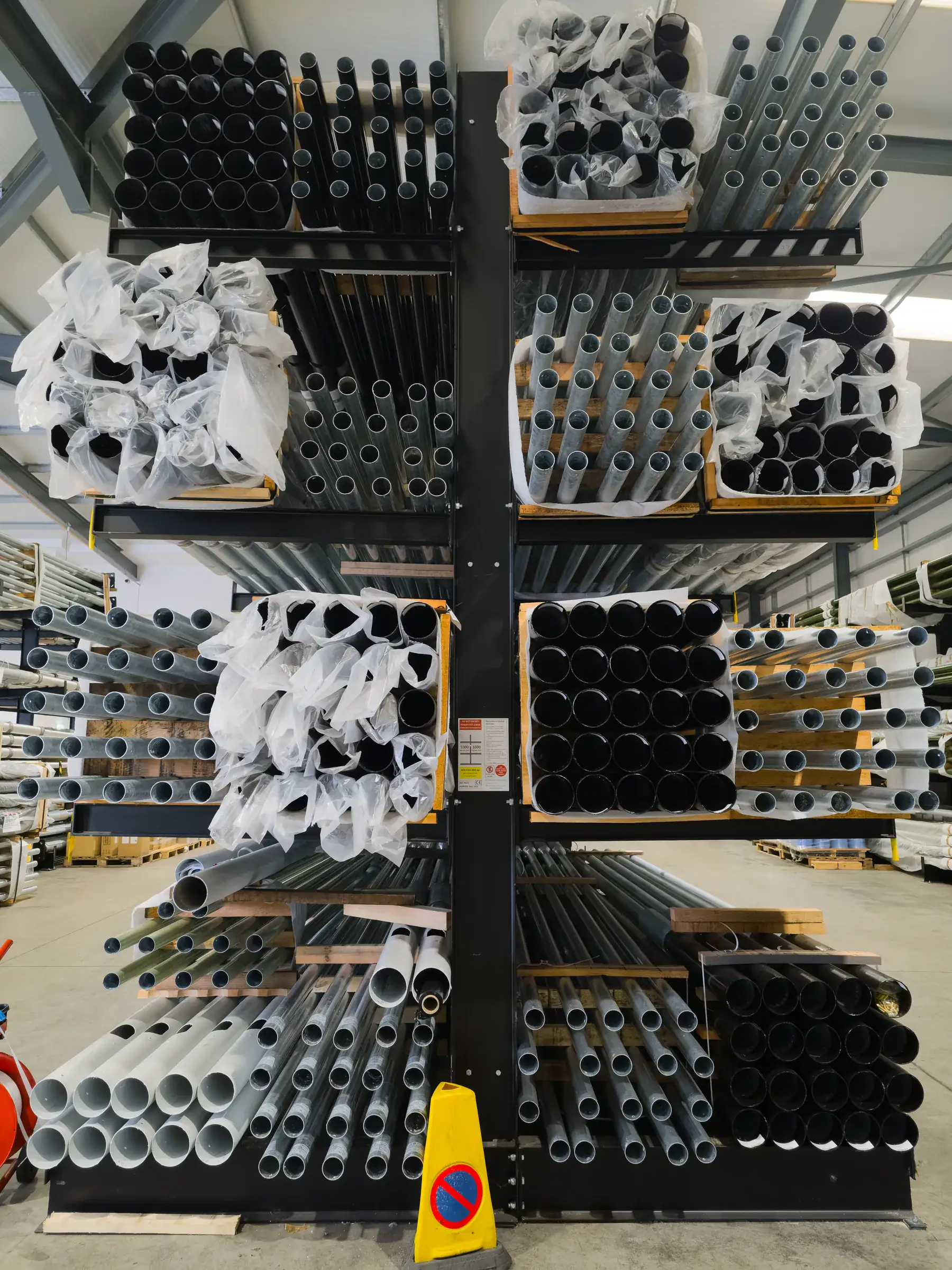
Our Newport coil racking project moved steel coil off the floor and onto two tiers of shaped cradles, accessed by coil ram, with installation phased over two weekends so production carried on through the week. More of our heavy industry work is on the manufacturing and engineering page.
Newport: half the floor back.
Steel coil moved off the floor and onto shaped cradles that stop rolling and spread the point load, accessed by coil ram.
Heavy duty cradles on a racking structure
Cylindrical loads cannot sit safely on a flat beam. A shaped cradle stops rolling and spreads the load.
Two storage tiers
Doubles the positions on the same footprint while keeping every coil individually accessible.
Aisle set against the coil ram truck
The truck and the longest coil set the working aisle, confirmed at survey.
- Before
- 36 floor positions
- After
- 72 cradle positions
- Floor recovered
- 44%
- Installation
- 4 days
Nothing rolls, nothing gets chocked by hand, and we got half the floor back.
When coil racking is the wrong answer.
A cradle is a specialist position. It costs more and stores less per bay than a flat beam, so it only belongs where the load needs it.
Loads that sit flat
Long bar and tube
Unknown coil weights
Very wide coil range
Neighbouring systems.
Other heavy, awkward loads, and the systems built for them.
Barriers and lifting kit for coil handling
Column protectors, barriers, drum and cylinder handling and lifting equipment are on the online store. Coil cradles are designed to your coil range, so the racking itself comes through the survey.
- Racking & shelving (opens the online store in a new tab)
- Storage (opens the online store in a new tab)
- Safety & premises (opens the online store in a new tab)
- Trucks & trolleys (opens the online store in a new tab)
- Steps & ladders (opens the online store in a new tab)
- Lifting, drum & cylinder (opens the online store in a new tab)
- Workshop & environment (opens the online store in a new tab)
- Office & mailroom (opens the online store in a new tab)
Coil racking questions, answered.
Coil racking is a heavy duty racking structure fitted with shaped cradles instead of flat beams or decking. Each cradle holds a steel coil, reel or other cylindrical load against rolling and spreads its weight into the structure, so coils can be stored off the floor, in tiers, with every coil individually accessible.
A coil on a flat beam touches it along a line, not across a face, so the load is concentrated rather than spread, and nothing stops it rolling. Pallet racking beams are rated for loads spread across the beam. A shaped cradle solves both problems.
Three numbers per coil type: outside diameter, width and weight, plus the inside diameter if a coil ram or C-hook is used. We also need the range across grades, the handling equipment and the number of coils of each size held at peak.
The rated coil weight per cradle position comes from the design for your coil range and is printed on the load notice for every bay. We do not quote cradle or bay capacities before the coils have been measured and weighed.
Most commonly by counterbalance truck with a coil ram through the eye of the coil, or by overhead crane with a C-hook. The handling method sets the cradle design and the aisle. Working aisles for a coil ram truck are typically 3.0 to 4.2m, set by the truck and the widest coil.
Two tiers is common, and it doubles positions on the same footprint while keeping every coil individually accessible. More tiers are possible where the handling equipment, the coil weights and the floor allow, and are confirmed at design.
Yes. Any cylindrical load that cannot sit stably on a flat beam is a candidate, including cable drums, paper and film reels, and hose reels. The cradle is sized to the diameter and weight range, the same way as for steel coil.
Yes. It is racking and work equipment under PUWER 1998, so it needs regular recorded visual checks by your Person Responsible for Racking Safety and an expert inspection at least every 12 months, as HSG76 and EN 15635 set out. Coil handling puts heavy loads in motion near the structure, so impact damage is checked closely.
Send us your coil sizes and weights.
Outside diameter, width and weight for each coil type, and how many you hold at peak. We will come back with a cradle layout and a price.