Longspan shelving. Heavy loads without fixed pallet footprints.
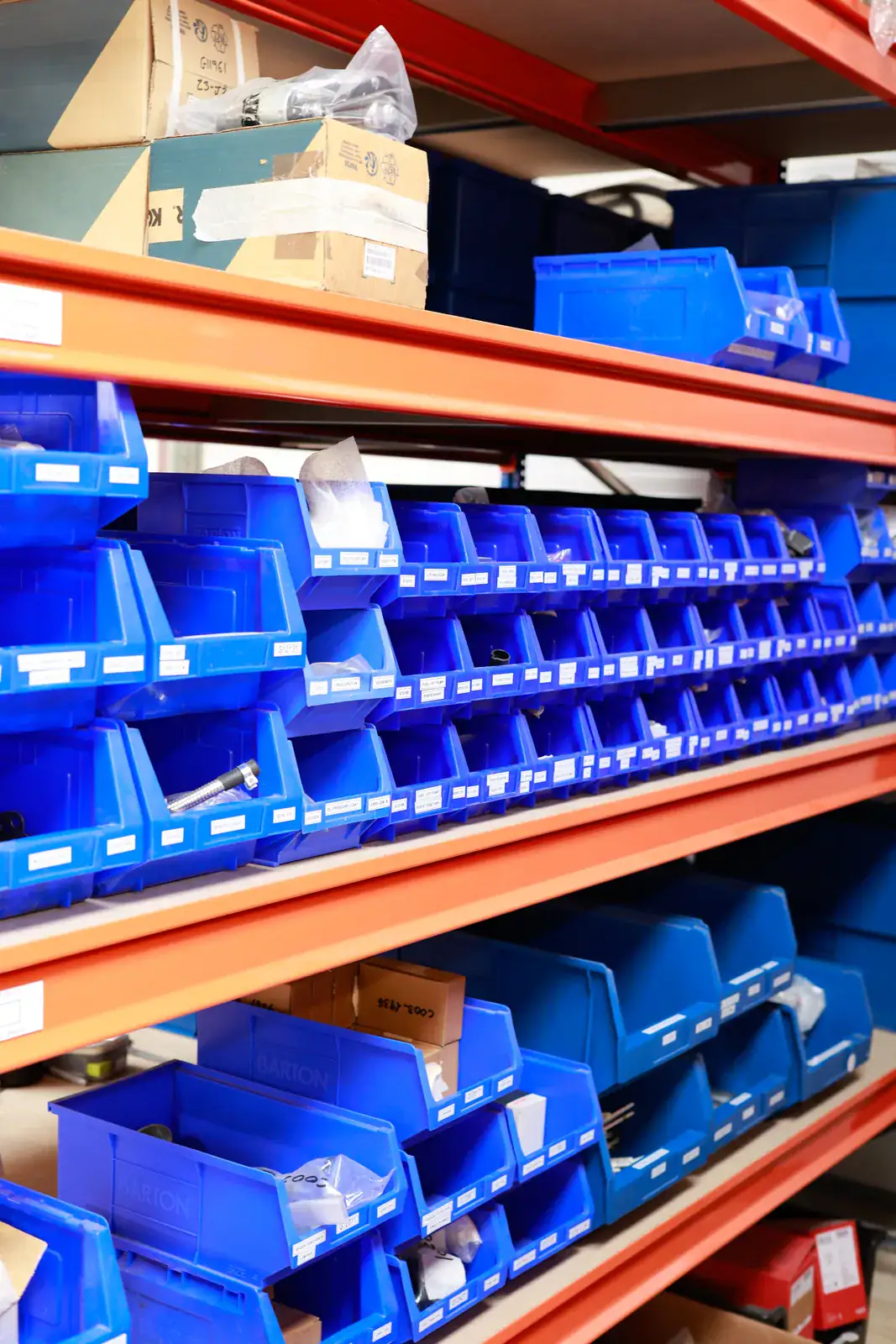
Longspan is the middle ground between light duty shelving and pallet racking. Wide bays on beams rather than fixed pallet positions, levels that adjust, and runs that extend in height and width as the stock changes.
Too heavy for shelving, not on pallets: that is longspan.
- Light duty tier
- ≈200kgper level
- Medium duty tier
- ≈400kgper level
- Heavy duty tier
- ≈800kgper level
- Deck options
- 3
Between shelving and racking.
Longspan exists because a large share of stock is too heavy, bulky or awkward for light shelving, yet nowhere near a full pallet. Putting it in a pallet position wastes the position. Putting it on light shelving overloads the shelf.
| Attribute | Light duty shelving | Longspan shelving | Pallet racking |
|---|---|---|---|
| Loaded by | Hand | Hand, sometimes with lifting aids | Forklift or truck |
| Bay construction | Shelves fixed into a frame | Beams spanning between frames | Beams sized to pallets |
| Load per level | Light, per manufacturer | Around 200, 400 or 800kg | Set by beam and frame design |
| Unit of storage | Items and small boxes | Mixed sizes, bulky items, cartons | Pallets |
| Bay width | Narrow | Wide and open | Matched to pallet count |
| Fixed footprint | No | No | Yes, one pallet position |
Where longspan sits. Load figures for longspan are typical per level tiers.
- Loaded by
- Hand
- Bay construction
- Shelves fixed into a frame
- Load per level
- Light, per manufacturer
- Unit of storage
- Items and small boxes
- Bay width
- Narrow
- Fixed footprint
- No
What longspan holds well.
Anything that varies in size, sits better on a continuous deck than on two beams, and is picked by a person.
- Spare parts and maintenance stock of mixed sizes
- Boxed goods and archive boxes, stacked to the deck
- Bulky and awkward items such as motors, gearboxes and coiled hose
- Metal stillages and tote boxes too heavy for light shelving
- Mixed product sizes on one run, where pallet positions would sit half empty
- Overflow and returns areas that change month to month
Duty tiers and decks.
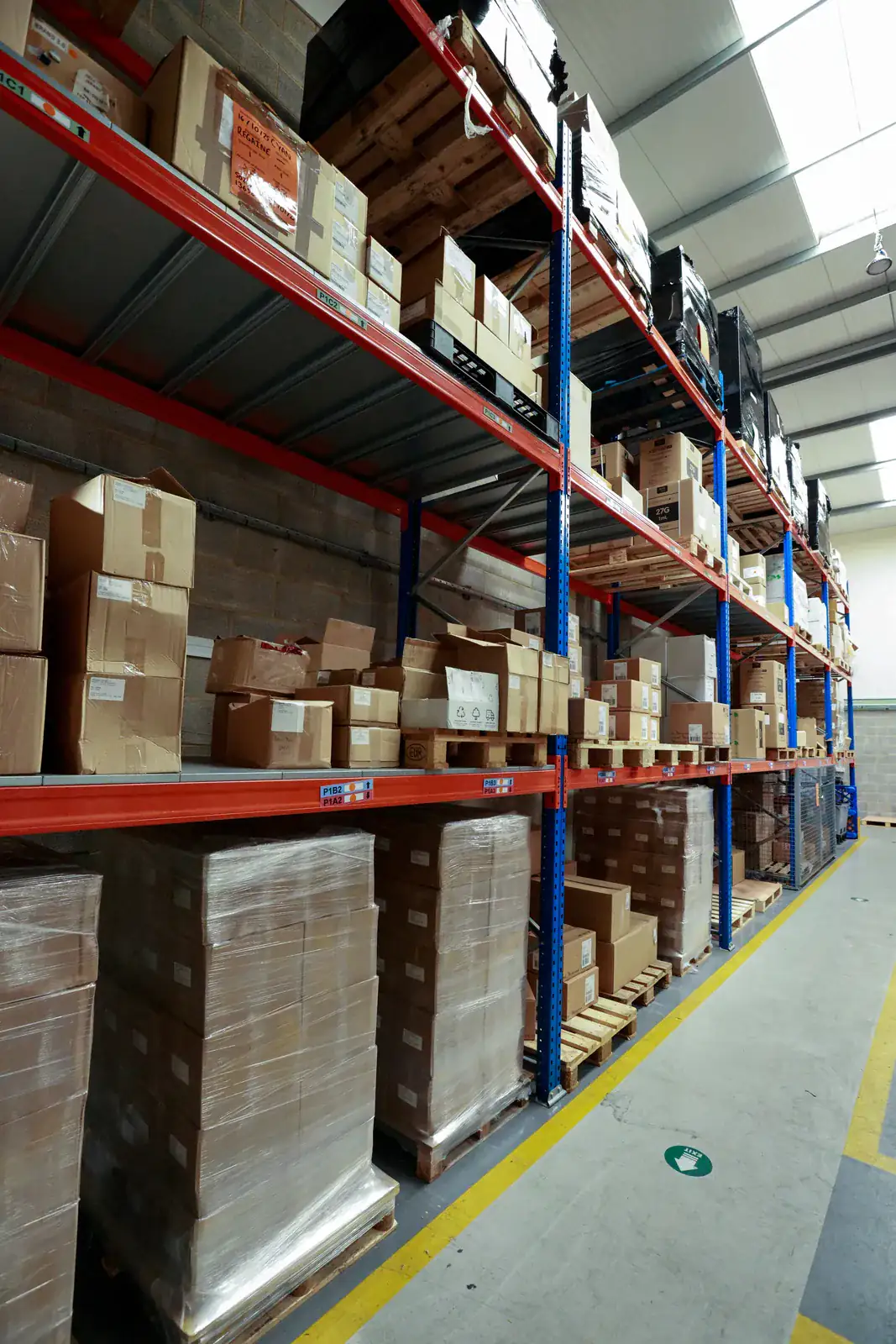
Three tiers cover most longspan stores. The deck is chosen for the stock and the room as much as for the load.
| Duty tier | Typical use | Deck options |
|---|---|---|
| Around 200kg per level | Archive boxes, packaging, light spares, retail stockrooms | Chipboard or mesh |
| Around 400kg per level | General warehouse stock, boxed goods, mixed spares, tooling | Chipboard, steel or mesh |
| Around 800kg per level | Heavy components, motors, castings, stillages and bulky goods | Steel or chipboard; mesh where airflow matters |
Longspan duty tiers. Figures are typical per level, uniformly distributed; confirmed per bay at survey.
- Around 200kg per level
- Archive boxes, packaging, light spares, retail stockrooms
- Around 400kg per level
- General warehouse stock, boxed goods, mixed spares, tooling
- Around 800kg per level
- Heavy components, motors, castings, stillages and bulky goods
Chipboard decks
Steel decks
Mesh decks
The rating for each bay comes from the manufacturer's data for the exact beam length and deck, and is written on the load notice fixed to the run.
Modular, adjustable, extendable.
A longspan run is built from starter bays and add-on bays. The add-on shares a frame with the bay before it, so each extra bay costs less than the first and the run grows to fit the wall. Levels sit on beams that relocate along the frame, so when the stock changes height the shelf moves with it.
Taller frames add levels without taking more floor, and back-to-back runs share an aisle. If the building has height beyond what can be reached from the floor, a mezzanine floor with longspan on both levels is often the better use of the space.
Starter bay
Add-on bay
Extra level
Taller frames
Used longspan shelving.
Used longspan is a sensible way to add capacity quickly, provided it is checked and matched. Frames, beams and locking pins are inspected before sale, the manufacturer is identified so add-on bays fit what you already have, and the rating is stated rather than guessed.
We also clear and buy back longspan you no longer need. See used racking buy-back and used pallet racking for the same approach on heavier systems.
When longspan is the wrong answer.
- Stock placed by forklift. That is adjustable pallet racking, whatever the load is called.
- Small parts picked in high volumes. Industrial steel shelving with dividers and drawers keeps them organised.
- Fast moving cartons picked all day. Carton live storage brings them to the picker.
- Long bar, tube and sheet. Cantilever racking has no front uprights to get in the way.
Longspan bays from the online store
Standard longspan starter bays, add-on bays and spare levels are stock lines in the racking and shelving department. Mixed schemes, mezzanine level shelving and anything that needs a layout still come through the free survey.
- Racking & shelving (opens the online store in a new tab)
- Storage (opens the online store in a new tab)
- Safety & premises (opens the online store in a new tab)
- Trucks & trolleys (opens the online store in a new tab)
- Steps & ladders (opens the online store in a new tab)
- Lifting, drum & cylinder (opens the online store in a new tab)
- Workshop & environment (opens the online store in a new tab)
- Office & mailroom (opens the online store in a new tab)
Longspan questions, answered.
Longspan is beam shelving: two upright frames joined by pairs of beams, with a deck laid across each pair. Because the beams span the full bay rather than fixing shelves into a narrow frame, the bays are wide and open, the levels adjust up and down the frame, and the system carries heavier loads per level than light duty shelving. It is loaded by hand, not by forklift.
Longspan is typically supplied in three duty tiers: around 200kg, 400kg and 800kg per level, uniformly distributed. The exact rating depends on the bay width, beam section and deck, and is taken from the manufacturer's data for your configuration and written on the load notice. Point loads and uneven loading reduce what a level can safely carry.
The terms are used for the same product. Longspan racking usually describes heavier duty bays, but structurally it is the same beam and frame system loaded by hand. If items need a forklift to place them, you need pallet racking rather than either.
Chipboard is the standard deck for general stock and gives a flat, continuous surface for small items. Steel decks resist damp, oil and heavy point loads, so they suit workshops and spares stores. Mesh decks let light and air through and stop dust settling, which suits damp areas and any store where the fire strategy or sprinkler design needs an open deck; confirm that requirement with your insurer before specifying.
Yes. Add-on bays share an upright frame with the bay before them, so a run grows one bay at a time. Taller frames can replace shorter ones to add levels. Extend with the same manufacturer and profile, because beams and frames are not interchangeable between brands.
Yes, when stock is available. Used longspan is checked for damaged frames, bent beams and missing locking pins before sale, identified by manufacturer so add-on bays match, and supplied with its rating stated. We also buy back longspan you no longer need.
Yes, and it is one of the most common mezzanine uses. The floor is designed for the shelving loads from the start, so tell us the duty tier and layout at the survey rather than after the floor is specified.
Standard bays are stock lines in the online store and ship directly for self assembly. Installed runs, larger designed schemes, mezzanine level shelving and mixed shelving and racking layouts typically run 4 to 8 weeks from order.
Send us the heaviest item and the widest one.
Those two facts choose the duty tier and the bay width. The survey adds the layout, the run lengths and a priced quotation.