
Industrial steel shelving. Bolted frames, every shelf adjustable.
Heavy duty industrial shelving units for stores that have to stay organised under daily use: engineering spares, tooling, consumables and boxed goods. Bolted steel frames, fully adjustable shelf pitch, steel or chipboard decks, open or fully clad.
Drawers, doors and dividers turn a bay into a cabinet, a parts bin or a lockable store without changing the frame.
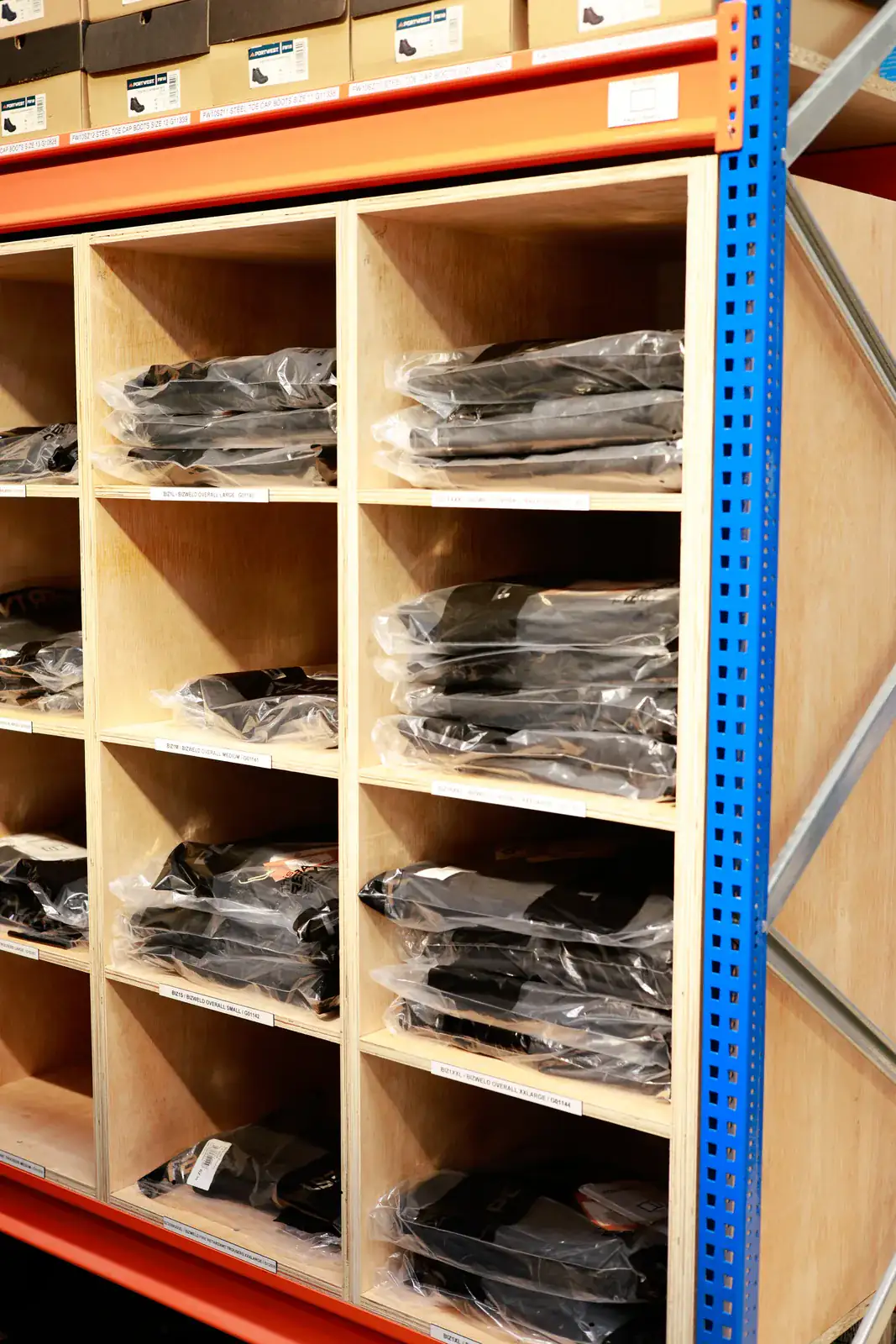
- Frame
- Bolted steel
- Shelf pitch
- Fully adjustable
- Decks
- Steel or chipboard
- Finish
- Open or clad
What a heavy duty shelving unit is made of.
The frame carries the load to the floor, and the shelf carries it to the frame. Everything else on the unit is there to organise, protect or secure the stock. Knowing which part does which job is how you avoid buying a heavier unit than the store needs, or a lighter one than it does.
Units stand alone or join into runs, where each add-on bay shares a frame with the one before it. Back-to-back runs share the space between them, and taller frames add levels without taking more floor.
Upright frames
Bolted steel frames with holes or slots along the full height, so shelves fix at any pitch the stock needs.
Shelves
Steel trays or beam supported decks, each fixed independently, so one level can move without disturbing the rest.
Decks
Steel for oil, damp and point loads. Chipboard for boxes, paper and small items on a continuous surface.
Bracing and cladding
Side and back panels that add rigidity, stop items falling through and keep dust off stock.
Accessories
Drawers, doors, dividers, shelf labels and bin fronts, specific to the frame profile.
Load notice
The rating per shelf for the configuration as built, fixed to the end of the run.
Open or fully clad.
The same frame does both jobs. The choice is about what the stock needs protecting from and who needs to see it.
| Attribute | Open shelving | Clad shelving |
|---|---|---|
| Visibility of stock | Full, from both sides | From the front only |
| Small items | Can fall between bays | Contained by side and back panels |
| Dust | Settles on stock | Reduced, more so with doors |
| Security | None | Lockable when doors are fitted |
| Access | From front and back on double sided runs | From the front |
| Typical use | Warehouse pick faces, goods in, bulky boxed goods | Engineering stores, tooling, PPE, archives and shared spaces |
Open against clad industrial shelving.
- Visibility of stock
- Full, from both sides
- Small items
- Can fall between bays
- Dust
- Settles on stock
- Security
- None
- Access
- From front and back on double sided runs
- Typical use
- Warehouse pick faces, goods in, bulky boxed goods
Drawers, doors and dividers.
Accessories are what turn heavy duty shelving into a store that stays tidy. They are designed for a specific frame profile, so they are specified with the shelving, not bought separately later.
Drawer units
Doors
Dividers
Bins and labels
For small parts bins, louvre panels and bin trolleys on their own, see storage solutions and lockers.
Shelf load ratings.
Industrial steel shelving is sold in duty classes, from light through medium to heavy. Each class has a rating per shelf, and that rating depends on the shelf size, the deck and whether the load is spread evenly. A shelf rating is a safety figure, so we publish it per configuration from the manufacturer's data rather than as a single number on a web page.
The longspan tiers of around 200kg, 400kg and 800kg per level are a useful comparison: if your heaviest items approach the upper end, they probably belong on longspan shelving rather than a shelving unit.
Light duty class
Office, retail and stockroom use with boxed and light items.
Rating per shelf from manufacturer data
Medium duty class
General stores, spares and boxed goods.
Rating per shelf from manufacturer data
Heavy duty class
Engineering spares, tooling, castings and dense stock.
Rating per shelf from manufacturer data
Point loads, uneven loading and wider shelves reduce what a shelf can safely carry. The rating as built is written on the load notice.
Where heavy duty industrial shelving earns its place.
- Maintenance and engineering stores holding spares for production lines
- Tool rooms, with clad bays and doors for controlled tooling
- Parts counters and trade counters picking small items all day
- Goods in and quarantine areas holding boxed stock awaiting checks
- Mezzanine pick floors, where shelving doubles the pick area. See mezzanine flooring.
- Workshops beside cantilever racking for long stock and heavier fixtures.
From stock list to installed run.
Shelving is quick to get wrong because it is easy to buy. Four steps keep it right.
- Step 1
Stock list
Item sizes, weights and pick frequency, including the heaviest and the largest item.
- Step 2
Layout
Run lengths, aisle widths and shelf pitches drawn against the room.
- Step 3
Specification
Duty class, decks, cladding and accessories, with ratings from manufacturer data.
- Step 4
Install
Built, labelled and load noticed, phased around the working store.
Not the right fit? Palletised stock belongs on adjustable pallet racking, and fast moving cartons on carton live storage. The shelving overview compares every type.
Industrial shelving questions.
A freestanding bay of steel shelving built from two upright frames and a set of shelves bolted between them. Industrial units are heavier gauge than office or boltless shelving, the shelf pitch adjusts along the full height of the frame, and the bay can be left open or clad on the sides and back. Units join into runs by sharing frames.
Shelf ratings depend on the manufacturer, the shelf width and depth, the deck and how the load is spread. They are taken from the manufacturer's data for the exact configuration and written on the load notice for the run, not estimated. For reference, longspan shelving, which suits heavier and bulkier items, is typically supplied in tiers of around 200kg, 400kg and 800kg per level.
No. Industrial steel shelving uses shelves fixed into closely spaced, fully adjustable positions in a bolted frame, which suits parts, boxed goods and anything that benefits from cladding, drawers and dividers. Longspan uses beams spanning wider bays and suits bulkier items of varying size. Many stores use both, with longspan for heavy and awkward items and steel shelving for everything that needs organising.
Steel shelves are the default in workshops and engineering stores because they resist oil, damp and point loads and wipe clean. Chipboard is quieter and gives a continuous surface for paper, boxes and small items, and is common in archive and office use. The choice is made per level, so one bay can mix both.
Side and back cladding stops small items falling through between bays, keeps dust off stock and gives a tidier finish in shared spaces. It also adds rigidity. Fully clad bays with doors become lockable cabinets, which suit tooling, PPE and consumables that need controlling.
Usually yes, provided the frames and shelves are from the same manufacturer and range as the accessories. Drawer units, doors and dividers are designed for specific frame profiles and are not interchangeable between brands, so we identify what you have before quoting.
Yes. Shelving on a mezzanine floor is one of the most efficient ways to add pick space in a parts store. The mezzanine is designed for the shelving layout and its loads from the start, so specify both together.
Designed shelving schemes typically run 4 to 8 weeks from order, and installation is phased around a working store where needed. Standard bays are stock lines in the online store for faster supply.
Send us the stock list and the room size.
Item sizes, the heaviest item and the room dimensions are enough to propose a layout and a duty class. The survey confirms it and prices it.