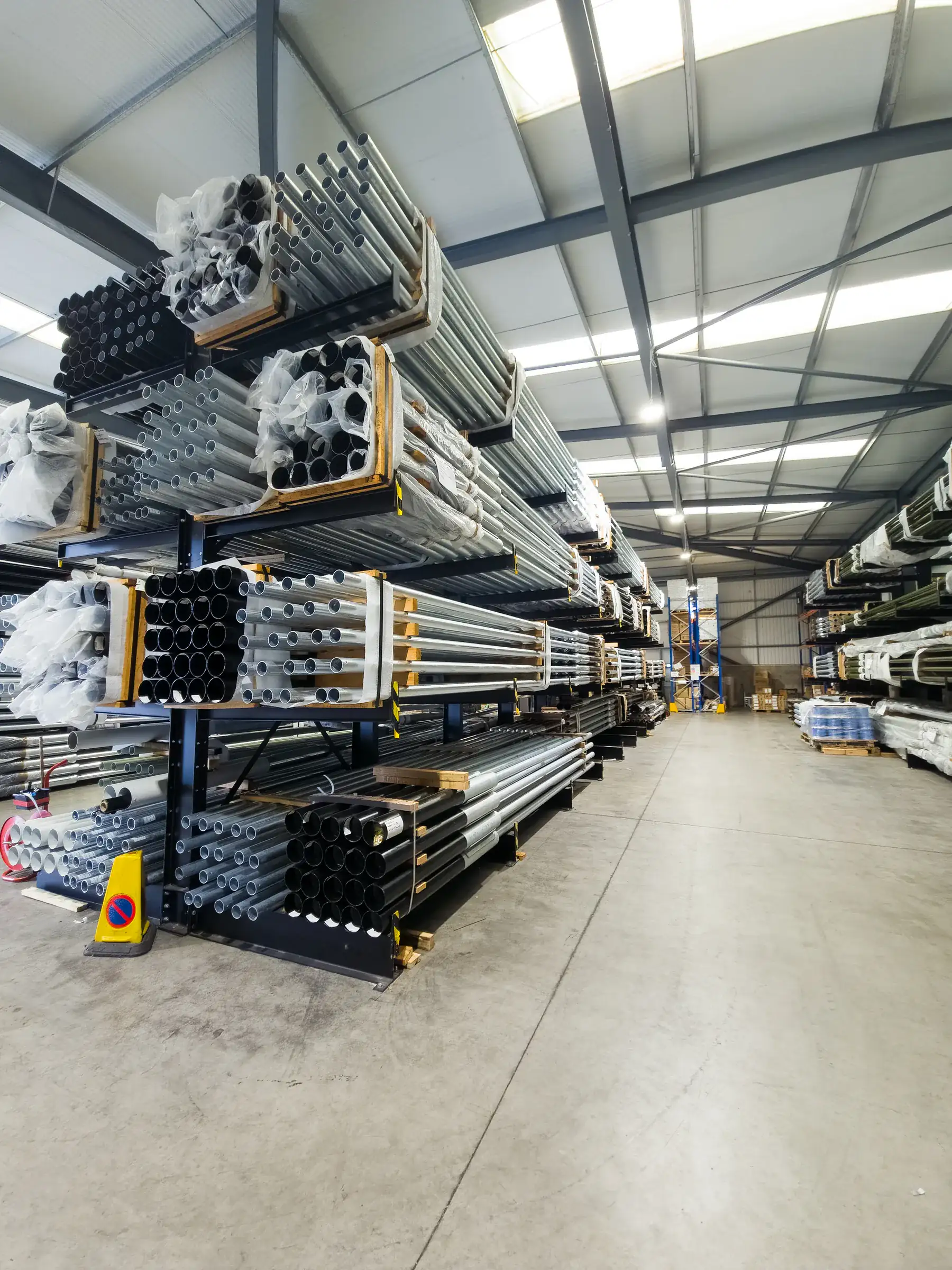
Long extrusion storage on cantilever racking, Neath.
Six metre aluminium extrusions moved from floor stacks into a cantilever run, supported along their length so profiles stop bowing.
Manufacturing and engineering · Cantilever racking · Neath
- Positions, before → after
- 168 arm positionsBefore: Floor stacked
- Floor area recovered
- 38%
- Installation
- 3 days
- Downtime avoided
- Goods-in kept running
The challenge.
- Extrusions were stacked on the floor on bearers, so lower lengths were damaged by the weight above and picking a profile meant unstacking the bundle.
- Long lengths sagged between bearers, producing bowed stock that was rejected at the cutting saw.
The constraints.
- Profiles arrive in mixed bundle sizes and lengths.
- The aisle had to work with the existing sideloader rather than a new truck.
What we specified, and why.
Each line of the specification answers one part of the problem. Here is the reasoning, line by line.
- Single-sided cantilever against the building wall
- Keeps the aisle clear for the sideloader and makes use of wall height that was previously empty.
- Close arm spacing along the run
- Supports long profiles along their length so they stay straight between arms.
- Arm end stops
- Stops bundles rolling off the arm when the sideloader places them.
Installation.
- Installed in sections so goods-in could continue unloading onto the first completed bays.
- Arm levels were set against the bundle heights measured at survey, leaving pitch adjustment for future profiles.
The outcome.
- Each profile is now picked from its own arm level without touching another bundle.
- Saw rejects due to bowed stock stopped once lengths were properly supported.
We stopped losing stock to the bottom of the pile. That alone paid for the racking.
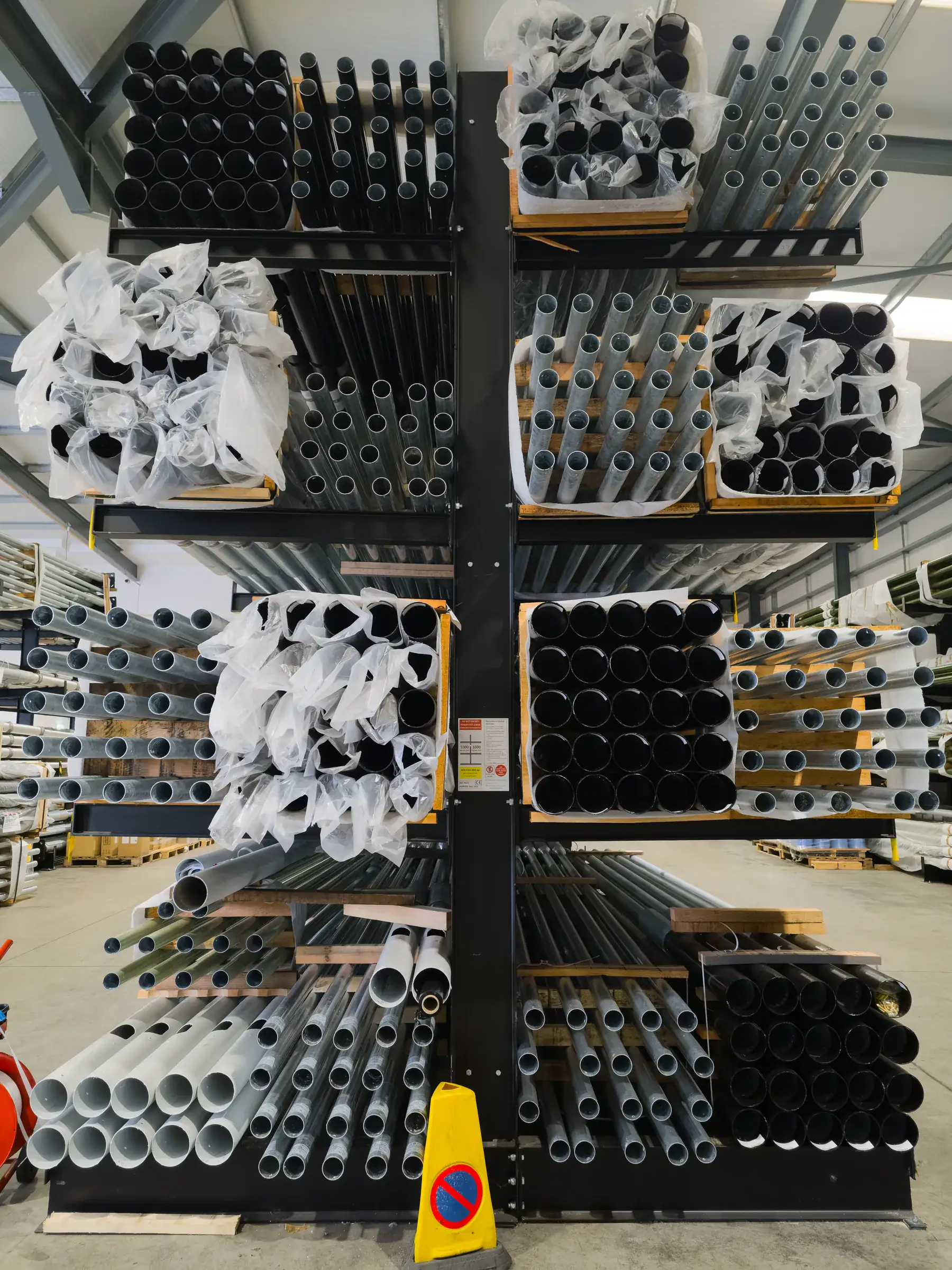
The system behind this project.
Related case studies.
Your building, measured. Your stock, counted.
Every project above started with a free site survey: a measured drawing, the stock profile, a CAD layout, a capacity figure and a priced quotation. No charge and no obligation.